Key Highlights
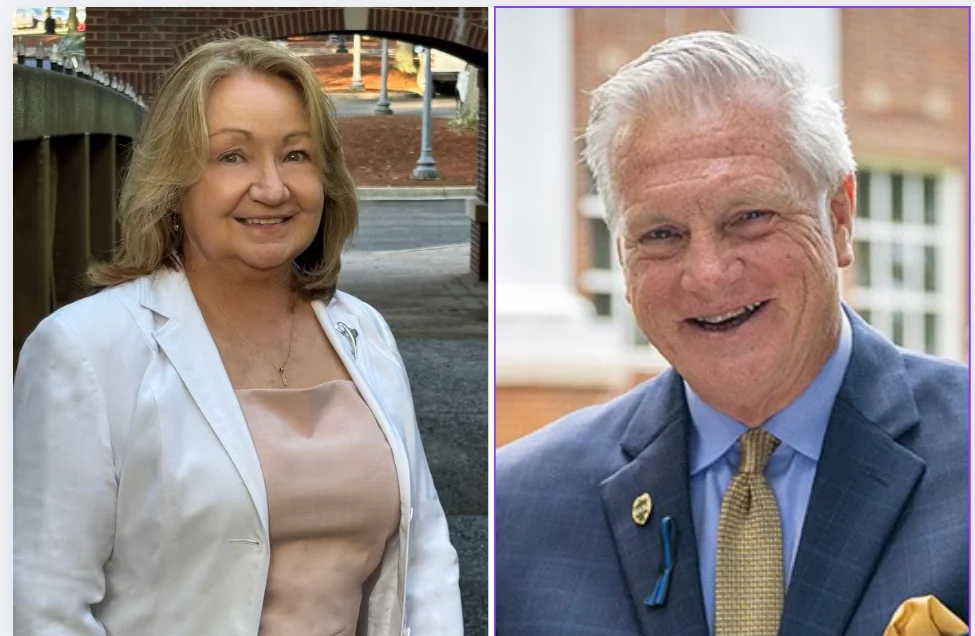
- Mary Robichaux, a former Democratic state representative, won the mayor race in Roswell, Georgia.
- The incumbent Kurt Wilson received backing from Republican Governor Brian Kemp but lost with 47% of the vote share.
- Robichaux’s victory is seen as an indicator of local voting behavior that could influence federal elections.
- Meanwhile, a special election in Tennessee resulted in a Republican victory.
Roswell Mayor Election Results
Mary Robichaux, a former Democratic state representative from Georgia’s House, triumphed over incumbent Kurt Wilson to become the new mayor of Roswell. The final tally showed that Robichaux secured 53% of the votes, while Wilson garnered 47%. This outcome came after both candidates initially failed to secure a majority in the general election on November 4, leading to a runoff.
The mayoral election was non-partisan, but it attracted national attention due to Georgia Governor Brian Kemp’s high-profile endorsement of Wilson.
In his call for support, Kemp described Wilson as a “Republican” mayor who had kept the city safe and thriving. Despite this backing, Wilson faced significant opposition from Robichaux, who previously served in the state House from 2019 to 2023.
The close race on November 4th saw just 185 votes separating Wilson and Robichaux, setting the stage for a more intense contest. Robichaux’s victory is viewed as significant given Georgia’s status as an important swing state.
In 2020, former President Joe Biden flipped the state by just 11,779 votes, making it his narrowest margin of victory in any state.
For context, in the 2024 presidential election, Donald Trump won Georgia with 50.7% of the vote share against former Vice President Kamala Harris’s 48.5%. This local race, therefore, could provide insights into how voters might behave come November 2026 for midterm elections.
Expert Analysis on Local Elections
In an interview with Newsweek, Thomas Gift, an associate professor of political science and director of the Centre on U.S. Politics at University College London, emphasized that while this was a local race, its implications extend beyond Roswell. “Almost all politics in America has been nationalized,” Gift stated, adding, “It would be a mistake to view this race as purely local.” He noted how high-profile endorsements can influence voter perceptions and underscored the importance of local factors.
Gift further explained that even non-partisan contests are often seen through a national partisan lens. “Local elections like these can give us clues about broader trends in American politics,” he said, highlighting the significance of issues such as development, zoning, and public safety in shaping voter opinions.
Special Election in Tennessee
In other election news, Republican Matt Van Epps emerged victorious in a special election for Tennessee’s 7th District. With 53.9% of the vote share, he outperformed Democratic state legislator Aftyn Behn who received 45%. This success for Republicans came despite initial poll predictions suggesting a closer margin.
Van Epps’ victory marks another Republican win in recent special elections, reflecting the broader political landscape in which party affiliations can significantly impact local races.
These results may also be seen as indicators of how national politics are influencing local outcomes.
In conclusion, the outcome of these local elections offers valuable insights into how voters perceive and engage with their representatives, both at a state level and on a federal scale. As experts like Professor Gift highlight, understanding these dynamics is crucial for comprehending broader trends in American politics.