Key Highlights
- Megan Rapinoe questions motives behind efforts to protect women’s sports from transgender inclusion.
- Rapinoe reacts to an op-ed by Angel City FC player Elizabeth Eddy calling for clear gender standards in the NWSL.
- Rapinoe criticizes a photo used in the New York Post article about trans athlete Barbra Banda, who withdrew after failing sex eligibility requirements.
- Rapinoe draws parallels between transgender rights and gay rights, emphasizing the importance of being true to oneself.
Megan Rapinoe Critiques Efforts to Protect Women’s Sports from Trans Athletes
Former U.S. soccer star Megan Rapinoe has raised questions about the motives behind efforts to protect women’s sports, particularly in light of transgender inclusion debates. Her concerns were sparked by an op-ed written earlier this month by Angel City FC player Elizabeth Eddy, which called for clear gender standards and different means of testing within the National Women’s Soccer League (NWSL).
Reacting to Controversial Op-Ed
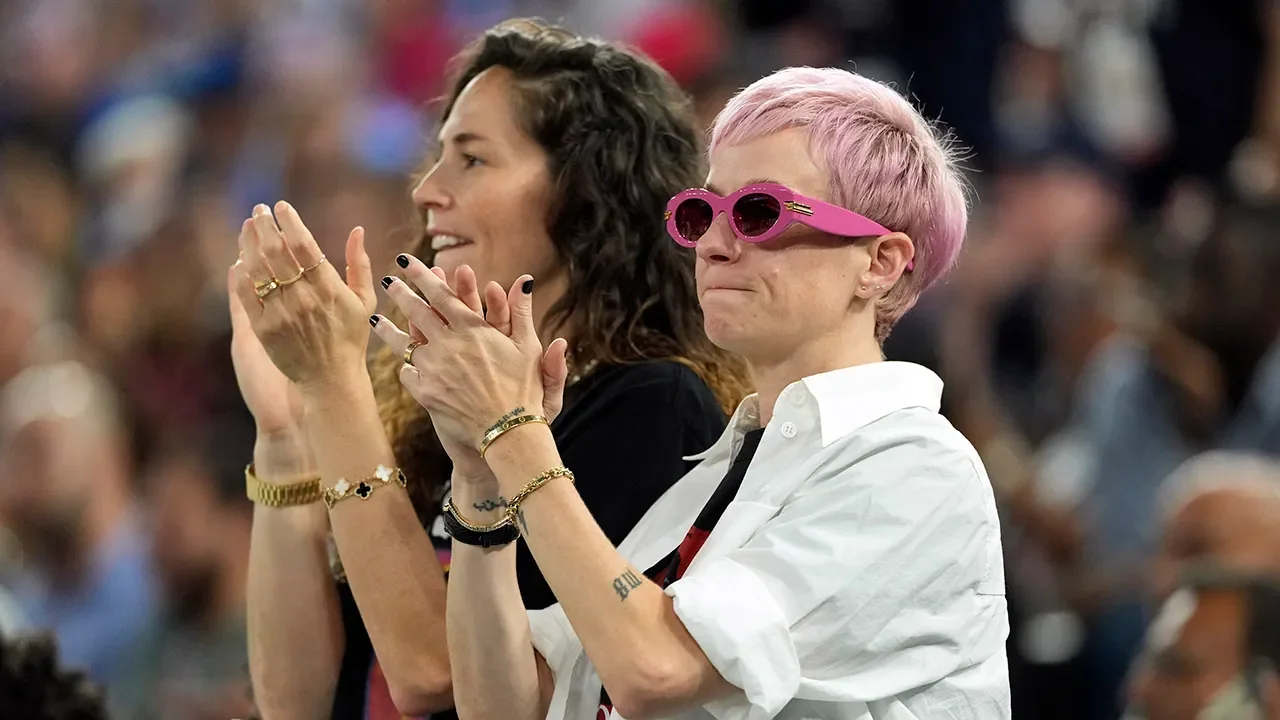
Rapinoe, known for her vocal support of LGBTQ+ rights in sports, turned to her podcast “A Touch More” with Basketball Hall of Famer Sue Bird to discuss Eddy’s op-ed. In the episode, Rapinoe questioned the authenticity of these efforts, pointing out that current NWSL players do not include transgender athletes.
“Are we really protecting women in sports, or are we doing this just thinly veiled, ‘Oh my god, we’re scared, and we have to protect women in sports?’” Rapinoe said in a mocking tone. “And it’s like, ‘We’re fine. We don’t even have any trans players in the NWSL.’ That was really, I felt, pretty disingenuous.”
Disagreement with New York Post Article
Rapinoe took issue with a photo used by the New York Post article about Eddy’s op-ed. The article featured Orlando Pride player Barbra Banda, who withdrew from the Zambian national squad after failing to meet sex eligibility requirements in 2022. Rapinoe criticized this use of imagery, highlighting its insensitivity and lack of representation.
“I just was totally struck by the familiarity of the story and the similarity to, as a gay person, our own pursuit of gay rights and of being our full selves, specifically of trans people,” said Rapinoe. “And it f—ing matters how you feel when you look in the mirror.
It matters how you feel inside your own body. It doesn’t matter what anybody else thinks.”
Connecting Trans Rights to Gay Rights
Rapinoe drew a parallel between transgender rights and gay rights, emphasizing that both groups face similar struggles for acceptance and inclusion. She highlighted the importance of allowing individuals to exist in their own skin and bodies comfortably.
“I think so often when we talk about gay rights, and specifically trans rights, we’re, like, trying to express at a basic level of how vital and how important it is for everyone to be able to exist in their own skin and in their own bodies in the way that they want and the way that feels comfortable. It doesn’t have to do with anybody else,” said Rapinoe. “And it really can be life-changing, it can be life-saving in so many ways.
And I just think it’s really important.”
Rapinoe’s comments reflect her ongoing commitment to advocating for LGBTQ+ rights and challenging discriminatory practices within sports. Her podcast episode serves as a platform for further discussion on these complex issues.