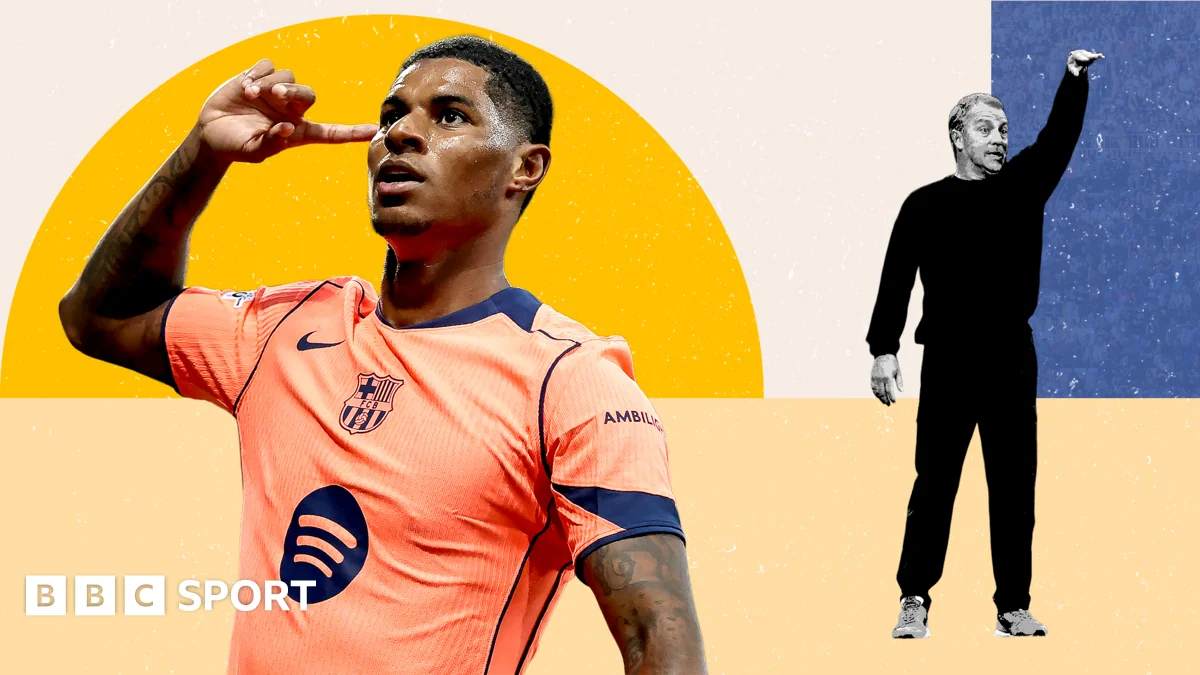
Key Highlights
- Barcelona’s loan deal for Marcus Rashford is showing positive results with the 27-year-old scoring five goals and contributing six assists.
- Hansi Flick has adapted the team tactics to make the most of Rashford’s versatile skills, allowing him more freedom on the pitch.
- Rashford’s role in Barcelona’s attacking play involves moving centrally from his usual left winger position, which enhances his goal-scoring opportunities.
- The overlapping runs by dynamic full-backs create space for Rashford to cut inside and deliver dangerous crosses or shots.
Revitalizing a Star: How Barcelona’s Tactics Are Reshaping Rashford’s Career
When Manchester United agreed to loan Marcus Rashford to Barcelona in the summer, it was seen as a bold move. The 27-year-old forward had previously struggled with consistency at Old Trafford, but his time in Catalonia has been nothing short of promising. As of early October 2025, he has scored five goals and contributed six assists across all competitions during his loan spell.
Hansi Flick, the Barcelona coach, has played a pivotal role in this resurgence by adjusting Rashford’s role and integrating him into the team’s tactical framework more effectively. According to Flick, “He’s giving us a lot of joy,” reflecting on Rashford’s impact so far at Camp Nou.
Adapting Roles for Optimal Performance
Rashford traditionally plays as a left winger, but his position and role at Barcelona have been redefined. On paper, this might appear limiting, but Flick has recognized the value in Rashford’s ability to operate between a winger and a striker. This versatility allows him to move centrally more often, which has brought Rashford closer to goal.
The freedom to play both wide and central positions has enabled Rashford to take more shots from dangerous areas, leveraging his world-class ball-striking skills. His goal against Newcastle United in the Champions League is a prime example of this strategy in action, coming when he drifted centrally from his left-wing position.
Cluster Play and Overlapping Runs
Beyond tactical adjustments, Flick’s approach includes clustering attacking players to create numerical superiority and space. When Rashford moves inside into the left half-space, he is often found by a midfielder with their back to goal. This positioning allows Rashford to lay off the ball for teammates who are in advantageous positions between the lines.
The overlapping runs by dynamic full-backs like Alejandro Balde further enhance Rashford’s game.
These runs create space for Rashford to cut inside and deliver dangerous crosses or shots, making his presence even more potent on the pitch. This combination of strategies has led to a treble from Lopez and a double from Rashford in one match, contributing significantly to Barcelona’s goal threat.
Human Element in Coaching
The success of these tactical changes is also attributed to the human element of coaching. Flick’s consistency in starting Rashford over the last six matches has helped him find his rhythm and build confidence. Additionally, the trust placed in Rashford’s set-piece delivery—something that influences how fans, pundits, and even Rashford himself view his performance—has boosted his overall statistics.
Rashford’s own statement on his desire to stay at Barcelona post-loan period is a testament to Flick’s success. He believes this approach not only benefits the player but also aligns with Barcelona’s broader strategy in nurturing talent and maximizing players’ strengths.
Conclusion
The story of Marcus Rashford’s resurgence at Barcelona offers insights into how tactical adjustments can reignite a struggling player’s career. Flick’s ability to adapt tactics and roles has been crucial, providing Rashford with the freedom and support needed for his best performance. As the season progresses, the potential for more exciting developments in this partnership remains high, both on and off the pitch.