Key Highlights
- Mahmoud Khalil seeks $20 million in damages from the Trump administration.
- Khalil accuses the government of using immigration courts to “control” and remove him.
- A federal judge has blocked the government from removing Khalil based on a determination by Secretary of State Marco Rubio that his presence harms U.S. foreign policy interests.
- The case is currently before the Third Circuit Court of Appeals, with Khalil’s attorneys arguing against the government’s jurisdiction.
Activist Mahmoud Khalil Challenges Government Detention
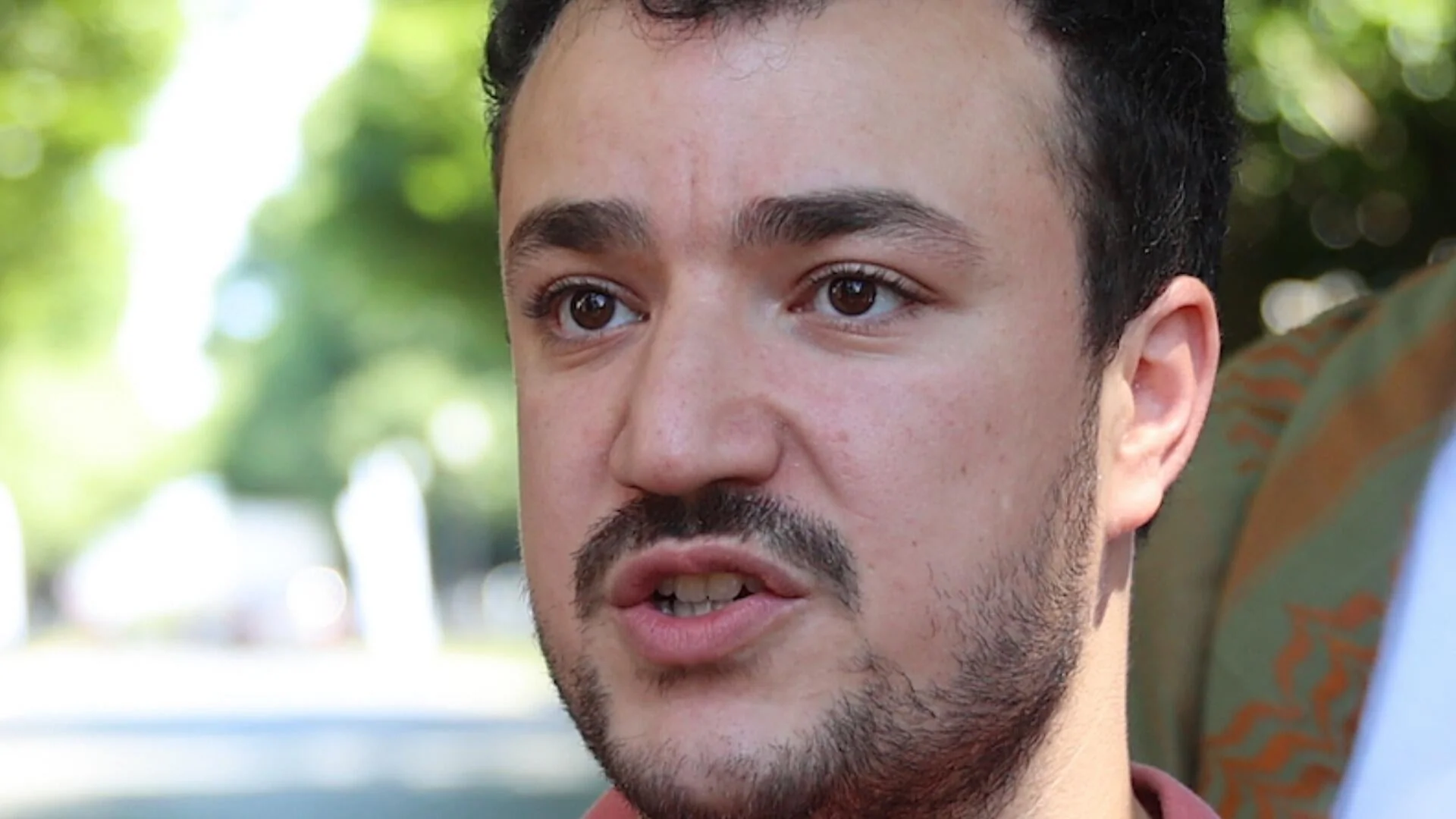
Mahmoud Khalil, a prominent pro-Palestinian activist and Columbia University graduate, has accused the Trump administration of using immigration courts as a means to “control” his legal process and potentially remove him from the United States. Khalil’s case is currently under scrutiny at the Third Circuit Court of Appeals in Philadelphia.
Accusations Against the Government
Khalil, who is married to an American citizen and holds a green card, was arrested by Immigration and Customs Enforcement (ICE) agents in March 2025. He claims he was detained because his student visa had been revoked, despite his assertion that he is actually a lawful permanent resident not on a student visa.
“The government lawyers were defending the indefensible… being literally detained for over 100 days for literally protesting a genocide,” Khalil told reporters. “They don’t have anything other than that. That’s why they’re choosing a kangaroo court, which is the immigration court, because they know they can control that process.”
Legal Battle and Court Rulings
A lower court has already ruled in Khalil’s favor by blocking the government from removing him based on a determination made by Secretary of State Marco Rubio that Khalil’s presence harms U.S. foreign policy interests. The Trump administration claims this determination makes Khalil removable.
However, last month, a federal judge in Boston found that the government violated constitutional rights of protesters, including Khalil, in its effort to deport international students and scholars expressing pro-Palestinian views. This decision was part of a separate lawsuit filed by an association of hundreds of professors and students.
Appeals Court Hearing
The case is now before the Third Circuit Court of Appeals. During a hearing on Tuesday, government lawyers focused on whether the lower court has proper jurisdiction to hear Khalil’s case. Despite being arrested in New York City, Khalil was transferred to Louisiana and then to New Jersey. The government argued that New Jersey was not the correct venue for his case.
“If our rule says, ‘wait until the system is updated Monday morning,’ the executive might spirit the person out of the country over the weekend,” one judge asked the government. “Are you asking us to adopt a rule that says when there is a lag in the data base that’s all on their lawyers and then Monday morning ‘sayonara, sorry he’s gone?'”
Khalil’s attorneys argued that his First Amendment case was an “extreme case” and “exceptional in many ways.” However, the judges expressed concern about opening the door for others facing immigration proceedings to try and relitigate their cases a second time in federal courts.
Implications and Future of the Case
The outcome of this case could have significant implications for both Khalil and future immigrants facing similar legal challenges. If the Third Circuit Court of Appeals upholds the lower court’s ruling, it could set a precedent for protecting the rights of activists and protesters.
“The Trump administration is still trying to re-detain me,” Khalil said. “They’re trying to stop the federal court from looking at my case because they know they don’t have a case against me. So we’ll keep fighting the legal fight until the end.” Khalil’s determination to continue his advocacy for Palestinian rights suggests that this case may not be resolved quickly.