Key Highlights
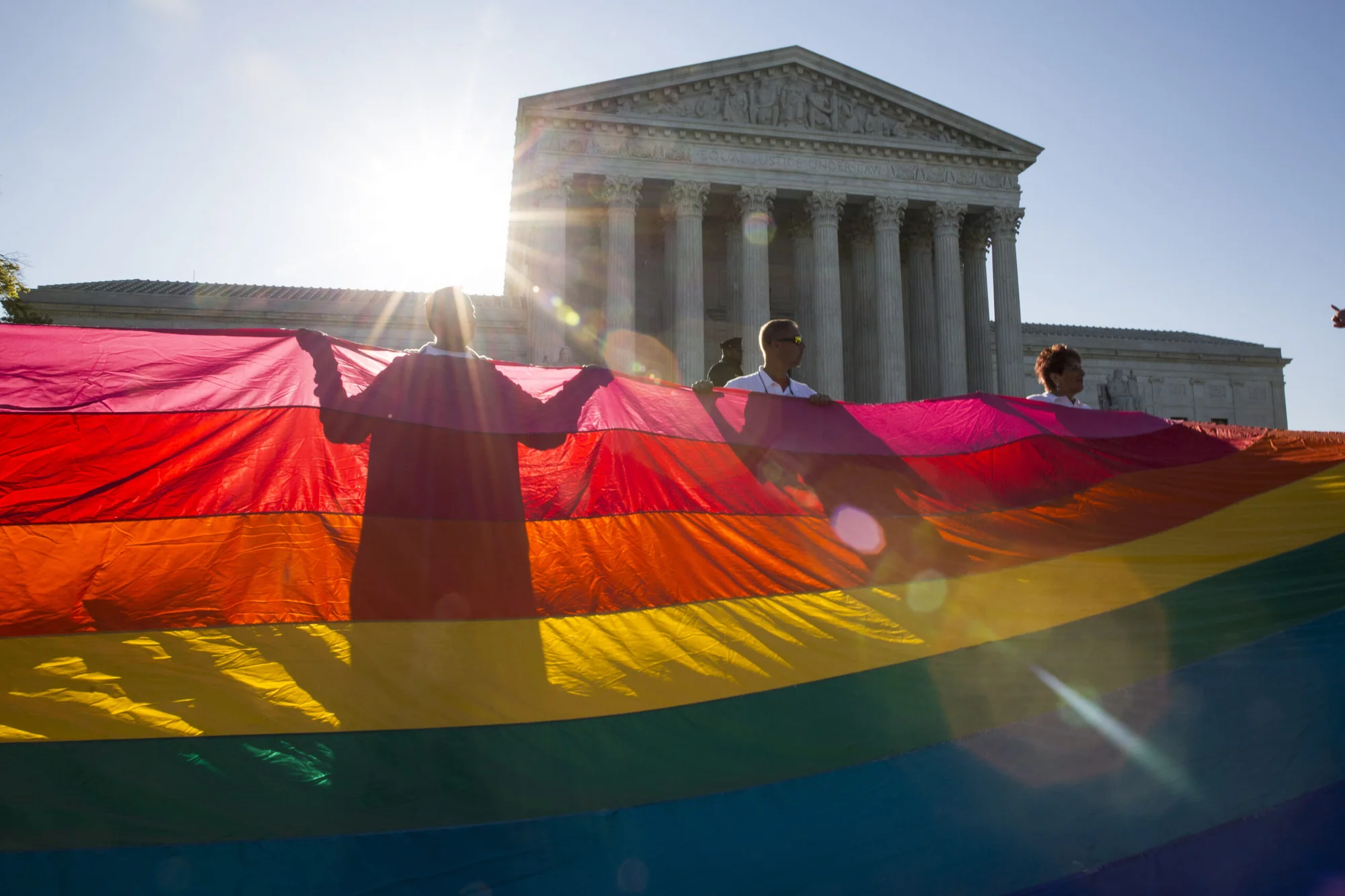
- The U.S. Supreme Court is set to consider whether to hear a challenge to same-sex marriage in a private conference on Nov. 7.
- Kim Davis, the former clerk of Rowan County, Kentucky, refused to issue marriage licenses to gay couples based on religious grounds and was later ordered by a federal court to do so.
- The case has been appealed to the Supreme Court after the U.S. Court of Appeals for the 6th Circuit rejected Davis’s argument that issuing same-sex marriage licenses would violate her First Amendment rights as a government official.
- If the justices deny review, they could announce their decision as early as Nov. 10.
The Case of Kim Davis and Same-Sex Marriage
Kim Davis, a former county clerk in Rowan County, Kentucky, is at the center of a significant legal dispute regarding same-sex marriage. In 2015, following the Supreme Court’s decision in Obergefell v. Hodges, which recognized a constitutional right to same-sex marriage, Davis refused to issue marriage licenses to gay couples on religious grounds. This action made her a focal point for discussions about religious freedom and government authority.
The Legal Journey
After Davis stopped issuing marriage licenses altogether, a lawsuit was filed by David Moore and David Ermold, who were seeking their marriage license. U.S. District Judge David Bunning ordered Davis to issue the licenses to both gay and straight couples in 2016.
However, when Moore and Ermold returned for their license, Davis once again refused, citing her religious beliefs.
In 2023, a jury awarded damages of $50,000 each to Moore and Ermold, with the case eventually reaching the U.S. Court of Appeals for the 6th Circuit. There, Davis argued that she could not be held liable because issuing a marriage license would violate her First Amendment rights as a government official. However, the appeals court rejected this argument, stating that while individuals have religious freedoms under the First Amendment, they cannot use their personal beliefs to override public policy and law.
The Supreme Court’s Role
Kim Davis appealed to the U.S. Supreme Court in July 2023, arguing that she had acted as an individual rather than a government official and thus should have been granted certain protections under the First Amendment. Additionally, she asked the court to overturn its decision in Obergefell v.
Hodges, contending that there is no constitutional basis for recognizing same-sex marriage.
The Supreme Court has scheduled a private conference on Nov. 7 to consider whether to hear Davis’s challenge. If four justices vote to take up the case, they will need at least one more to overturn Obergefell v. Hodges. A decision could be announced as early as Nov. 10 if the court denies review.
Expert Perspectives
Legal experts suggest that the Supreme Court’s decision on whether to hear Davis’s case is a critical moment for the interpretation of religious freedom and same-sex marriage rights in America. Professor Elizabeth Wydra, president of the Constitutional Accountability Center, stated, “This case could have far-reaching implications, not only for Kim Davis but for all public officials who might find themselves in similar situations.”
The outcome will not only shape legal interpretations but also set a precedent on how religious beliefs can influence government actions. The decision is expected to be closely watched by both supporters and opponents of same-sex marriage, as well as those concerned about the balance between individual rights and public policy.