Key Highlights
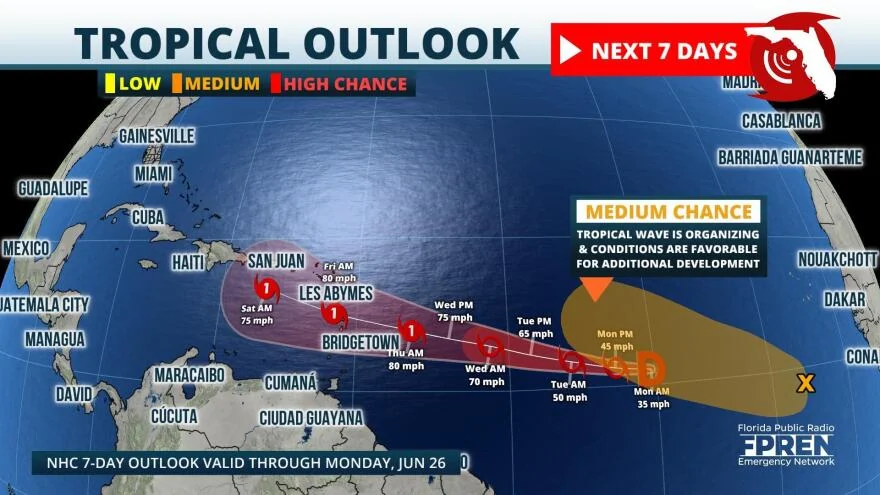
- A tropical wave in the central Atlantic shows signs of organizing and moving toward the Caribbean.
- If it becomes a tropical storm, it would be named Melissa and mark the 13th named storm of the 2025 season.
- The National Hurricane Center forecasts heavy rainfall and gusty winds for the Windward Islands.
- Experts suggest that late-season hurricanes are rare but not unheard of in the U.S., particularly in Florida.
The Late October Hurricane Forecast: A Potential Tropical Storm on the Horizon
A tropical wave currently situated over the central Atlantic Ocean is generating significant interest among meteorologists due to its potential development into a full-fledged hurricane. This system, as it moves westward towards the Caribbean Sea, has prompted forecasters to closely monitor its evolution.
Forecasting the Path of the System
According to the National Hurricane Center (NHC), a tropical wave over the central Atlantic is producing widespread showers and thunderstorms. This system may develop into a tropical storm in the coming days, as it continues its journey westward at speeds between 15 to 20 miles per hour.
“Regardless of development, this system is expected to bring heavy rainfall and gusty winds to the Windward Islands late this weekend,” reported the NHC. “It’s forecasted to move across the Caribbean Sea much of next week.”
Expert Opinions on Late-Season Hurricanes
Metaphorically speaking, October is a time when hurricanes are less common but certainly not unheard of in North America. Alex DaSilva, an AccuWeather hurricane expert, emphasized that the conditions for storm formation in the Caribbean remain favorable due to warm waters and minimal wind shear.
“Atmospheric conditions are primed for a storm to form in the Caribbean,” said DaSilva. “The waters are exceptionally warm since the Caribbean has not been disturbed by a single tropical storm or hurricane so far this season.”
However, while late-season hurricanes like these are rare, they do pose significant risks. Michael Lowry from WPLG-TV pointed out that historically, late-October hurricanes tend to target Florida more often than other states.
The Climate Context and Future Implications
This potential tropical storm serves as a reminder of the unpredictable nature of hurricane seasons. The return of La Niña conditions can lead to atmospheric patterns conducive for late-season storms, making it crucial for residents and emergency management teams in coastal areas to stay vigilant.
Experts caution that while the likelihood of such events is relatively low, they should not be ignored due to their potential impact on communities, particularly those in Florida. This case underscores the need for continuous monitoring and preparedness across the region.
Conclusion
The ongoing development of this tropical wave highlights the dynamic nature of hurricane seasons. As meteorologists continue to track its progress, it serves as a timely reminder that even late October can bring significant weather challenges. With climate change potentially altering these patterns, staying informed and prepared remains crucial for all coastal communities.