Key Highlights
- A fast-moving tropical disturbance, known as Invest 98L, is expected to bring heavy rainfall to the central Caribbean.
- The system could potentially develop into a tropical storm and pose a significant threat due to its warm ocean conditions.
- People along the south coasts of the Greater Antilles, especially in the Dominican Republic, should prepare for potential flooding.
- High wind shear is currently impeding the development of 98L, but favorable conditions could allow it to intensify later this week.
Rapid Movement and Potential Threats
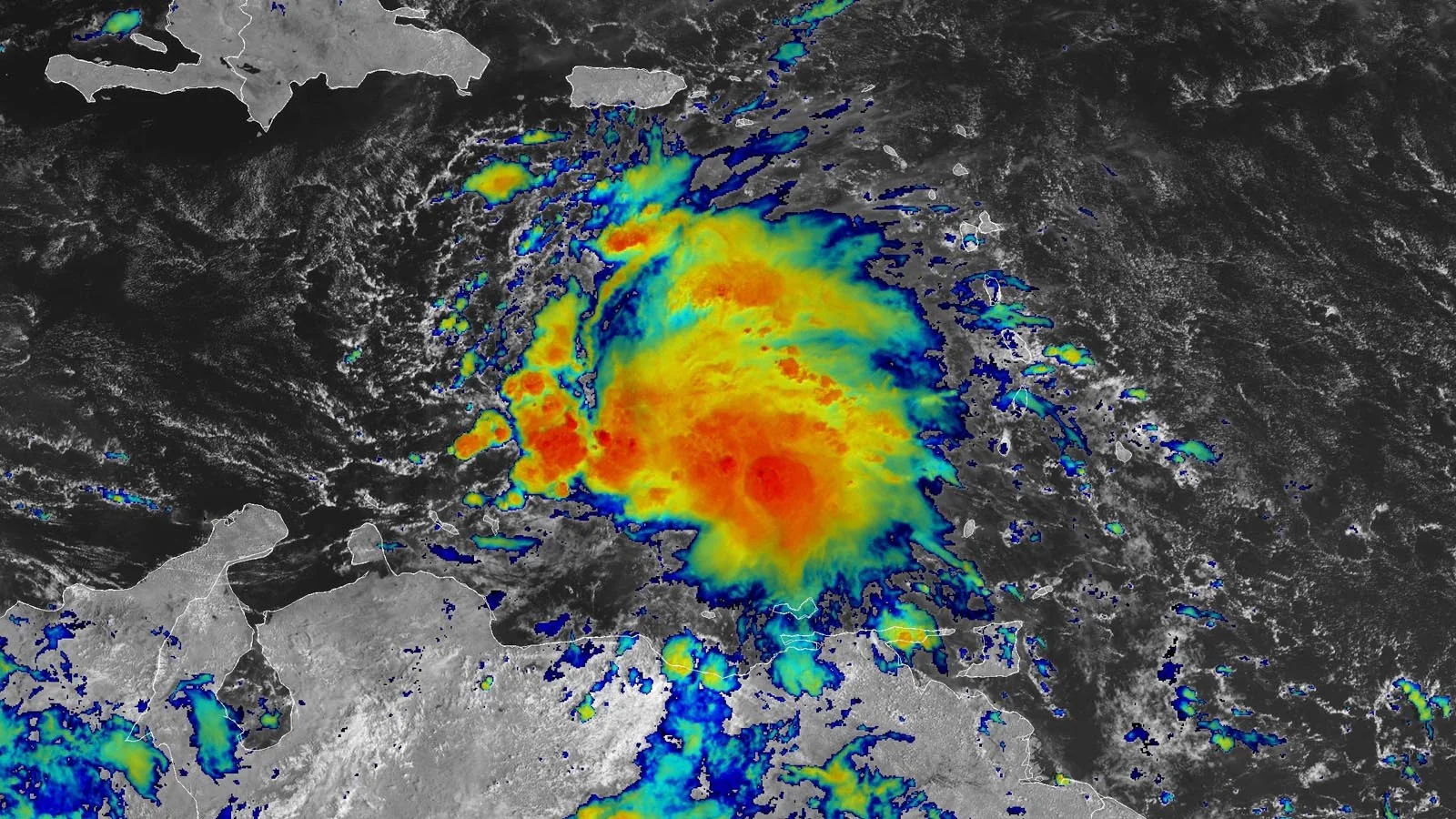
A large, fast-moving tropical disturbance, referred to as Invest 98L, has recently swept through the Windward Islands of the Caribbean. By Sunday, this system had entered the central Caribbean Sea, where it is predicted to intensify into a formidable rainmaker for days on end. Meteorologists at the National Hurricane Center are closely monitoring the situation and have given Invest 98L a 50% chance of becoming at least a tropical depression by Wednesday, with an 80% chance over the next week.
The system’s rapid movement is expected to slow down by Tuesday, making it uncertain whether it will follow a westward drift or turn northwards. The European model favors a continued westward path through the week, while the GFS (Global Forecast System) suggests a northward turn as early as Wednesday.
Environmental Factors Favoring Intensification
Despite high wind shear from the subtropical jet stream, which currently impedes the development of Invest 98L, favorable environmental conditions are anticipated to emerge mid-week. Sea surface temperatures in the central Caribbean are at their warmest on record for late October, nearing an average of 30.5 degrees Celsius (87°F). This warmth, combined with deep oceanic heat content, provides a rich moisture environment that could support the system’s intensification into a tropical storm or even a hurricane.
According to the National Hurricane Center and data from the University of Arizona, sea surface temperatures are significantly warmer than average, creating an ideal setting for tropical systems. The Oceanic Heat Content map shows values over 100 kilojoules per square centimeter (kJ/cm2), which are particularly supportive of rapid intensification once a tropical storm is established.
Regional Impacts and Precautions
The potential impact of Invest 98L varies based on the model predictions. If it follows the GFS scenario, a northward turn earlier in the week, it could bring widespread rainfall to areas such as the Dominican Republic late this week, with some regions expecting 5 to 10 inches (125-250 mm) of rain and localized amounts exceeding 20 inches (500 mm). Such heavy rainfall would increase the risk of flash flooding and mudslides.
However, if Invest 98L persists in its current path or lingers over the central Caribbean later this week, significant strengthening into a tropical storm or hurricane is more likely.
The model predictions suggest that Honduras, Nicaragua, Jamaica, Cuba, and the Bahamas could be at risk if the system waits to make its expected northward turn until the weekend or early next week.
Experts recommend that residents in these areas prepare for potential impacts, including flash flooding, landslides, and strong winds. Local authorities and emergency services should be prepared to issue warnings and take necessary measures to protect public safety.
Conclusion
The developing Invest 98L poses a significant threat to the central Caribbean due to its rapid movement and favorable environmental conditions for intensification. While the exact track remains uncertain, the potential for heavy rainfall and flooding is high, particularly in regions such as the Dominican Republic, Honduras, and Nicaragua. As the system continues to evolve, meteorologists will provide more accurate forecasts, allowing local communities to take necessary precautions and prepare for the upcoming storm season.