Key Highlights
- Illinois basketball has become a hub for recruiting players with European backgrounds.
- The team’s coach, Brad Underwood, emphasizes offensive rebounding and stresses the term “get opposite.”
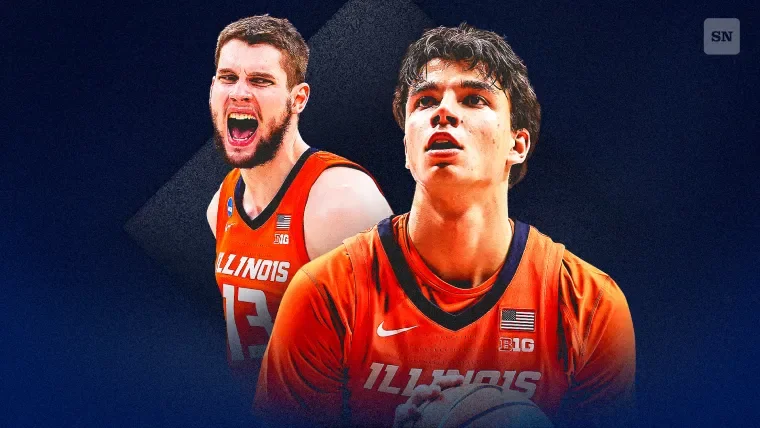
- The Fighting Illini have four prominent players with significant European development experience.
- International players bring diverse experiences and increased competition to college basketball teams.
The Rise of International Players in College Basketball
College basketball is witnessing a shift as more international players, particularly those from Europe, are making their way into American universities. The University of Illinois at Urbana-Champaign (Illinois) has emerged as a leading institution in this trend, with its coach Brad Underwood focusing on recruiting players who have developed their skills in European club systems.
Coach Underwood’s Emphasis on Rebounding
Underwood’s philosophy is rooted in his understanding of the game from his time coaching at the high-major level and his own experiences playing abroad. He stresses offensive rebounding as a key to improving efficiency, often shouting “get opposite” during games. This term refers to positioning oneself strategically based on where the shot will likely bounce off the rim, giving players the best chance to secure the rebound.
According to Ben Humrichous, a power forward for Illinois, this strategy is not universally understood by all international players. In one instance, Humrichous recounted how his teammate David Mirkovic from Montenegro and point guard Mihailo Petrovic from Serbia had no prior knowledge of the term but followed their teammates’ lead.
Illinois’ Strong European Presence
The Fighting Illini currently have five players with notable European backgrounds, including twin brothers Tomislav and Zvonimir “Big Z” Ivisic who played for SC Derby in Montenegro. Other key international players include Andrej Stojakovic, the son of former NBA star Peja Stojakovic, and Mihailo Petrovic.
Underwood’s strategy has not only attracted these top talents but also helped him secure the nickname “Bradimir.” He has even gone as far as selling T-shirts depicting his European-themed look. The presence of international players is now seen as a significant advantage, fitting well with the diverse composition of the University of Illinois.
Benefits and Challenges
The recruitment of international players offers several benefits for college basketball programs. These players often have extensive experience playing against older opponents in Europe, providing valuable competition. Additionally, they are seen more frequently by NBA scouts due to their involvement in European club competitions.
However, the process is not without challenges; it can be difficult and costly for prospects to leave their clubs, though financial compensation now available through NIL (Name, Image, and Likeness) allows them greater flexibility.
Underwood explained that his program’s focus on Europe fits well with the university’s diverse student body. He highlighted several advantages of recruiting from Eastern Europe: players are fundamentally sound, well-coached since a young age, and have great passion for the game. The financial opportunities now available through NIL payments further enhance the attractiveness of college basketball to these prospects.
Impact on College Basketball
The impact of international player recruitment is significant. In the past decade, only two players from European club systems were named consensus All-Americans, but with the rise in financial compensation and educational benefits, more such talents are now considering NCAA programs. This shift could potentially revolutionize American college basketball, providing teams with a wealth of experienced and skilled players.
Coach Underwood’s approach has already yielded positive results for Illinois, as evidenced by their 4-0 start to the season and victories against strong opponents like Texas Tech.
The team’s strategy is not just about individual talent but also about building a cohesive group that can compete at the highest levels of college basketball.
The future of college basketball may well be shaped by this international influx, with more players gaining valuable experience in both American and European systems before making their professional debuts. As Illinois continues to lead the way, other programs are likely to follow suit, creating a new era for collegiate athletics.