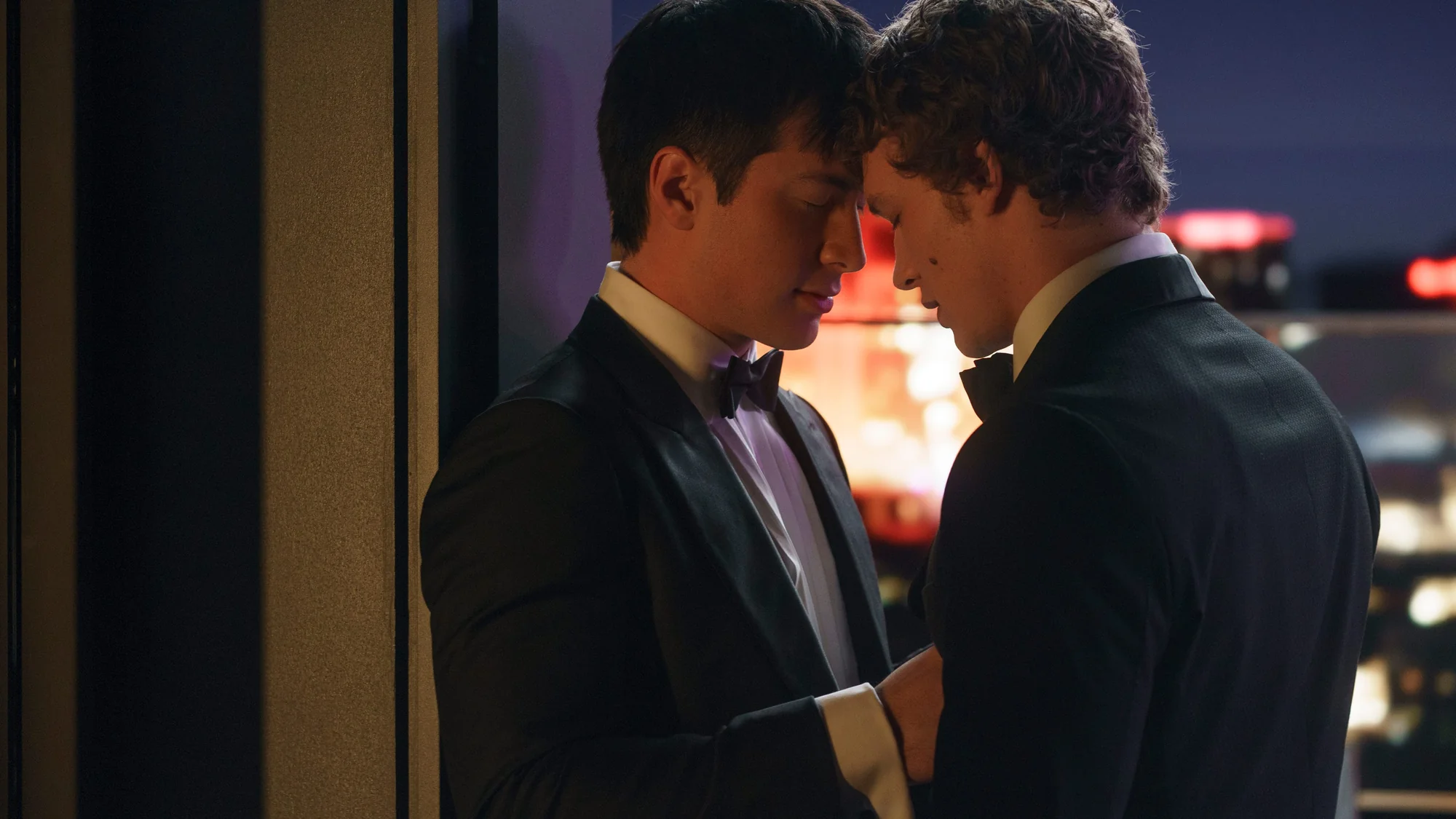
- The ambiguous sexuality of lead actors in “Heated Rivalry” has reignited a debate about who gets to play gay roles in Hollywood.
- Some argue that gay actors should play queer characters for more authentic performances, while others believe any actor can convincingly portray any character regardless of their own sexual orientation.
- The discussion highlights the lack of representation and opportunities for openly gay actors in Hollywood.
- “Heated Rivalry” and similar shows face scrutiny over non-queer actors playing queer roles despite critical acclaim.
Heated Rivalry: A Sporting Drama with a Twist
The Canadian ice hockey drama “Heated Rivalry,” starring Hudson Williams as Shane Hollander and Connor Storrie as Ilya Rozanov, has sparked a heated debate about representation in Hollywood. The show’s ambiguous sexuality and steamy romances have drawn attention to the broader issue of who gets to be gay on screen.
The Appeal and Controversy
One can see why “Heated Rivalry” has been plastered all over social media feeds. The chemistry between Williams and Storrie, their smooth skin, sharp jawlines, and sculpted abs make for compelling on-screen partners. However, the show’s viral clips of titillating scenes have also reignited an online debate about who gets to play gay roles in Hollywood.
The Debate: Open Queerness vs. Privacy
Both lead actors faced pushback online for choosing not to disclose their sexualities. One corner of the internet defends their right to privacy, while others see this as another instance of non-queer actors profiting off the LGBTQ+ community. The argument is complex and has been ongoing for decades.
The Nuanced View on Queerness in Media
Some argue that gay actors should play queer characters because their lived experiences can inform authentic performances. Others counter that any actor capable of convincingly portraying a character, regardless of their own sexual orientation, should be given the opportunity to do so.
The debate also touches on the idea that there might be something inherently different or unknowable about queer love. However, at its core, queer love is no different from any other kind of love. A more valid argument is found in those who recognize the lack of gay representation in Hollywood and see these roles as opportunities to increase visibility for openly gay actors.
Queer Actors vs. Non-Queer Actors
Despite outward support for queerness, Hollywood isn’t always a safe or equitable space for queer actors. A storied history of queer actors hiding their sexuality to protect their career options and marketability exists. Many presumably cis, straight actors have played gay roles with acclaim, such as Timothée Chalamet, Paul Mescal, Jake Gyllenhaal, Matt Damon, and others.
However, these non-queer actors receive the same praise for their performances, while openly queer actors are seldom given the same opportunities. This discrepancy is particularly evident in awards and accolades, where queer roles often go unacknowledged or underappreciated.
Ambiguity as a Marketable Trait
Interestingly, if the two actors were openly queer, “Heated Rivalry” might not have gotten the same fan response. The ambiguity is marketable, but how can we get more representation with this don’t-ask-don’t-tell ethos? Actors of “Heated Rivalry” or any other queer media don’t owe us their sexuality.
Expecting them to come out before they’re ready puts undue pressure on two young actors. No one should be forced to explain a very personal part of themselves to the world, nor should they have to reveal their sexualities to gain recognition in an industry that often discriminates against openly queer talent.
The Larger Issues
This debate is much larger than one show can solve. The ambiguity and don’t-ask-don’t-tell ethos are deeply rooted in societal expectations of masculinity and our myopic view of sexuality, issues that go beyond a single production.
In 2025, with the fluidity of gender identities and the acceptance of more diverse sexual orientations, depictions of queerness will continue to be scrutinized as long as openly queer actors face discrimination in Hollywood. Art and storytelling are inherently political, reflecting our society’s values and norms.
As Jacob Tierney, creator of “Heated Rivalry,” pointed out, it’s against the law to ask about an actor’s sexuality during the hiring process.
However, preferring actors with certain experiences for certain roles is a common practice in Hollywood. Shows like “Pose” have shown that giving queer roles to queer actors is possible but not profitable.
The ambiguity of “Heated Rivalry’s” lead actors might be marketable, but it also highlights the larger issues within the entertainment industry. The debate over who gets to play gay roles in Hollywood will continue until more equitable representation and opportunities are available for openly queer actors.