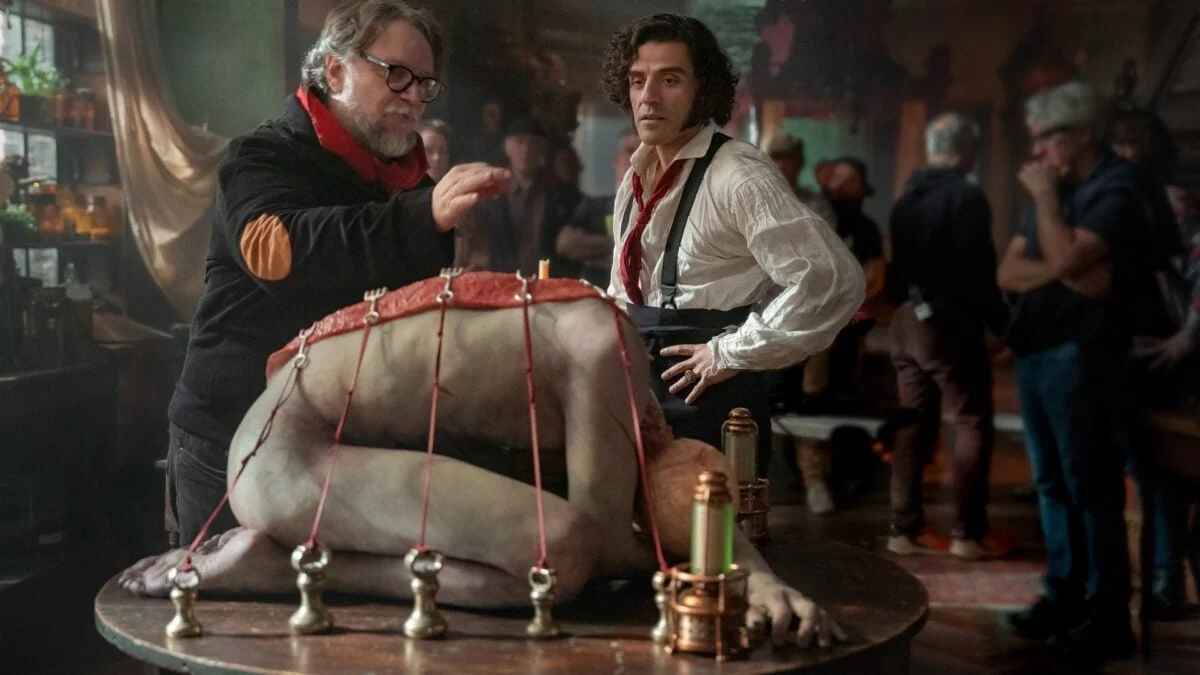
Reclaiming Cultural Identity: A Film for Latinx Audiences
The filmmakers aimed to reclaim their cultural identity through Victor Frankenstein’s character. Del Toro explained, “Those moments for me are things that you determine only from a Latin culture. The swarthy Catholicism of the film.
But I think the sort of pageantry of Catholicism, which verges on the operatic, you know, the intensity of emotions.” This perspective was further emphasized by Isaac’s experience as an immigrant, who has often felt like an outsider due to his career and background. “That kind of fed into this kind of myopic view of, like, excellence. The only way I can succeed is by being excellent and better than everyone else at this thing,” said Isaac.
Using Cinematic References: A Nod to Mexican Cinema
To inspire Isaac’s portrayal of Victor Frankenstein, del Toro showed him the 1949 Mexican film La Oveja Negra (The Black Sheep), starring Pedro Infante. This choice was deliberate and symbolic, drawing parallels between Infante’s iconic presence and Victor’s character. As Isaac described it, “We used that one moment when Jacob comes back to ask for a bride,” and continued, “and I just kind of walked by him and pushed him away. That was a little nod.”
Recreating the Frankenstein Experience: A Blend of Cultures
The filmmakers aimed to create a unique blend of cultures in their adaptation. Del Toro elaborated on his intentions, saying, “The Victor that I really believe would be a fresh Victor is a Victor that had swagger and sensuality and flair.” This vision was further realized through the use of telenovela-like techniques, such as characters walking away to process emotions before reacting dramatically.
In one particular scene, del Toro gave Isaac specific directions: “It was like you have to walk from his left shoulder past him and then you stop and you turn back,” recalled Isaac. Del Toro interjected, “It’s like a telenovela.” This approach added an authentic flavor to the film, resonating with Latin American storytelling traditions.
Both filmmakers agreed that their cultural background played a significant role in shaping the final product: “When people say, ‘What’s Mexican about your movies?’ I say, ‘Me.
Yeah,” del Toro laughed, celebrating how his culture permeates his creations. “What else do you want? I think you cannot deny what you are, who you are.”
Frankenstein is now in theaters and will be released on Netflix on November 7, 2023.