Key Highlights
- Guillermo del Toro directed “Frankenstein,” a film for Netflix that revisits the classic gothic tale.
- The director spent over 50 years developing his vision of Victor Frankenstein and his monster.
- Del Toro emphasizes the philosophical questions raised by the story, relating them to current-day concerns.
- “Frankenstein” premiered in theaters on November 7, 2025, with streaming available on Netflix from the same date.
The Philosopher’s Stone of Gothic Horror
Director Guillermo del Toro, known for his rich and imaginative films such as “Pan’s Labyrinth” and “The Shape of Water,” has once again ventured into the realms of gothic horror with his latest project, “Frankenstein.” A NBC News Sunday Morning piece reveals that this adaptation, produced for Netflix, is a testament to del Toro’s lifelong fascination with the narrative. The film, which premiered in theaters on November 7, 2025, and became available on Netflix from the same date, marks a significant milestone in the director’s career.
Del Toro’s Obsession
“Frankenstein” is more than just a reimagining for del Toro; it’s a labor of love that spanned over 50 years. As he explains, “I gave it over 50 years of my life,” underscoring the depth and significance of his dedication to this project. The film not only serves as a cinematic exploration but also a personal journey for del Toro.
Philosophical Musings
In an interview with CBS News, del Toro reflects on why “Frankenstein” endures. He attributes its longevity to the fact that it was written by a teenager full of questions and rage, which resonate with contemporary concerns: “What are we? Why am I human? Why am I here?” These philosophical inquiries form the heart of del Toro’s adaptation, making “Frankenstein” a poignant reflection on humanity’s quest for understanding.
The Creative Process
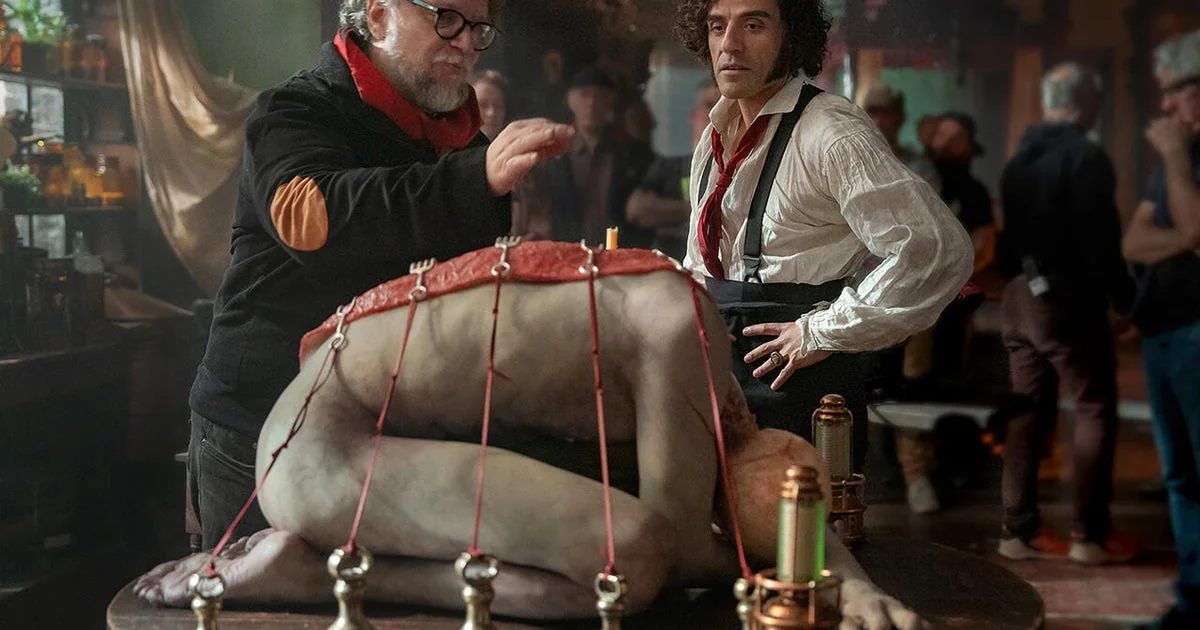
Del Toro meticulously crafted every aspect of his vision, from wardrobe and props to extensive notes that he spent years writing. The director even has a dedicated room in his house called “Frankenstein Hall,” where he spends time designing and investigating the characters. This commitment is evident in the film’s intricate details, which del Toro describes as “the most extensive, minute, anatomical putting together of the monster in the history of cinema.”
Bringing Life to the Creature
The cast of “Frankenstein” includes Oscar Isaac in the role of Victor Frankenstein and Jacob Elordi as the Creature. Both actors were selected based on their eyes, with del Toro noting that Isaac’s eyes had “brilliance, madness, seduction and pain” while Elordi’s displayed an “innocence and purity.” The creature’s design was also a focal point for del Toro, who insisted it be newly minted rather than looking like a repair job in an ICU. He emphasized the importance of beauty and sexiness, reflecting his Catholic upbringing, as evidenced by his grandmother’s influence on some of the imagery.
Reflections on Monsters
Del Toro views monsters not merely as scary entities but as patron saints of imperfection, telling audiences that it’s okay to be you. This sentiment is echoed in his work, where he often explores themes of acceptance and individuality. As del Toro puts it, “We are all creatures,” suggesting a universal connection through the monster’s narrative.
Legacy and Impact
The enduring relevance of “Frankenstein” lies not just in its historical significance but also in its ability to provoke thought and inspire new generations. Del Toro’s adaptation is part of a long tradition that includes Boris Karloff’s 1931 portrayal, which has become an indelible part of cinematic history. By revisiting this classic tale, del Toro ensures that the narrative continues to resonate with modern audiences.
As the film industry celebrates its creativity and innovation, “Frankenstein” stands as a testament to the enduring power of storytelling. Del Toro’s vision is not only a tribute to Mary Shelley but also a reminder of how timeless questions about humanity can be explored through the medium of cinema.