Key Highlights
- Senate resumed talks to end the 30-day government shutdown.
- Republican leaders object to Democratic measures and call for a vote on the House-passed continuing resolution.
- SNAP funding is set to lapse, impacting millions of Americans.
- Speaker Johnson expresses concern over shutdown’s impact and upcoming elections.
Government Shutdown Resumes: Senate Talks Continue Amid Political Standoff
The U.S. Senate resumed critical talks on Thursday as the government shutdown entered its 30th day, with senators returning to Capitol Hill to negotiate a resolution. Despite ongoing efforts, significant challenges persist, particularly regarding how and when to reopen key federal services.
Senate Majority Leader John Thune Sees Progress
Senate Majority Leader John Thune told CNBC that “a lot more conversations” are happening between rank-and-file members, suggesting a shift in the political climate. Thune emphasized the need for the government to reopen first before addressing full-year funding measures, stating, “Unfortunately, doing all that is going to take a while. So we’ve got to reopen the government, then we’ll have a normal appropriations process.” This approach aligns with previous statements from Republican leaders who prioritize immediate government operations over long-term budgetary discussions.
SNAP Funding at Risk: Impact on Low-Income Households
The prolonged shutdown is not only disrupting federal services but also posing significant challenges to millions of low-income Americans. The U.S. Department of Agriculture announced that SNAP (Supplemental Nutrition Assistance Program) funding will lapse on November 1, leaving beneficiaries uncertain about their ability to access food assistance.
SNAP recipients receive an average of $187 per month and are concerned about the potential loss of this vital lifeline. Experts warn of increased hardship for families relying solely or primarily on these benefits.
Speaker Johnson’s Concerns Over Shutdown’s Impact
House Speaker Mike Johnson emphasized the urgency of reopening government services, citing the detrimental effects on federal employees and essential programs like SNAP. He expressed deep concern over the potential suspension of SNAP funding, stating that “starting on Saturday, let me give you a list of things that this means for the American people: it means that tens of millions of American families will struggle to keep food on the table.” Johnson’s comments underscore the wide-reaching implications of the shutdown and reflect increasing pressure on Democratic leadership to act.
Democrats’ Persistent Stance
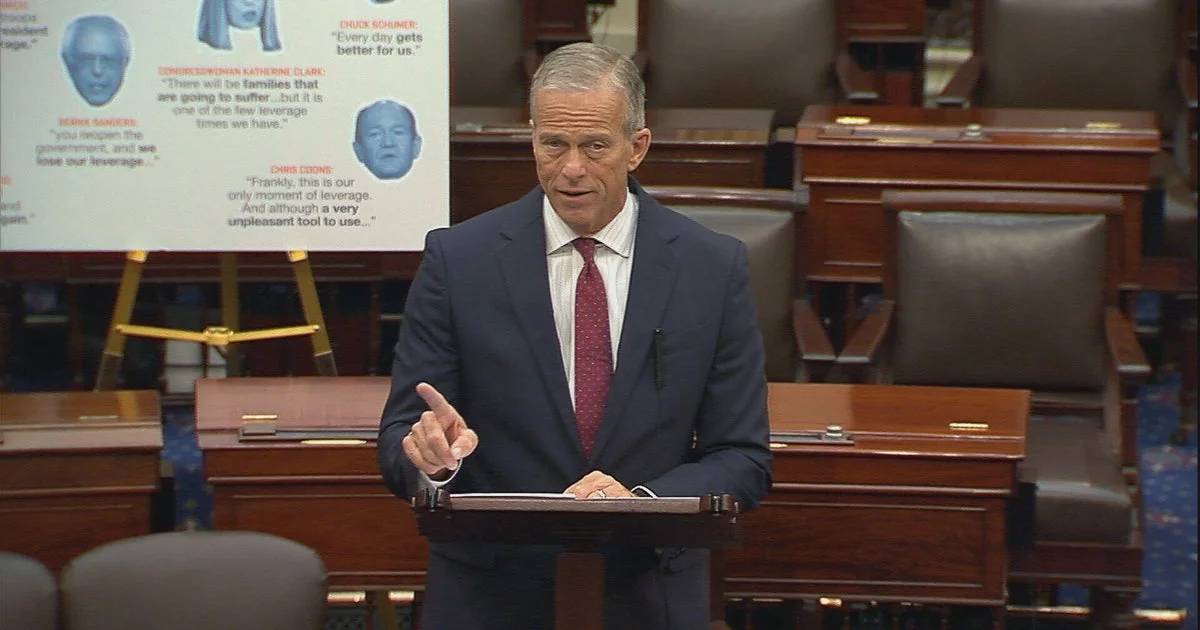
Democratic senators remain resolute in their efforts, with Senator Chris Coons proposing a measure to pay members of the armed forces. However, this request was blocked by Senate Majority Leader Mitch McConnell, who argued that “government shutdowns have real consequences” and that Democrats should “turn government funding back on and pass full-year appropriations.” This disagreement highlights the deep partisan divide and complicates efforts towards a bipartisan solution.
The situation remains fluid as senators weigh their options. While some express cautious optimism about progress, others like Senator Kevin Cramer remain critical of Democratic positions.
As the election cycle looms next week, political dynamics may shift, providing new opportunities for compromise or further deadlock. The coming days will be crucial in determining whether a resolution can be reached to end this prolonged government shutdown.