Key Highlights
- Senate Republicans plan a vote on Friday to advance the House-passed continuing resolution with the goal of amending it to include long-term appropriations bills and an extension of government funding beyond Nov. 21.
- The vote would need 60 votes to succeed, but the Senate has failed to clear this bar for the last 37 days.
- Republicans discussed adopting a limited change to the Senate’s filibuster rules to make it easier to reopen the government without Democratic votes, though such a change is unlikely to be adopted.
- Senate Majority Leader John Thune expressed uncertainty about whether enough Democrats would support the vote.
Government Shutdown Continues: Key Vote Looms on Friday
The ongoing government shutdown in the United States has entered its 38th day, with the Senate GOP eyeing a crucial vote scheduled for Friday to advance the House-passed continuing resolution. This move aims to incorporate long-term appropriations bills and extend funding beyond November 21, hoping to peel off enough moderate Democrats to end the stalemate.
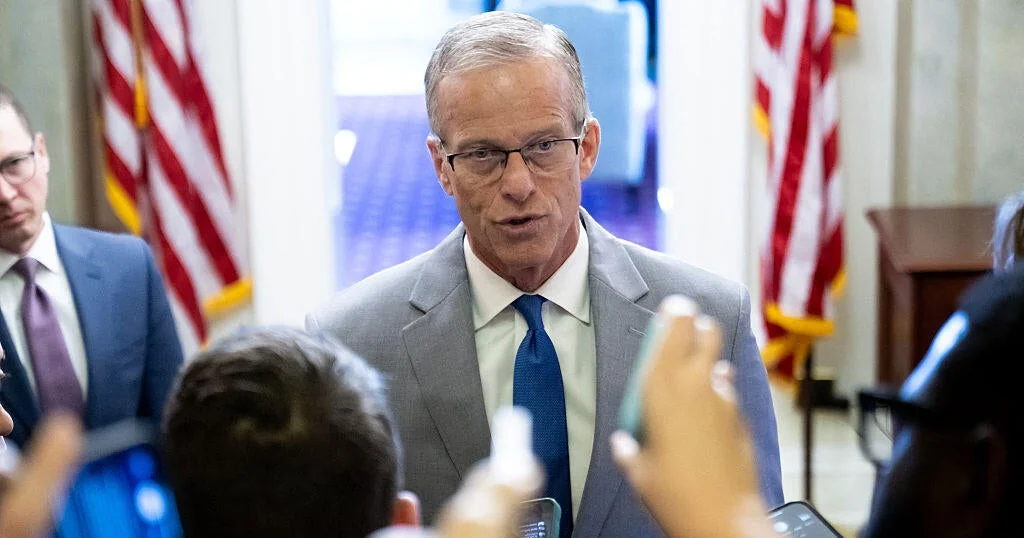
According to sources familiar with the matter, the Senate Republicans are planning this vote in a bid to secure the necessary support from at least 60 senators. However, the Senate has failed to reach this threshold for the past 37 days, making Friday’s potential success uncertain. Senate Majority Leader John Thune acknowledged the challenge during a press conference, stating, “My hopes and expectations are always that we’re going to have enough Democrats to actually proceed, but I don’t know, we’ll see.”
Republican Filibuster Strategy
In an attempt to streamline the process, Senate Republicans considered adopting a limited change to the Senate’s filibuster rules. This would lower the threshold for funding the government during a shutdown from 60 votes to a simple majority of 51, but only if the vehicle is a “clean” continuing resolution without any additional strings attached.
While this strategy could potentially reduce the need for 60 votes, Republican sources expressed doubt that it would be adopted. Former Senate Democratic leader Harry Reid previously amended the filibuster rule in 2013 to allow executive and most judicial branch nominees to be confirmed by a simple majority. However, the current rule has not been widely altered since then.
Health Care Subsidies and Bipartisan Tensions
The approach planned for Friday does not address the expiring health care subsidies under the Affordable Care Act, an omission that has prompted disagreements within the Democratic caucus. Most Democrats want a tangible policy, not just the promise of a vote. As Senator Tim Kaine noted, “That is something that’s being discussed. I don’t have any commitments.” Despite these challenges, there may be a few moderate Democrats who decide that the promise of a vote on extending health care subsidies is enough to end the shutdown.
Democrats’ Stance and Future Negotiations
Senate Democrats emerged from a two-hour meeting remaining tight-lipped about their approach. Senate Minority Leader Chuck Schumer called it “a very good, productive meeting,” while Senator Lisa Blunt Rochester expressed optimism. However, moderate Democrats who have been part of bipartisan discussions appear to be waning in enthusiasm.
House Speaker Mike Johnson emphasized the importance of a vote on extending health care tax credits, stating that he would not commit to holding such a vote in the lower chamber without seeing progress in negotiations.
He expressed frustration with Senate Democrats, saying, “We need to be transparent, open, we need to do it through the process.” The shutdown continues to impact federal workers and air traffic control operations, highlighting the urgency of reaching a resolution.
As the nation awaits Friday’s vote, the ongoing negotiations underscore the complex challenges facing Congress in resolving the government funding impasse. The outcome will have far-reaching implications for both political parties and the American public affected by the shutdown.