Key Highlights
- The 2026 Toyota RAV4 has been made exclusively hybrid, aligning with global trends towards electric and hybrid technologies.
- While the move to a hybrid-only lineup is seen as a strategic business decision by Toyota, improvements in driving pleasure and interior quality are lacking according to critics.
- The new RAV4 offers better fuel efficiency and smoother transitions between power sources compared to its predecessor but still faces criticism over engine noise and cabin materials.
- Despite being the bestselling SUV, the RAV4’s hybrid-only status might not be enough to compete against segment leaders in terms of driving experience and overall value for money.
The Hybrid Revolution at Toyota
The 2026 Toyota RAV4 marks a significant shift by becoming the first major SUV model from the automaker to offer only hybrid and plug-in hybrid versions. This decision reflects the broader automotive industry’s push towards electrification, driven by environmental concerns and government regulations.
Performance Enhancements
The new RAV4 Hybrid brings several improvements over its predecessor. The powertrain now includes a front-wheel-drive setup for the FWD model, providing 226 horsepower. For the all-wheel-drive variant, this figure rises to 236 horsepower.
These changes aim to enhance performance and efficiency while maintaining Toyota’s commitment to hybrid technology.
The hybrid transaxle and electric motors have been redesigned, leading to smoother transitions between gasoline and electric power sources. Preliminary fuel economy figures indicate a significant improvement with the FWD model achieving up to 44 miles per gallon combined. In real-world testing, our AWD RAV4 Limited managed an impressive 36 miles per gallon on a highway loop at 75 mph.
Interior and Exterior Design
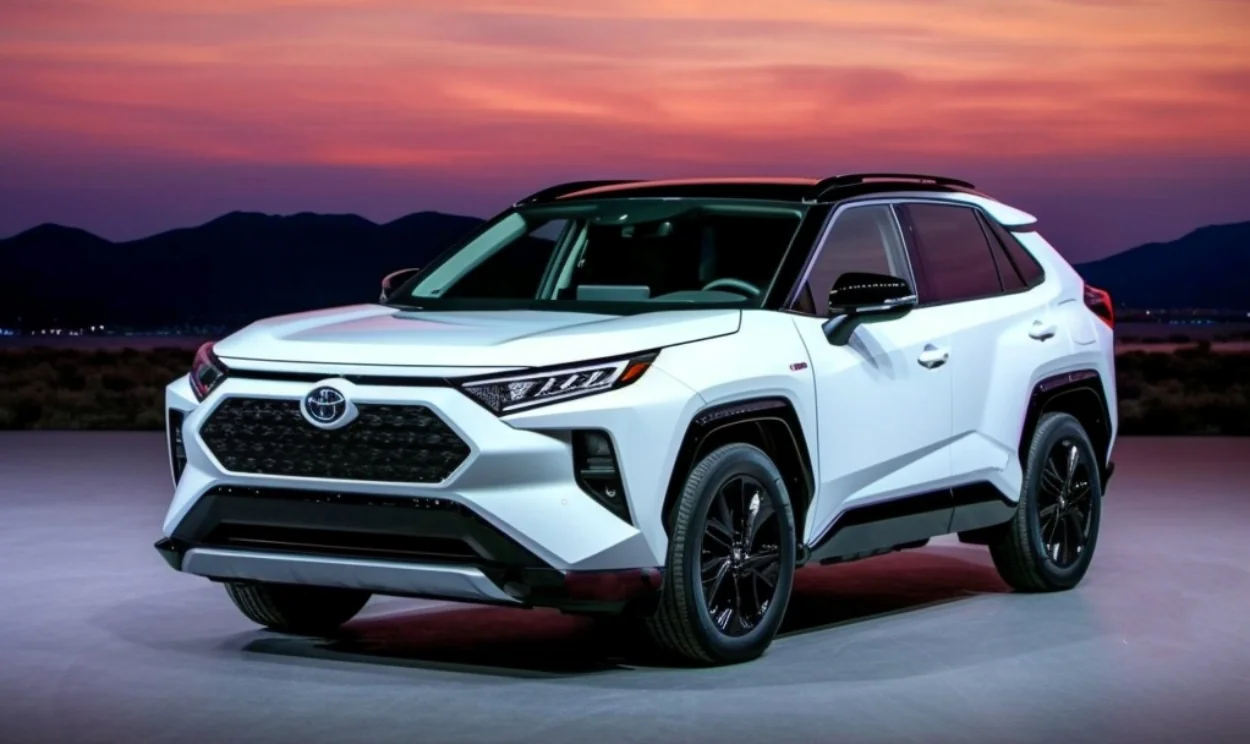
The exterior of the new RAV4 presents a more aggressive and robust appearance with various style options. However, the interior has been criticized for its utilitarian design, featuring a liberal use of hard plastic materials that lack padding in critical areas such as the center-console armrest.
Toyota’s decision to make the RAV4 exclusively hybrid is seen as a strategic move to capitalize on growing consumer interest in eco-friendly vehicles. However, the current model falls short in terms of driving pleasure and interior quality compared to its competitors.
The cabin feels less refined than expected, with noticeable vibrations from the engine during hard acceleration.
While the RAV4 Limited trim offers a 12.9-inch touchscreen display, it is marred by cheap-looking plastics on the dash and door panels. Fit-and-finish issues were observed in pre-production test cars, highlighting areas where Toyota could improve to meet consumer expectations.
Conclusion
A Step Forward but Room for Improvement
The 2026 Toyota RAV4’s hybrid-only status represents a significant step towards a more sustainable future. However, it is clear that further advancements are needed in driving experience and interior quality to truly stand out in the competitive SUV market.
As the automotive industry continues its transition towards electrification, companies like Toyota must balance their commitment to innovation with customer satisfaction. The RAV4’s success will depend not only on its technological features but also on how well it addresses the shortcomings highlighted by early reviews and consumer feedback.
The future of the RAV4 lies in its ability to adapt and improve while staying true to its core strengths in reliability and hybrid technology. Whether this new generation can deliver on those promises remains to be seen, as Toyota faces increasing pressure from both consumers and regulators to meet higher environmental standards.