Key Highlights
- Turkey faces significant economic challenges due to regional instability and rising oil prices.
- Inflation is expected to rise despite high interest rates, driven by food price volatility and inadequate water management.
- There’s a brewing debate over lowering interest rates amid high inflation and global geopolitical tensions.
- Turkey’s foreign trade deficit has increased, adding pressure on the Turkish Lira.
- The Halkbank case adds political risk to Turkey’s financial stability.
Regional Instability and Economic Turmoil
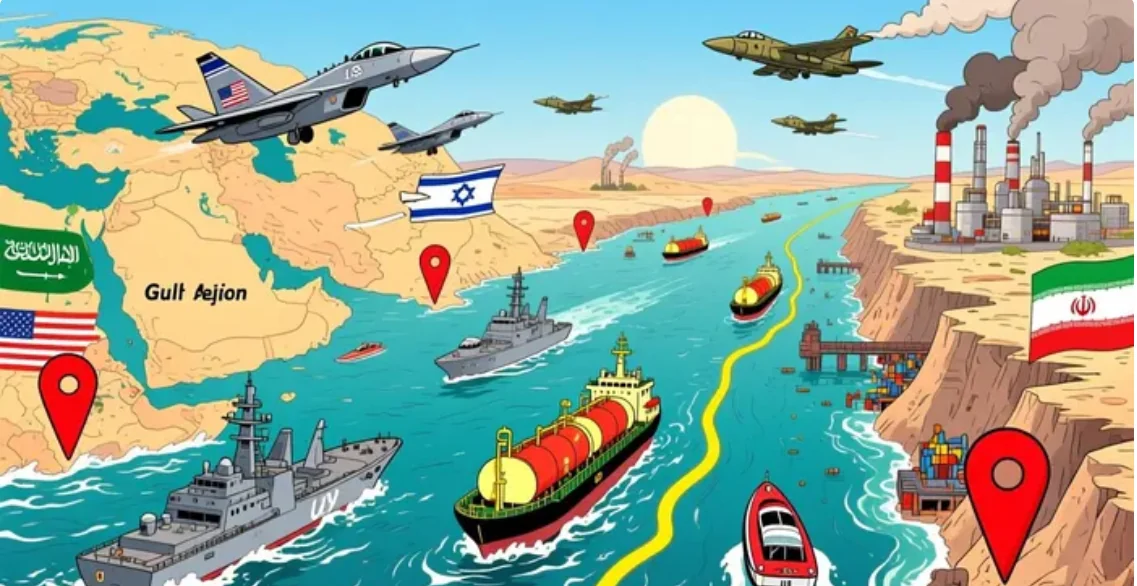
The Middle East is on edge, with rising tensions between Iran, the United States, and Israel. For Turkey, this translates into significant economic challenges. Journalist Erdal Sağlam highlights that these geopolitical shifts have already pushed Brent crude prices past $72 per barrel. With Turkey being a heavy energy importer, any disruption in oil supply could spell disaster for its economy.
Energy Prices and the Turkish Lira
If a full-scale conflict were to disrupt the Strait of Hormuz, oil prices could surge dramatically. This scenario would place immense pressure on the Turkish Lira, exacerbating the cost-of-living crisis. The Central Bank’s prior projections are now looking increasingly optimistic as inflation figures suggest otherwise.
High Inflation and Structural Issues
The inflation outlook in Turkey is bleak. February data points to a potential 3% to 3.4% monthly increase, driven by food price volatility and fuel hikes. These aren’t just seasonal effects; they’re compounded by structural issues such as inadequate water management leading to floods and droughts.
Interest Rate Debates
A central theme in the analysis is the debate over interest rate cuts. Despite high inflation figures, there’s political pressure on the Central Bank to lower rates for economic stimulation. Bank managers, who previously argued against such cuts, are now signaling expectations for a reduction by up to 1 percentage point. This raises alarm bells among economists as cutting rates in an environment of high inflation is seen as reckless and indicative of surrendering the fight against inflation.
Foreign Trade Deficit and Banking Risks
The foreign trade deficit has increased, with January figures showing a 11% rise. The Ministry of Trade dismisses this as temporary but analysts like Erdal Sağlam are skeptical. He points to structural challenges in global trade, including shifting logistics and competition from India, contributing to the deficit.
Halkbank Case Adds Political Risk
The Halkbank case in the US is another layer of complexity for Turkey’s financial stability. A hearing scheduled for March 3rd adds a political dimension as it coincides with Turkey’s diplomatic stance regarding Iran. Zeynep Gürcanlı, a diplomatic analyst, suggests that the US may be applying pressure due to Turkey’s reluctance to support strikes against Iran.
This case underscores the intertwined nature of economic and political risks.
Overall, Turkey’s economy is facing multiple headwinds. The geopolitical landscape, coupled with structural issues at home, makes for a volatile environment. As the Central Bank navigates this complex terrain, the stakes are high, both economically and politically.