Key Highlights
- Chinese Vice-Premier He Lifeng invited world leaders to embrace Chinese-made renewable energy technologies.
- China signaled its intent to lead the global transition from fossil fuels to renewables amid U.S. retreat on climate policy.
- China’s state-backed overseas investment program has poured billions into developing countries for renewable projects.
- The U.S. under President Trump had withdrawn from key international climate agreements and promoted “green energy scam” rhetoric.
Chinese Climate Leadership in the Global Arena
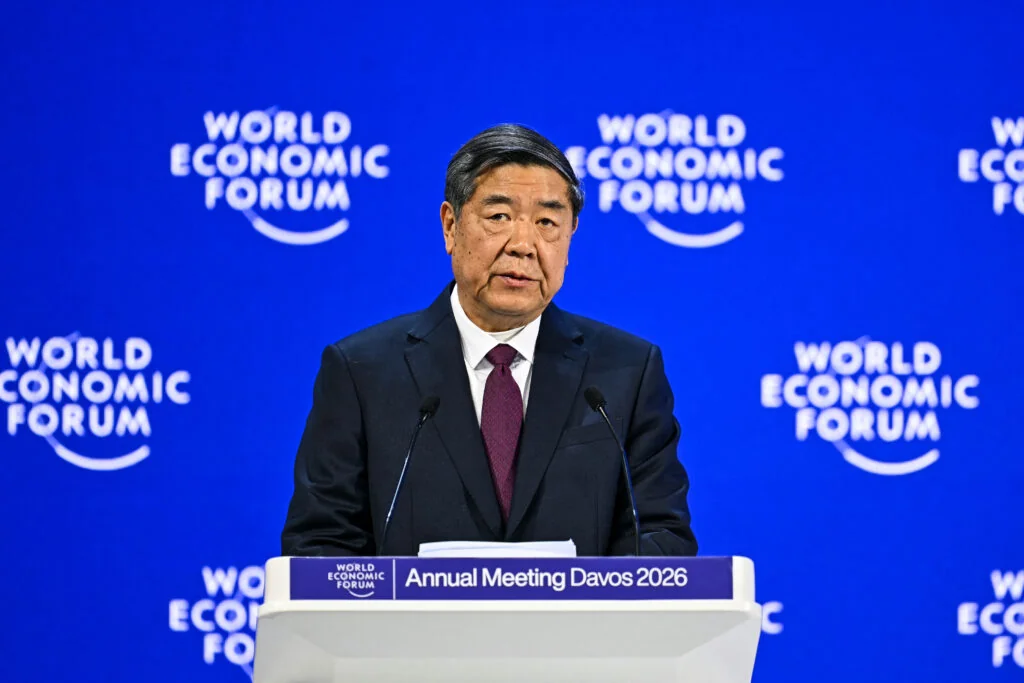
At the World Economic Forum (WEF) annual meeting in Davos, Switzerland, Chinese Vice-Premier He Lifeng delivered a powerful message to world leaders: embrace China’s renewable energy technologies. The timing of this statement is significant as it comes at a pivotal moment when the United States has withdrawn from key climate policy commitments.
He Lifeng’s speech was a stark contrast to the U.S.’s previous stance, where President Donald Trump had previously denounced “green energy scams” and pulled out of critical international agreements. This shift in global leadership has created an opportunity for China to step into the void left by Western nations’ retreat from climate policy.
Economic Benefits Drive Chinese Renewable Energy Strategy
The push for renewable energy is not just about environmental sustainability; it also represents substantial economic benefits for China. The country, which accounts for a third of global greenhouse gas emissions and imports vast amounts of oil, sees the shift to low-carbon power as an opportunity to enhance its manufacturing sector.
China’s state-backed overseas investment program has already invested hundreds of billions of dollars in renewable energy projects across developing countries. These investments have surpassed those in fossil fuels for the first time since the 2000s, according to Inside Climate News. This move not only aligns with China’s economic interests but also positions it as a global leader in green technology and infrastructure.
Global Shift and Diplomatic Implications
The shift towards renewable energy is increasingly driven by economic forces rather than diplomatic discourse at international forums, according to Li Shuo from the Asia Society Policy Institute. “It’s becoming less about what governments say and more about which companies are putting electric vehicles on the road and solar panels on rooftops,” he noted.
As developing countries expand their energy appetites, China is keen to direct them towards its renewable technologies rather than traditional fossil fuel markets dominated by Western powers. This strategy not only advances China’s economic interests but also solidifies its role as a global leader in the green economy.
Filling the Void Left by the U.S.
The United States, under Trump’s presidency, had abandoned key climate policies and agreements, leaving a significant void in global climate leadership. As China steps into this space, it is working to “fully and effectively implement” these international agreements, as stated by He Lifeng at Davos.
This move has implications beyond just climate policy; it signals a broader shift in the geopolitical landscape. The ability of China to leverage its economic power for political gain on issues like renewable energy will continue to shape global relations in the coming years.