Key Highlights
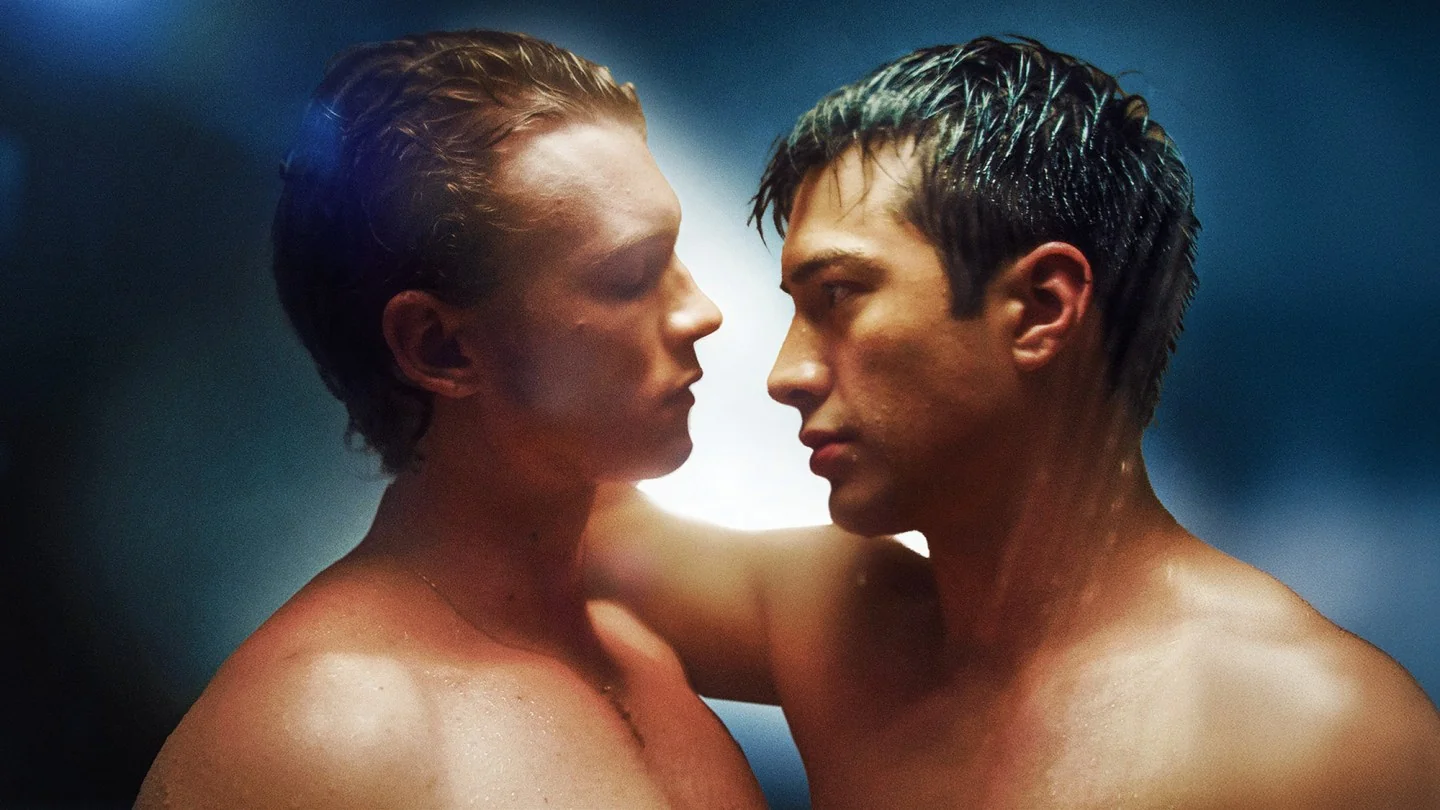
- Heated Rivalry, a Canadian series with explicit male-on-male sex scenes, has become one of the biggest hits on streaming platforms.
- The show’s success is largely attributed to its female audience, who have been long waiting for content that resonates with their experiences and desires.
- Author Rachel Reid wrote the book series on which the show is based, addressing themes of homophobia in hockey culture and the struggles of closeted players.
- Director Jacob Tierney turned Reid’s books into a TV adaptation, leveraging his own love for the genre to bring it to mainstream audiences.
- The show’s success has sparked debates among its male viewers regarding the authenticity and representation in gay romance content.
A New Wave in LGBTQ+ Content
Thursday nights at the Poliquin household in Vancouver, British Columbia, are set aside for appointment viewing. That’s when new episodes of Heated Rivalry — the steamy gay hockey drama that has everyone buzzing — drop on premium streamer Crave in Canada and HBO Max in the U.S.
Not everyone joins in on the fun. The family’s two children, 11 and 13, are dispatched to their rooms.
Matt, the dad, wanders off to the kitchen. It’s just Joy, a 45-year-old mom, who’s planted on the couch, eagerly awaiting every horny hookup between the show’s hunky protagonists: Russian Ilya Rozanov (played by Texas-born Connor Storrie, 25), star center of the fictional Boston Raiders, and Shane Hollander (Canadian actor Hudson Williams, 24), team captain of the also-fictional Montreal Metros.
Breaking Down Barriers
Rachel Reid, an author from Halifax, Nova Scotia, has been a hockey fan for most of her life. But some aspects of the sport’s culture made her feel “sad and angry,” she says. “One of the big ones is homophobia. I kept thinking about how difficult it would be to be a closeted NHL player.
I wanted to write a book where a player did come out and found happiness and love.”
The result was Game Changer, the first book in what would quickly become a series. The debut novel features neither Ilya nor Shane — its characters are Scott, a pro hockey player, and Kip, a barista and grad student (they’re introduced in the show’s third episode). More books followed, including Common Goal, a May-December matchup between a retired goalie and a college student that Tierney affectionately refers to as “Call Me By Your Twink.” The books were best-sellers for Harlequin well before Tierney turned Heated Rivalry, Reid’s 2019 installment, into a TV show, having sold 650,000 copies.
The Making of a Hit
A scraggly 46-year-old former child actor (he lived in L.A. as a kid and shared an agent with Ryan Phillippe, occasionally booking roles on shows like Touched by an Angel), the Montrealer in the horn-rimmed glasses and the five-o’clock shadow looks like a tortured screenwriter, not a wine mom. Heated Rivalry was not shoved into Tierney’s hands by a pushy producer. He was turned onto Reid’s books during the pandemic and fell in love with them on his own.
“A friend said, ‘Why don’t you listen to some audiobooks?’ and Heated Rivalry was one of the first I listened to,” he says. “I was like, ‘Boy, these books are spicy.’ But it’s also funny, it’s smart — and a very compelling love story.” Tierney was working in reality TV as executive producer of The Traitors Canada when he read a Washington Post article about romance novels being a billion-dollar industry that doesn’t get taken particularly seriously. “Then it noted that hockey romances are especiallyspectacular,” he recalls. “I literally gasped.” In the article’s second paragraph, there was a mention of Heated Rivalry. Panicked that another producer might beat him to it, he reached out to Reid on Instagram.
The Female Audience and Beyond
Lucy Neville, a sex researcher and author of “Girls Who Like Boys Who Like Boys,” explains the genre’s appeal: “Women would circulate photocopied zines of their slashfic at general fan conventions. They’d sniff out the other perverts.” When the internet arrived, those stories exploded in scale. Communities formed on platforms like LiveJournal, Tumblr and Archive of Our Own, creating a vast, mostly female-driven literary universe that eventually found a foothold in mass-market publishing.
Neville points to Pornhub’s data: “For a decade now, male-male porn is the second most common choice among female viewers.
The last time I checked, approximately 46 percent of people watching man-on-man scenes were women.” Foster has published papers on the phenomenon and has found no tidy explanation. He agrees that some women feel liberated by the omission of objectified female bodies.
Controversies and Debates
The show’s success has sparked debates among its male viewers regarding the authenticity and representation in gay romance content. Jordan Firstman, who stars on HBO’s I Love LA, kicked off a firestorm of controversy when he declared in a Vulture interview that the sex in the show “is not how gay people fuck” and that the series caters to people who “want to see two straight hockey players pretending to be gay.” Firstman ended up walking back his comments on Instagram.
“We as queer people need to check our messaging,” Tierney says. “The things that we decide women can or cannot do can be really exhausting. Women are allowed to write about men.
They’re allowed to write about gay men. The question should be, how are they writing about us? Is it with empathy?
Is it with allyship? Is it with kindness?” Back at Joy’s house, at least, there is no shortage of queer allies. She has turned all of her girlfriends onto the series.
Even the NHL, which in recent years has been trying to broaden its appeal to gay sports fans with LGBTQ-themed events and nights, has expressed delight with the program. “There are so many ways to get hooked on hockey and, in the NHL’s 108-year history, this might be the most unique driver for creating new fans,” a league rep tells THR.
As for Tierney, he doesn’t have much time these days for theories — he’s barely had a moment to pop his head out of the editing bay to enjoy the show’s success. At interview time, he was still cutting episodes five and six, and soon he’ll need to start planning for an already-ordered second season.
“That will largely be based around The Long Game, which is what Shane and Ilya’s other book is called,” he says. “I’m going to put some other stuff as well from the other books to keep the fans happy, which is my pleasure.” Fans are happy, all right.