Key Highlights
- Venezuelan opposition leader María Corina Machado is working towards regime change against President Nicolás Maduro.
- The Trump administration debates what to do about the Venezuelan dictatorship and whether regime change could stabilize the country.
- Regime change can be dangerous and destabilizing, leading to unpredictable outcomes as seen in Iraq and Libya post-civil wars.
- Apostle of democracy is not a guarantee; potential scenarios include greater violence or more problems for U.S. policy in Latin America.
The Push for Regime Change Against Maduro
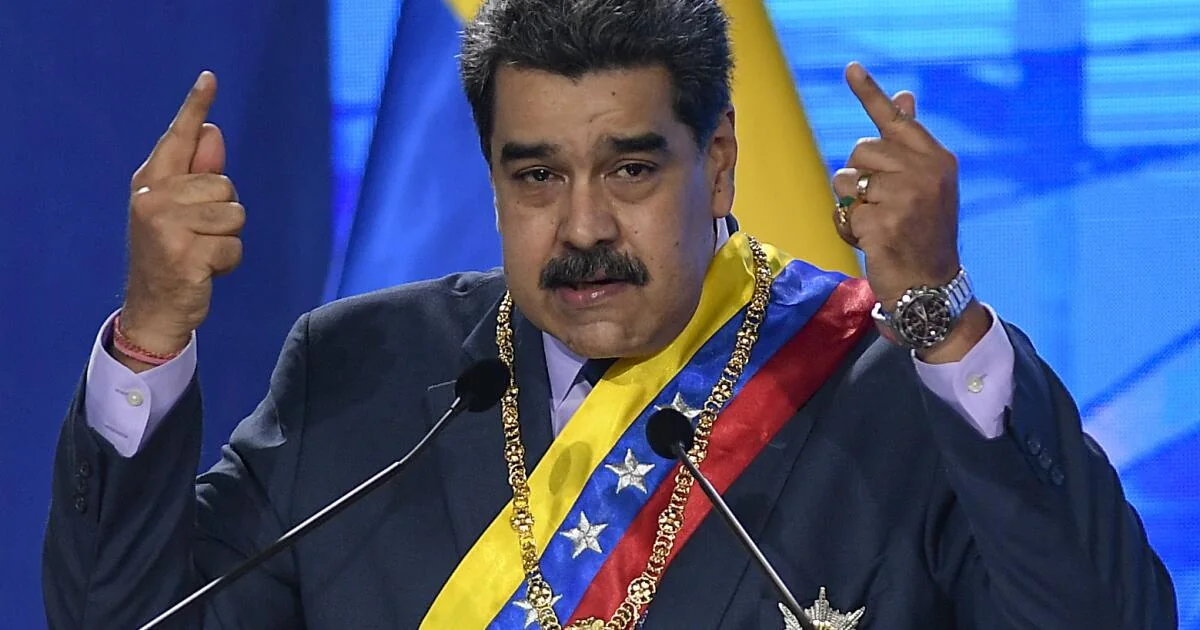
As the USS Gerald Ford aircraft carrier sails to the Caribbean, the United States continues its military operations against drug-smuggling activities off Venezuela’s coast while the Trump administration grapples with the question of how to deal with Venezuelan dictator Nicolás Maduro. One thing is certain: Venezuela and the Western Hemisphere would be better off if Maduro stepped down from power.
This sentiment is shared by Venezuelan opposition leader María Corina Machado, who has been advocating for regime change. As a Nobel Peace Prize laureate, Machado has spent considerable time in the United States lobbying policymakers to pressure Maduro into vacating his position. Her approach is tailored to resonate with the Trump administration, emphasizing that Maduro’s rule is corrupt and rests on weak foundations.
Risks of Regime Change
However, as the saying goes, if it sounds too good to be true, it probably is. While there’s no disputing that Maduro is a despot and a fraud who steals elections, U.S. policymakers cannot take Machado’s claims at face value without scrutiny.
The United States learned this lesson during the lead-up to the Iraq War when it was sold an unrealistic vision of post-war stability by opposition leader Ahmed Chalabi. The outcome is well-known: the U.S. found itself in a prolonged and costly occupation that proved more challenging than initially anticipated.
Historical Precedents
The history of regime change, as seen in Iraq and Libya, underscores the dangers involved. In Iraq, the removal of Saddam Hussein led to an uprising by Sunni-dominated military officers and loyalists from the Ba’ath Party, who found themselves out of power. The Shia majority, previously oppressed, took control, leading to a civil war that resulted in tens of thousands of deaths.
In Libya, the intervention by U.S.-NATO forces removed Moammar Kadafi’s regime but failed to create the democratic utopia many had hoped for. Instead, the country descended into conflict between tribal alliances and weak institutions, making it a hub for terrorist groups.
Challenges in Venezuela
Venezuela presents unique challenges due to its experience with democracy. While it has held relatively free and fair elections in the past, this does not guarantee success in a post-Maduro regime. The Venezuelan army’s support will be crucial but is unlikely to cooperate given their deep ties to Maduro’s regime.
Furthermore, the complete dissolution of Maduro’s regime could lead to chaos, with elements of the former government, drug trafficking organizations, and established armed groups like the Colombian National Liberation Army vying for control.
This scenario would complicate efforts to stabilize Venezuela and might result in an even greater source of drugs and migration.
In conclusion, while María Corina Machado’s vision of democracy after Maduro is possible, it is not the only outcome or the most likely one. The U.S. must proceed with caution, recognizing that regime change can be a double-edged sword with unpredictable consequences.