Key Highlights
- Mercor, a San Francisco-based startup, challenges traditional views on AI’s limitations.
- The company hires professionals to train AI in core human skills like judgment and nuance.
- Jamie Dimon of JP Morgan and Satya Nadella of Microsoft argue that EQ and critical thinking are irreplaceable by AI.
- Mercor aims to prove executives wrong by hastening the replacement of people with AI in the workforce.
The Great AI Debate
In a world increasingly dominated by automation, leaders like Jamie Dimon of JP Morgan and Satya Nadella of Microsoft have raised the alarm. They argue that emotional intelligence (EQ) and critical thinking are skills that cannot be replicated by artificial intelligence (AI). However, a Silicon Valley startup named Mercor is taking a bold stance against this perspective.
Mercor’s Challenge to Traditional Views
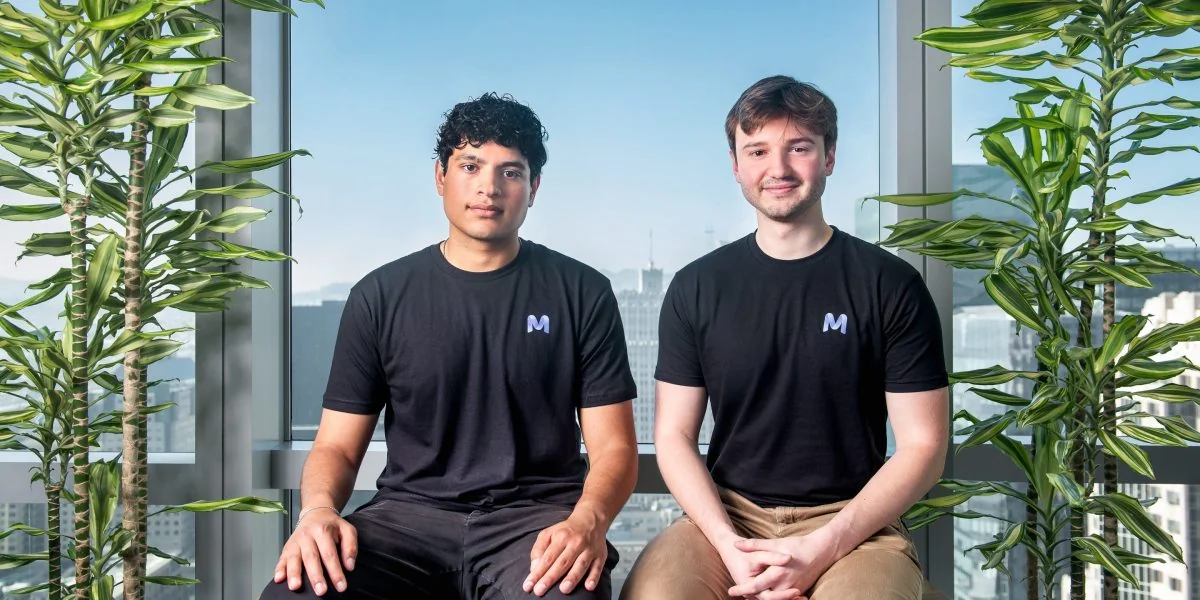
Founded by Brendan Foody, Adarsh Hiremath, and Surya Midha, Mercor is challenging the notion that human judgment and nuance are off-limits to AI. These young entrepreneurs, who were recently named the youngest self-made billionaires after their company was valued at $10 billion in November 2025, have set out to prove that AI can indeed learn these “human skills.”
According to Foody, “Everyone’s been focused on what models can do. But the real opportunity is teaching them what only humans know—judgment, nuance, and taste.” This mission reflects a significant shift in the approach to AI development.
The Mercor Model: Teaching Machines Human Skills
Mercor’s business model hinges on hiring people from diverse professional backgrounds to train its AI. The company lists job postings for individuals with expertise in fields such as investment banking, private equity analysis, linguistics, sports journalism, astronomy, and legal work. These professionals are paid competitive hourly rates ranging from $10 to $150 per hour.
The goal is clear: Mercor aims to bridge the gap between machine learning and human nuance. By having these experts evaluate AI performance through detailed rubrics, they hope to teach the technology how humans make decisions in complex scenarios.
AI Productivity Index: Assessing AI Capabilities
To validate its approach, Mercor has launched an AI Productivity Index (Apex), which benchmarks AI models on real-world knowledge across four fields: medicine, management consulting, investment banking, and law. The system uses the same rubrics and expert-generated tasks that contractors help to create.
Notably, even advanced models like GPT-5 struggled to meet the “production bar” for autonomous work. GPT-5 scored 64.2% in total, with varying scores across different categories.
This indicates that while AI has made significant strides, there is still a long way to go before it can fully replicate human judgment and nuance.
Despite these limitations, Mercor believes that models performing at 60% or better can reshape the nature of work as professionals integrate AI into their processes. Foody notes, “Perhaps a consultant can more easily complete a competitor analysis if given an initial draft from an AI.”
The Future of Work: Human vs. Machine Collaboration
As AI continues to evolve, the most human skill may no longer be doing the work but possessing the judgment required to critique it. The future of work increasingly hinges on how humans and machines can collaborate effectively.
Mercor’s innovative approach could mark a significant turning point in the debate over AI’s capabilities. By proving that AI can learn complex, human-like skills, the company aims to hasten the integration of technology into various industries, potentially transforming the workforce as we know it.
The journey ahead is fraught with challenges and uncertainties.
However, Mercor’s mission underscores a broader trend: the continuous evolution of technology and its impact on society. As the world grapples with the implications of AI, companies like Mercor are at the forefront, pushing boundaries and redefining what it means to be human in an increasingly automated world.
Join us at the Fortune Workplace Innovation Summit May 19–20, 2026, in Atlanta. The next era of workplace innovation is here—and the old playbook is being rewritten.