Key Highlights
- Australia was seen as a world leader in gun control after the 1996 Port Arthur massacre.
- The recent Bondi Beach attack has rekindled discussions about the effectiveness of current gun laws.
- Despite strict regulations, Australia still has more than four million privately-owned firearms.
- Leading gun control advocate Roland Browne calls for tighter restrictions on firearm ownership.
The Legacy of Port Arthur: A World Leader in Gun Control
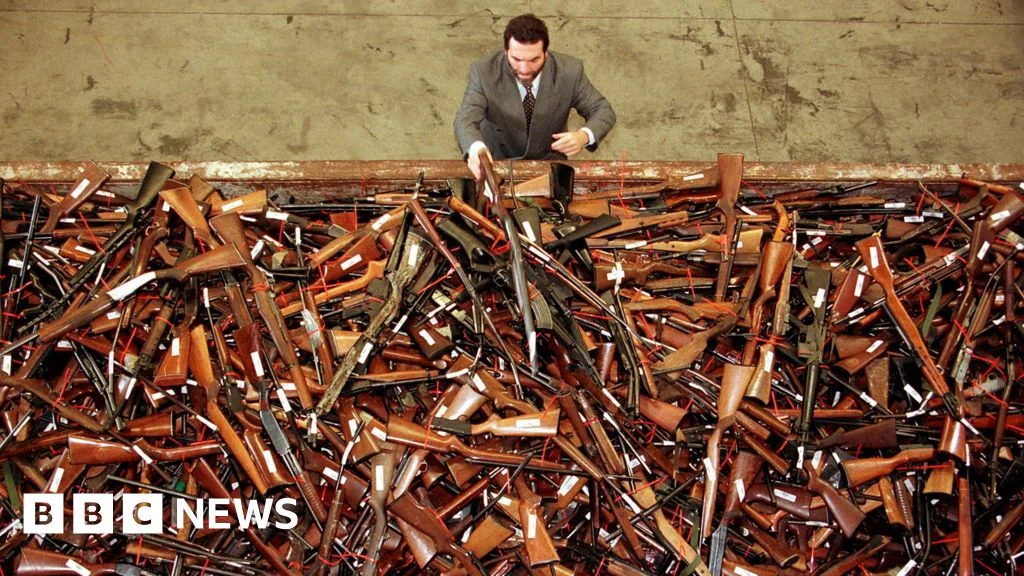
Australia’s journey to becoming a global pioneer in gun control began almost 30 years ago, with the tragic massacre at Port Arthur. On April 28, 1996, a single gunman killed 35 people using semi-automatic rifles, leading then-Prime Minister John Howard to implement some of the world’s strictest gun laws.
The event, which occurred on a Sunday afternoon in Tasmania, was a turning point for Australia. The country took steps that included a buyback program where over 650,000 guns were handed in and destroyed, along with background checks and mandatory cooling-off periods for firearm sales.
Recent Tragedy at Bondi Beach: A Call for Action
The recent Bondi Beach attack on Sunday, which left 15 dead, has reignited the debate over gun laws. Roland Browne, a leading advocate for stricter gun control, laments that despite stringent regulations, incidents like this still occur.
“There’s just a lot of similarities,” Browne told BBC. “They’re both very public places frequented by tourists from around the nation and around the world.” He also expressed disappointment in the political system, stating that voices for tighter gun laws are not adequately heard until such tragic events happen.
The Reality of Gun Ownership in Australia
While Australia prides itself on its stringent gun control measures, the reality is more complex. A report by the Australia Institute revealed that there are over four million privately-owned firearms across the country—almost double the number from about 20 years ago. Queensland has the most registered guns, followed closely by New South Wales and Victoria.
“It’s sickening and I’m bitterly disappointed in our political system whereby the voices for tighter gun laws and public health aren’t listened to until there’s a major event like this,” Browne added. He argues that even now, gun ownership is widespread, with one in three firearms located in major cities.
Proposed Reforms and Opposition
In response to the Bondi Beach shooting, Prime Minister Anthony Albanese announced a national gun buyback scheme. Other proposals include limiting the number of guns someone can legally own, making Australian citizenship a condition for firearm ownership, and improving intelligence sharing during licence applications.
However, Tom Kenyon from the Sporting Shooters Association of Australia argues that such measures are unnecessary. “Limiting the number of guns wouldn’t have made a difference on Sunday,” he says. “And it wouldn’t have changed the fact that an attack occurred because those two individuals had been radicalised.”
The swift action prompted by the tragedy has led to renewed calls for stricter gun laws, but the debate remains contentious with opposing views from both sides of the argument.
For more updates and detailed analysis on this ongoing issue, stay tuned to our latest reports. The story of Australia’s struggle with gun control is far from over, as it continues to grapple with balancing public safety and individual rights.