Key Highlights
- A small earthquake struck Great Falls on February 12, 2026.
- The quake was one of four within two weeks, registering at 3.7 magnitude.
- Montana is among the most seismically active regions in the US.
- No injuries or serious damage were reported in recent quakes.
Quakes in Great Falls: A Regular Occurrence
The plains of central and eastern Montana, including Great Falls, are known for their seismic activity. Just last Thursday, February 12, 2026, the region was shaken by another small earthquake, marking the fourth one felt within a two-week period.
Recent Quake Details
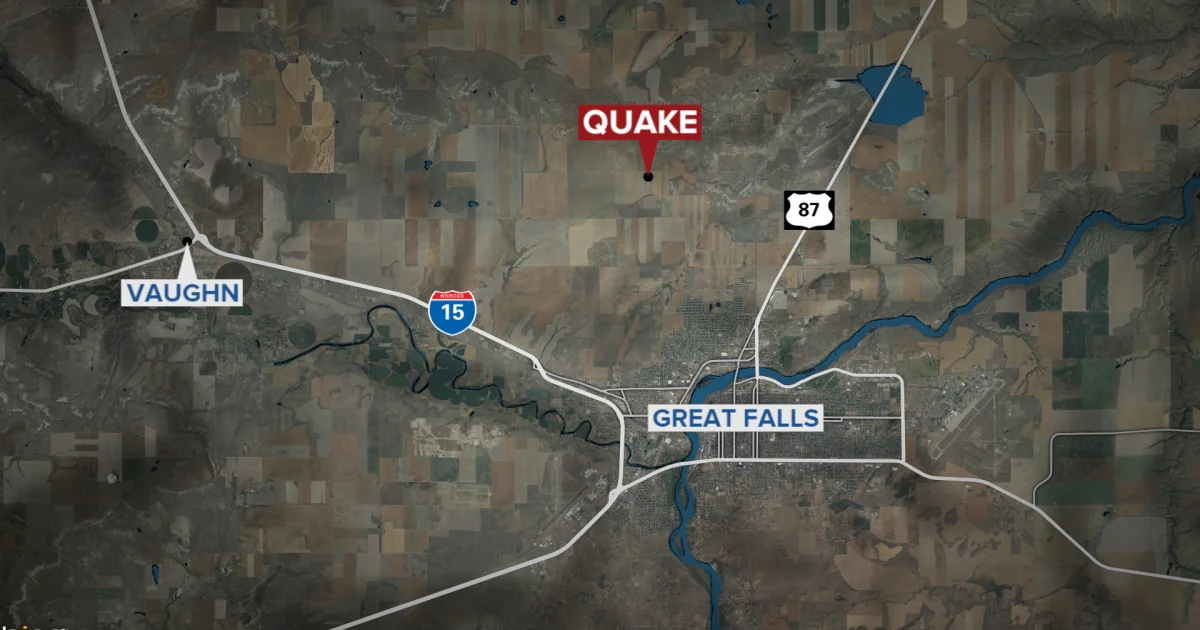
The U.S. Geological Survey reported that the quake registered as a 3.7 magnitude and occurred at 6:36 p.m., centered about 5.7 miles north of Great Falls, at a depth of approximately 6.2 miles. People across Great Falls, Sun Prairie, and Ulm felt it, with reports streaming in from Dutton and Choteau as well.
Seismic Activity: A Long-Term Issue
The Treasure State is one of the most seismically active regions in the United States. The intermountain seismic belt, which runs through the western third of Montana, is where much of this activity occurs. According to experts at the Yellowstone Volcano Observatory and the Earthquake Studies Office on the campus of Montana Tech in Butte, small earthquakes are common, occurring several times every day.
From January 29, 2026, a 4.2 magnitude quake shook the region, followed by a smaller 2.7 quake that evening and another 3.2 on Saturday, January 31—likely aftershocks of the first one. All quakes in recent history have been small and caused no serious damage.
Historical Context
Montana’s seismic past includes notable earthquakes such as the 7.3 magnitude Hebgen Lake earthquake on August 17, 1959, which triggered over 160 new geysers in Yellowstone National Park and resulted in several fatalities from a rockslide in Madison Canyon.
The Ongoing Challenge of Seismic Preparedness
Despite the frequent quakes, Great Falls residents remain generally unbothered. Local authorities are well-prepared to handle such events. The Cascade County Sheriff Jesse Slaughter was interviewed by MTN News during an unrelated story when the earthquake hit.
The ongoing seismic activity in Montana highlights the need for continuous monitoring and preparedness.
While small earthquakes like these are not uncommon, they serve as a reminder of the geological forces at play beneath our feet. The state’s resilience is tested each time the earth shifts, but for now, life goes on as usual.