Key Highlights
- Xiu Xiu revealed that “African Imperial Wizard” is a “middle-aged white man” during their performance.
- The artist’s project involves using blackface and African imagery, blending pastiche with actual samples from the continent.
- Musician Angela Seo expressed concerns about the impact of cultural appropriation on marginalized communities.
Cultural Appropriation in Music: The Case of “African Imperial Wizard”
In a recent post on their Instagram, experimental music group Xiu Xiu revealed that the artist behind the provocatively-named project “African Imperial Wizard” is actually a “middle-aged white man.” This revelation highlights the ongoing issue of cultural appropriation in the music industry.
Performance and Unveiling
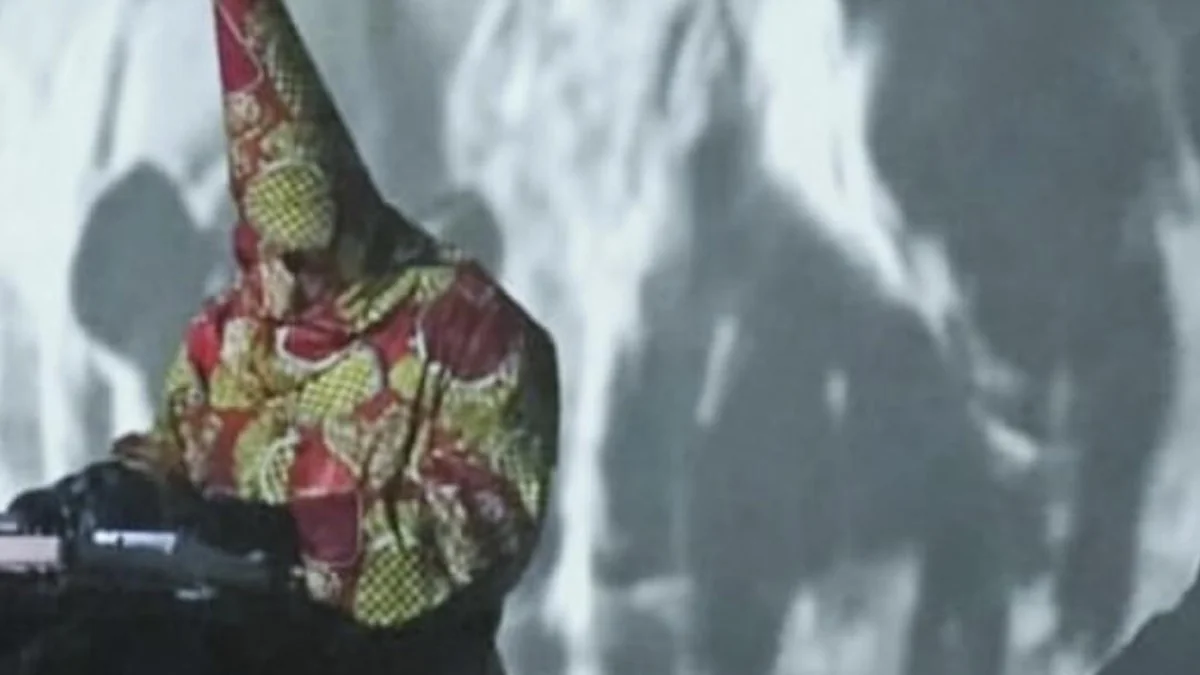
Xiu Xiu’s performance at the Hradby Samoty festival in Bratislava, Slovakia, provided an opportunity for them to confront “African Imperial Wizard” directly. As they played with him last night, they did not know his true identity until he came backstage and removed his hood. The group expressed their shock at discovering that the artist behind this provocative persona is a “middle-aged white man.”
The term “Imperial Wizard,” which refers to a leader of the Ku Klux Klan, has been used by the artist as part of his performance strategy. This choice of title and imagery further complicates the narrative around cultural appropriation, given its historical context.
Artistic Pastiche and Reality
“African Imperial Wizard” is known for projecting a pastiche of Black African “tribal” imagery on screen during his performances. He claims to be part of an imagined pan-African armed struggle and calls for unity among Africans in his music. However, Xiu Xiu uncovered that the majority of these records are created using Ableton samples, revealing the artist’s reliance on technology rather than direct cultural engagement.
The project’s album art features images reminiscent of African tribes in face paint, while its Spotify page is filled with stock photographs depicting armed African tribe members. These visuals and statements create a confusing blend of cultural appropriation and artistic expression, leaving many questioning the intentions behind such practices.
Consequences and Reactions
Angela Seo, a member of Xiu Xiu, spoke about the challenges faced by artists when confronting issues like this. She stated, “I am just pretty fed up with how much I had to even think about this over the last couple days.” Seo highlighted the potential for backlash and online harassment that can come from bringing such sensitive topics into public discourse.
Seo also emphasized her belief in allowing artists to make mistakes while learning and growing. She argued, “We can ‘cancel’ and discard certain actions and thoughts and practices that are not right, but we should be able to say that’s not cool without being slammed with unhinged responses.” This statement reflects the broader debate around cancel culture and its impact on artistic freedom.
While Xiu Xiu has faced criticism in the past for similar issues, this case highlights the complexity of cultural appropriation in music. The artist’s use of blackface imagery and African themes raises questions about authenticity and respect in cross-cultural collaborations.
Conclusion
The unmasking of “African Imperial Wizard” as a middle-aged white man performing under a provocative persona underscores the ongoing challenges in the music industry regarding cultural appropriation. As artists continue to explore diverse musical influences, it is crucial to maintain respect and authenticity. The case serves as a reminder for all musicians to consider their sources and methods when engaging with other cultures.