Key Highlights
- The recent winter storm that affected hundreds of thousands in the U.S. tests the Federal Emergency Management Agency (FEMA) under a weakened state post-Trump administration cuts.
- Climate change is making large-scale weather disasters more likely and intense, contributing to extreme winter weather events like this one.
- FEMA’s reduced workforce and diminished preparedness are raising concerns about the agency’s ability to respond effectively during multi-state disaster situations.
- Scientists link rapid Arctic warming and stronger ocean heat waves to the increased disruptiveness of winter storms, highlighting the complex interplay between climate change and weather patterns.
The Winter Storm: A Test for FEMA’s Preparedness
A sprawling winter storm that left hundreds of thousands without power and grounded flights across the eastern half of the U.S. is being viewed as a potential test for the Federal Emergency Management Agency (FEMA) under its current state. The president has stated his intention to eliminate FEMA, and the agency has lost thousands of employees since his second term began.
Emergency-management experts have been waiting for such an event that would put the weakened FEMA to the ultimate test. Alan Gerard, a retired National Oceanic and Atmospheric Administration (NOAA) meteorologist who now writes Balanced Weather, states, “We’ve been lucky over the last year; we didn’t have any landfalling hurricanes or wide-ranging natural disaster situations in recent months.”
Climate Change’s Role: A Complex Interplay
The storm is not just a result of the current weather conditions but also reflects the long-term impact of climate change, according to scientists. Jennifer Francis, an atmospheric scientist and senior scientist at the Woodwell Climate Research Center in Massachusetts, explains that “global warming has reshaped the atmospheric engine” in ways that can make winter storms and extreme cold outbreaks more disruptive than ever.
According to a 2024 study by Michael Mann of the University of Pennsylvania, nor’easters have intensified significantly over recent decades. Nor’easters spin up along the East Coast, pull subtropical moisture from the south, and drag frigid polar air from the north, leading to both warm and cold temperature extremes associated with them.
Impact on States: Widespread Disruption
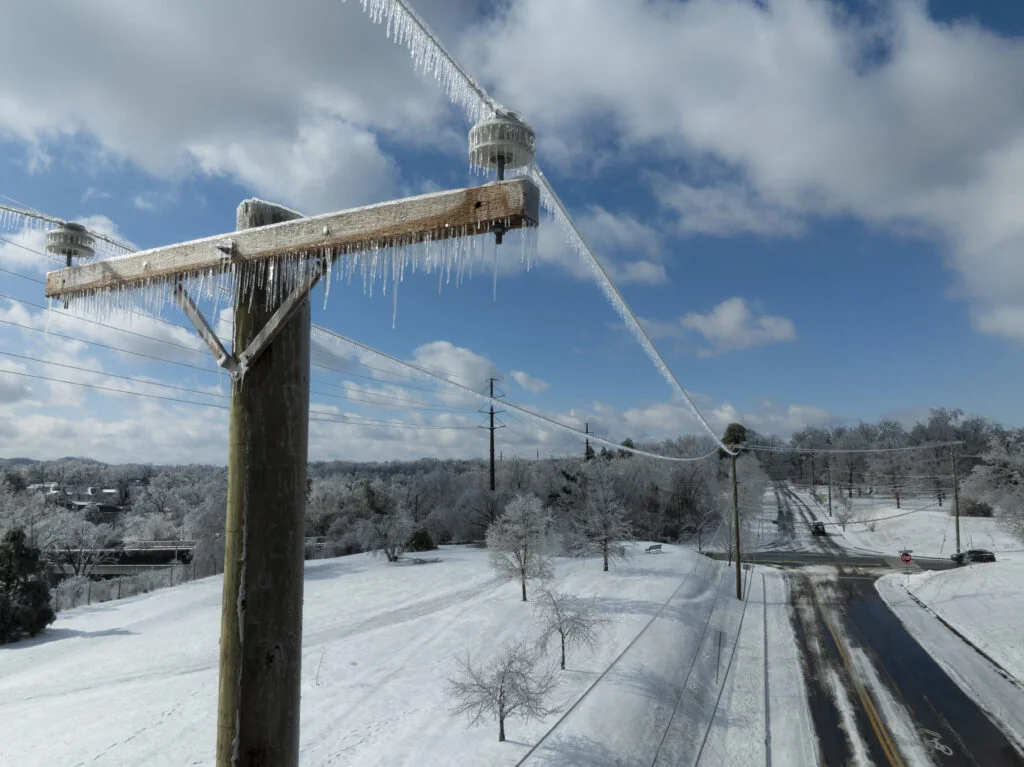
The storm has had a severe impact on states such as Louisiana, Mississippi, and Tennessee. More than half a million customers were still without power in these areas as of Monday morning. Utility companies described “catastrophic damage,” with the possibility of weeks before full restoration.
Mississippi Governor Tate Reeves stated that the situation would get worse before it got better due to ongoing ice on trees and power lines. He added, “We are coordinating with FEMA to bring in additional generators and supplies for warming centers.”
Health Hazards and Infrastructure Damage
The storm has posed significant health hazards, particularly for those without power. The National Weather Service warned that an extremely cold night was forecasted, with low temperatures in the single digits. Buildings are not generally built to withstand such conditions, increasing the risk of hypothermia.
In Chicago, the storm brought its lowest recorded wind chill since 2019, at 36 degrees below zero on Friday. Pedestrians faced the risk of frostbite and other cold-related injuries as emergency departments saw an increase in patients with cold-exposure issues.
Conclusion
Preparing for Future Disasters
The winter storm serves as a stark reminder of the challenges ahead for disaster response agencies under the current climate conditions. As climate change continues to reshape weather patterns, FEMA and other emergency management organizations must adapt their strategies to address more frequent and intense disasters.
Experts emphasize the need for ongoing research into how rapid Arctic warming and ocean heat waves are contributing to extreme winter weather events. By understanding these complex interplays, policymakers can better prepare communities for future storms and ensure robust disaster response systems are in place.