Key Highlights
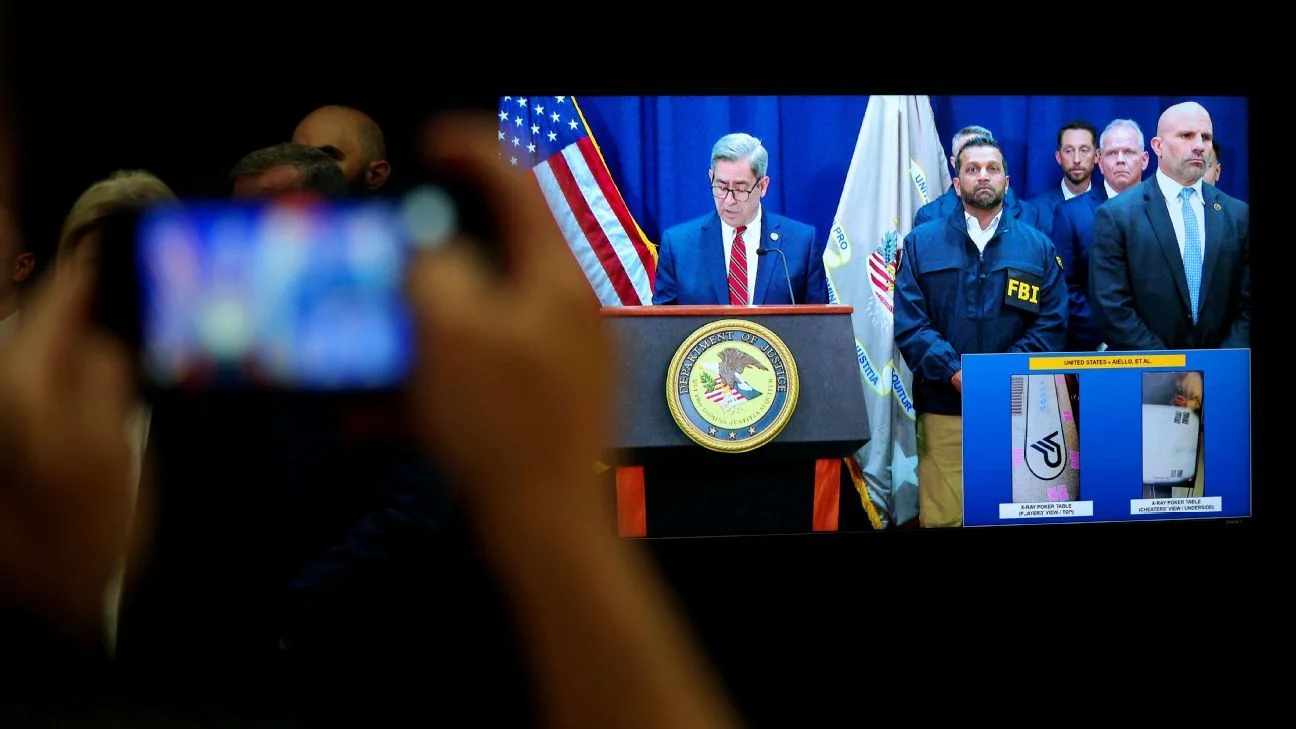
- The FBI announced 31 federal indictments for a rigged poker scheme involving prominent NBA figures.
- The scheme used technology like X-ray tables and marked cards to cheat high-stakes players.
- Involvement of the Mafia provided support and protection for the illegal games.
- High-profile players like Chauncey Billups were part of the scheme, raising ethical concerns in sports.
The FBI’s Investigation into Rigged Poker Games
The Federal Bureau of Investigation (FBI) has unveiled a major investigation into an alleged yearslong illegal poker rigging scheme that involved prominent National Basketball Association (NBA) figures. The case, which has resulted in 31 federal indictments as of October 24, 2025, highlights the intersection between professional sports and organized crime.
Technology at the Heart of the Scheme
The scheme began in April 2019 with technology primarily inside card-shuffling machines that read the order of cards dealt. This information was relayed to an off-site operator who then communicated subtle signals to players on the table, allowing them to manipulate outcomes. Sometimes, X-ray tables and hidden cameras in poker chip trays were used to assist in reading cards. In some cases, players wore special contact lenses or glasses with marked cards.
Co-Conspirators and Their Roles
Defendant Robert “Black Rob” Stroud was central to the scheme, alongside other co-conspirators who included prominent NBA figures such as Chauncey Billups and Damon Jones. Billups, a Basketball Hall of Famer, played a crucial role in maintaining the illusion by appearing as one of the players at the table. The quarterback position, responsible for signaling inside players, was often held by individuals like John Mazzola.
The Role of the Mafia
The involvement of La Cosa Nostra (LCN) provided both protection and financial support for the illegal games. In Manhattan, New York, the Bonanno crime family operated a game at 147 Lexington Ave., while the Gambino crime family, with support from Genovese crime families, hosted a game at 80 Washington Place. The LCN’s involvement extended to robbing individuals of altered shuffling machines valued over $10,000.
Financial and Ethical Implications
The scheme aimed to defraud wealthy players, known as “fish” or “whales,” out of tens of millions of dollars. One victim, identified as John Doe No. 1, lost nearly $2 million in games staged between June and July 2023. While the financial pipeline established by the scheme benefited organized crime groups, it also raised significant ethical concerns within professional sports.
Repercussions and Future Steps
Following his arrest, Chauncey Billups appeared in court on October 19, 2025, and was released under substantial bond. His attorney, Chris Heywood, stated their intention to fight the charges. The case underscores the complex relationship between organized crime and professional sports, prompting calls for increased scrutiny and regulation within the industry.
In conclusion, this investigation reveals a sophisticated scheme that involved high-profile athletes, technology, and organized crime. It serves as a stark reminder of the ethical challenges faced by professionals in the realm of gambling and highlights the ongoing vigilance required to protect the integrity of sports competitions.