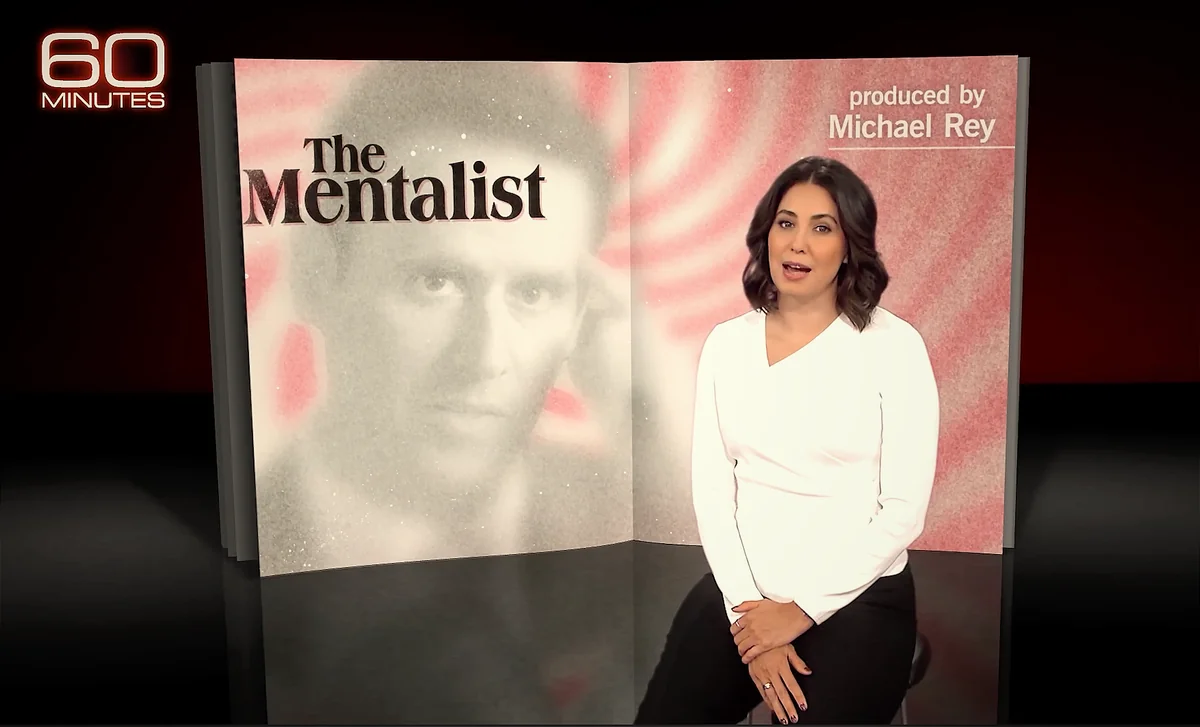
Key Highlights
- Oz Pearlman’s appearance on 60 Minutes raised questions about the authenticity of his psychic feats.
- James Randi’s exposure of Uri Geller’s tricks serves as a reminder that “mind-reading” acts are often based on deception and trickery.
- Pearlman’s methods involve keen observation, psychology, and influence rather than supernatural abilities.
- The entertainment value of 60 Minutes overshadowed critical scrutiny during Pearlman’s segment.
The Revival of Television Gullibility: 60 Minutes and Oz Pearlman’s Mind-Reading Claims
On October 29, 2025, the venerable news program 60 Minutes presented a segment that left viewers questioning the line between entertainment and deception. Mentalist Oz Pearlman, known for his sleight of hand and psychological tricks, dazzled correspondent Cecilia Vega with seemingly supernatural feats during an interview on the show.
The segment began with a dramatic moment when Pearlman correctly guessed Vega’s childhood bedroom poster and dream vacation destination. These revelations prompted 60 Minutes to dub him a master of making people believe he could read minds. However, the segment’s awe-struck reaction echoed the 1970s when respected TV host Barbara Walters was similarly enchanted by self-proclaimed psychic Uri Geller.
The Geller Era and Skepticism’s Triumph
In the 1970s, Geller convinced many that he could bend spoons and read minds through paranormal means. However, magician and skeptic James Randi exposed these claims as a ruse. Unlike Geller, Pearlman does not claim supernatural powers but rather attributes his abilities to keen observation and psychology.
Pearlman admitted that his act is “based on a big lie—that I can read minds,” a confession that should give pause to any too-eager believer. The key difference between the two magicians lies in their approach: Geller pretended to be supernatural, while Pearlman uses psychological techniques to deceive.
Inside the Mentalist’s Bag of Tricks
To his credit, Pearlman is a master showman who employs various tricks to create the illusion of mind-reading. These include information gathering from public sources, forces and pre-show setups, sleight of hand, and psychological manipulation.
For instance, when guessing Joe Rogan’s ATM pin code, Pearlman likely obtained this information through sneaky means rather than genuine psychic ability. Experts note that many “miraculous” mind-reading feats are achieved by researching the subject ahead of time or using cleverly crafted props and misleading sequences.
Pearlman’s methods involve keen observation, psychology, and influence. He constructs a psychological profile of his subjects based on subtle cues in body language, eye movement, and speech, then subtly steers them toward choices that appear spontaneous but are anything but.
Why Do Smart People Fall for It?
The irony is that highly educated individuals, from tech CEOs to seasoned journalists, often have confidence in their reasoning. This over-confidence can make them less skeptical and more susceptible to being fooled by seemingly convincing mind-reading acts.
In the 60 Minutes piece, Vega may have been focused on experiencing the “wow” factor firsthand rather than applying healthy skepticism. The entertainment value of the segment overshadowed critical scrutiny, a pattern reminiscent of past segments that promoted pseudoscience without proper investigation.
Towards a More Skeptical Spotlight
While Oz Pearlman’s act is undoubtedly gifted and entertaining, his framing by influential programs like 60 Minutes can edge toward promoting pseudoscience. The issue lies in how such acts are presented: as genuine phenomena rather than well-choreographed con jobs performed using the same methods deployed by stage magicians.
Experts argue that media outlets should invite skeptics or magicians to deconstruct these performances on-air, providing context and critical scrutiny. This would ensure a more balanced presentation and help viewers recognize that what looks like mind-reading is, in reality, a well-choreographed con performed using the same methods deployed by stage acts.
The segment also highlights the broader issue of pseudoscience in popular culture.
For instance, homeopathy, which promises to treat symptoms through serial dilutions and vigorous shaking, has been discredited by rigorous clinical trials. Despite this, its market continues to grow, with an estimated value reaching $6.8 billion by 2035.
The entertainment industry often prioritizes sensational stories over critical analysis, allowing pseudoscientific claims to gain traction. This is a cause for concern as it can lead patients to delay or reject proven treatments in favor of unproven therapies.