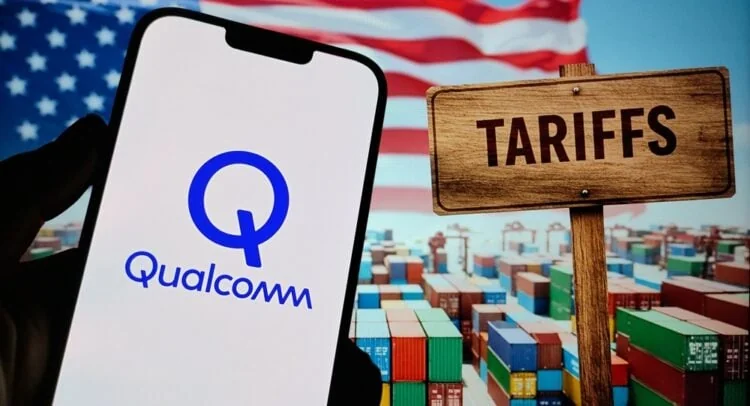
Key Highlights
- Qualcomm QCOM +15.05% ▲ faces antitrust investigation from Chinese regulators over its acquisition of Autotalks.
- 46% of Qualcomm’s total revenue in fiscal 2024 came from China, highlighting the company’s geopolitical exposure.
- Insider selling by CEO Cristiano Amon and CFO raises investor concerns amid regulatory headwinds.
- The new antitrust probe could result in severe financial penalties and strategic risks for Qualcomm’s automotive ambitions.
Geopolitical Pressure on Qualcomm
The semiconductor giant Qualcomm QCOM +15.05% ▲ finds itself embroiled in a complex web of geopolitical tensions, particularly with China. Just two weeks ago, the Chinese State Administration for Market Regulation (SAMR) initiated an antitrust investigation into Qualcomm’s acquisition of Israeli auto-tech firm Autotalks. This move comes after Qualcomm reportedly told regulators it was abandoning the transaction—a decision now under scrutiny.
Chinese Regulatory Scrutiny
The probe focuses on a deal that was finalized in June 2025, following a reported change of heart by Qualcomm regarding the transaction. Autotalks specializes in V2X (vehicle-to-everything) communication technology, critical for smart and autonomous vehicles. China’s protective stance towards its rapidly expanding electric vehicle sector may wary of allowing Qualcomm to integrate this technology into its global patent portfolio.
Historically, China has shown a willingness to target U.S. semiconductor firms; in 2018, Beijing effectively blocked Qualcomm’s $44 billion acquisition of NXP Semiconductors by dragging out the approval process until it expired. This time, the antitrust probe poses an even greater risk, with potential penalties that could reach up to 10% of Qualcomm’s prior-year revenue in China.
Geopolitical and Economic Dependence
Qualcomm’s business model is a geopolitical paradox. It stands as a cornerstone of U.S. technology, responsible for designing the wireless patents and chips that underpin much of the global smartphone ecosystem. However, 46% of Qualcomm’s total revenue in fiscal 2024 came from China (including Hong Kong), making it deeply intertwined with America’s chief economic rival.
The company is particularly vulnerable to any meaningful regulatory action or supply chain disruptions stemming from the U.S.–China trade conflict.
Washington has threatened new tariffs, while Beijing has responded with export restrictions on critical materials. These measures could deliver a serious blow to Qualcomm’s earnings and investor confidence.
Strategic Diversification Efforts
In response to the growth slowdown in its core business, Qualcomm has turned towards Automotive and the Internet of Things (IoT) as new growth pillars. The automotive division grew by 44% year-to-date in fiscal 2025, contributing only 8.8% of total revenue. However, this reliance on a small segment makes Qualcomm’s diversification efforts crucial.
The recent antitrust probe strikes directly at these growth plans. If regulators impose restrictions or penalties on Qualcomm’s V2X licensing, the company risks undermining its automotive ambitions, which are essential for long-term growth.
Insider Selling and Investor Sentiment
Further adding to investor unease, reports of notable insider selling by CEO Cristiano Amon in October have drawn additional scrutiny. While such sales don’t always imply trouble—they’re often part of pre-arranged trading plans or personal diversification moves—the magnitude and timing of these transactions are likely to raise questions amid mounting regulatory headwinds.
Valuation and Investment Strategy
Qualcomm’s stock appears attractive from a valuation standpoint, with a forward P/E ratio of 14.2x and an EV/EBITDA multiple of 11. However, the growth outlook is concerning, with a forward PEG ratio sitting at 2.6, indicating that the stock may be overvalued relative to its earnings growth potential.
Given the company’s fraught history with Chinese regulators and the uncertain timeline for the antitrust probe, maintaining a Hold rating on Qualcomm stock appears prudent until there is clarity on the investigation’s outcome and the scope of regulatory risk.
Conclusion
Qualcomm remains a world-class technology leader but finds itself in a complex global crossfire. While its appealing P/E ratio and low enterprise value multiples mask deeper concerns, the company is battling on multiple fronts—technological, competitive, and geopolitical. Until there’s clarity on the investigation’s outcome, maintaining a cautious stance appears to be the most prudent course of action.