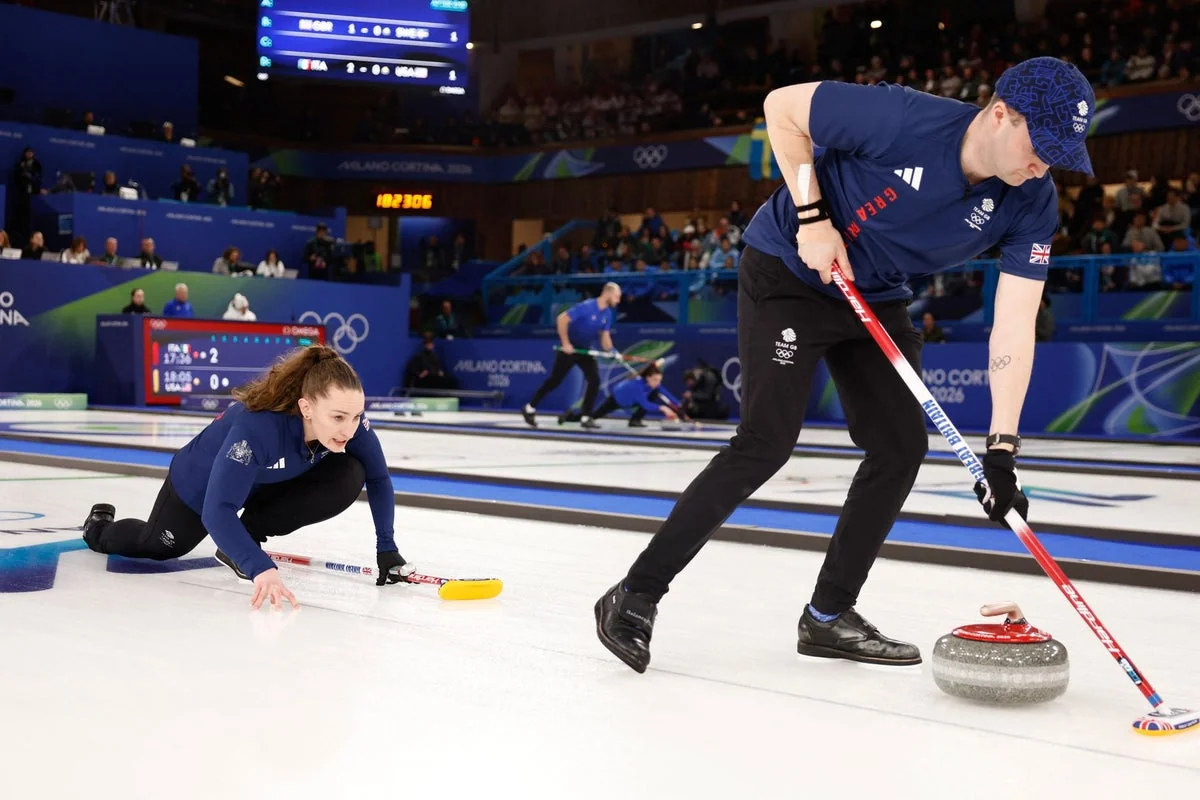
Key Highlights
- Curling’s mixed doubles format returns in Milano-Cortina 2026.
- The power play is a crucial element in the mixed doubles discipline.
- Mixed doubles games can score up to six points per end due to pre-placed stones.
- Pre-placed stones position teams strategically for advantage or disadvantage.
In the Milano-Cortina 2026 Winter Olympics, curling’s mixed doubles format makes a comeback after a frustrating fourth-place finish in Beijing 2022. Scotland’s Bruce Mouat and Jennifer Dodds are back to challenge for gold with an intriguing new wrinkle: the power play.
The Power Play: A Strategic Advantage
Unlike traditional curling, where teams throw two stones per end, mixed doubles throws five stones in each end. But here’s the twist: these games often begin with one stone pre-placed by each team—creating a strategic advantage or disadvantage for the last-stone team.
Curling’s Strategic Game
The placement of pre-placed stones is critical. In most ends, the last-stone team starts with one stone at the back of the four-foot circle, while the other team places a center guard. When power play is called, these pre-placed stones are moved out to one side, creating space down the middle for big shots.
Why It Matters
This setup can drastically change the game’s dynamics. For instance, moving those pre-placed stones opens up the center of the sheet, allowing teams to score six points in a single end—a feat not possible under normal rules. This is where the power play comes into play.
The Return of Mixed Doubles
Mixed doubles curling has been part of the Olympics since 2018 but struggled for popularity and success. In Cortina, the format kicks off two days before the Opening Ceremony and runs through to the medal matches on the final day.
Aiming for Gold
Teams like Team GB are aiming high. Kirsty Muir’s historic gold in the big air finals could be a preview of what’s coming in curling. Meanwhile, Scotland’s home advantage adds another layer of pressure to their quest for a medal.
You might think this is new, but it’s been around since 2018. The real story here is how these teams manage the power play and pre-placed stones to outmaneuver their opponents.