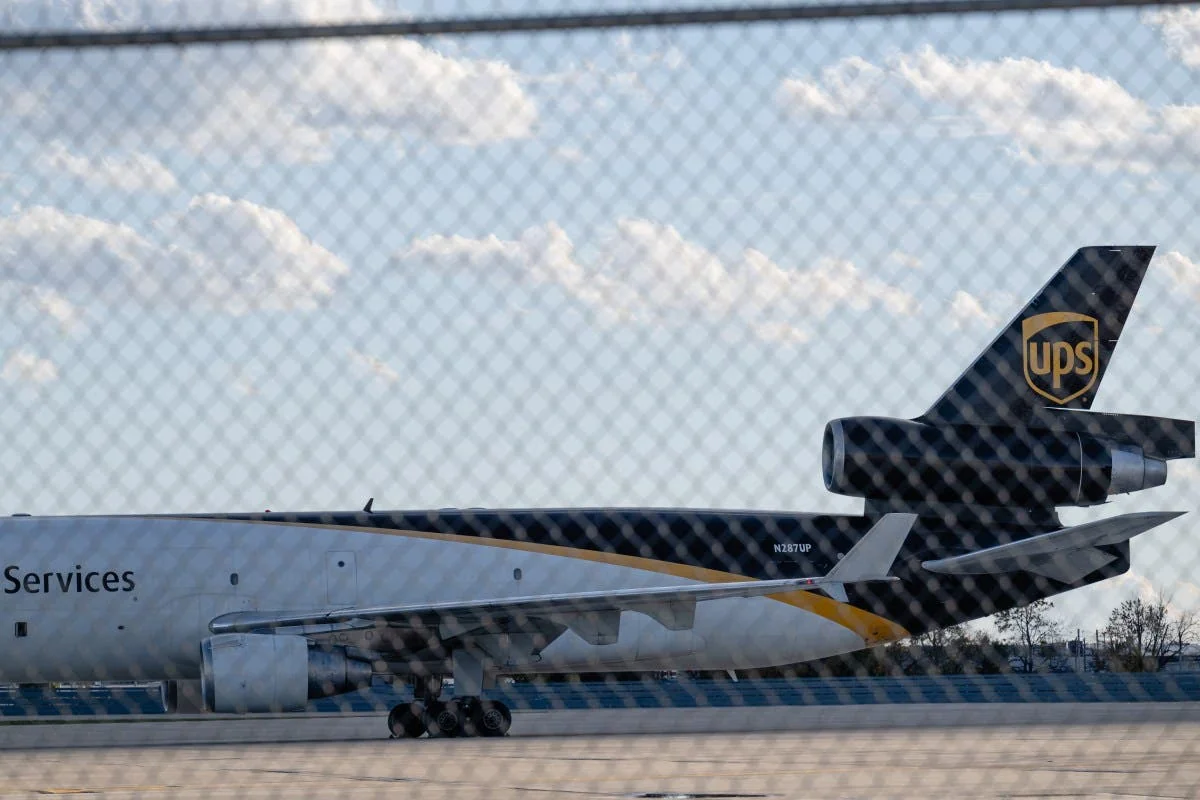
Key Highlights
- UPS and FedEx have grounded their MD-11 planes following a crash that killed over 10 people.
- The decision is expected to affect deliveries during the upcoming holiday season.
- Both companies claim contingency plans are in place to ensure reliable service.
- Experts warn the grounding could impact delivery capacity and prices for international airfreight.
Background on the Crash and Grounding Decision
On November 4, a UPS Airlines cargo aircraft crashed shortly after takeoff from Louisville Muhammad Ali International Airport in Kentucky. The incident, witnessed by many and filmed online, resulted in over ten fatalities. This tragic event has led to an emergency airworthiness directive issued by the Federal Aviation Administration (FAA), mandating that all McDonnell Douglas MD-11 and MD-11F aircraft remain grounded.
Impact on Delivery Services
The grounding of these planes, which are part of UPS’s 500-strong fleet and FedEx’s 700-plane fleet, has raised concerns among industry experts. According to the data from ShipMatrix, approximately 2.3 billion packages are expected to be delivered during the holiday season this year, a 5% increase compared to last year. Satish Jindel of the SJ Consulting Group stated that “As that peak volume increases and you need every bit of transportation capacity, not having 26 planes could be a real big factor for them.”
Contingency Plans and Expert Opinions
In response to the grounding, both UPS and FedEx have announced contingency plans. UPS stated: “Out of an abundance of caution and in the interest of safety, we have made the decision to temporarily ground our MD-11 fleet. The grounding is effective immediately.” Similarly, FedEx expressed its commitment to safety by saying, “Safety is our highest priority at FedEx.
Out of an abundance of caution, we have made the decision to ground our MD-11 fleet as we conduct a thorough safety review based on the recommendation of the manufacturer.”
However, experts like Jeremy Tancredi from West Monroe, who previously worked for UPS, warned that while these planes are often used on international routes, they could still impact holiday deliveries. He noted, “As that peak volume increases and you need every bit of transportation capacity, not having 26 planes could be a real big factor for them.”
Future Implications
The duration of the grounding remains uncertain but could significantly affect delivery services if it persists for multiple weeks. Industry insiders suggest that if this situation extends beyond a few days, cargo divisions of international passenger airlines may start using the belly space on their wide-body aircraft to handle more freight by allowing passengers to carry additional items.
This decision underscores the delicate balance between safety and operational efficiency in the highly competitive delivery sector. While both companies emphasize their commitment to service reliability, the ongoing review process highlights the critical nature of maintaining safety standards in air cargo operations during peak holiday seasons.