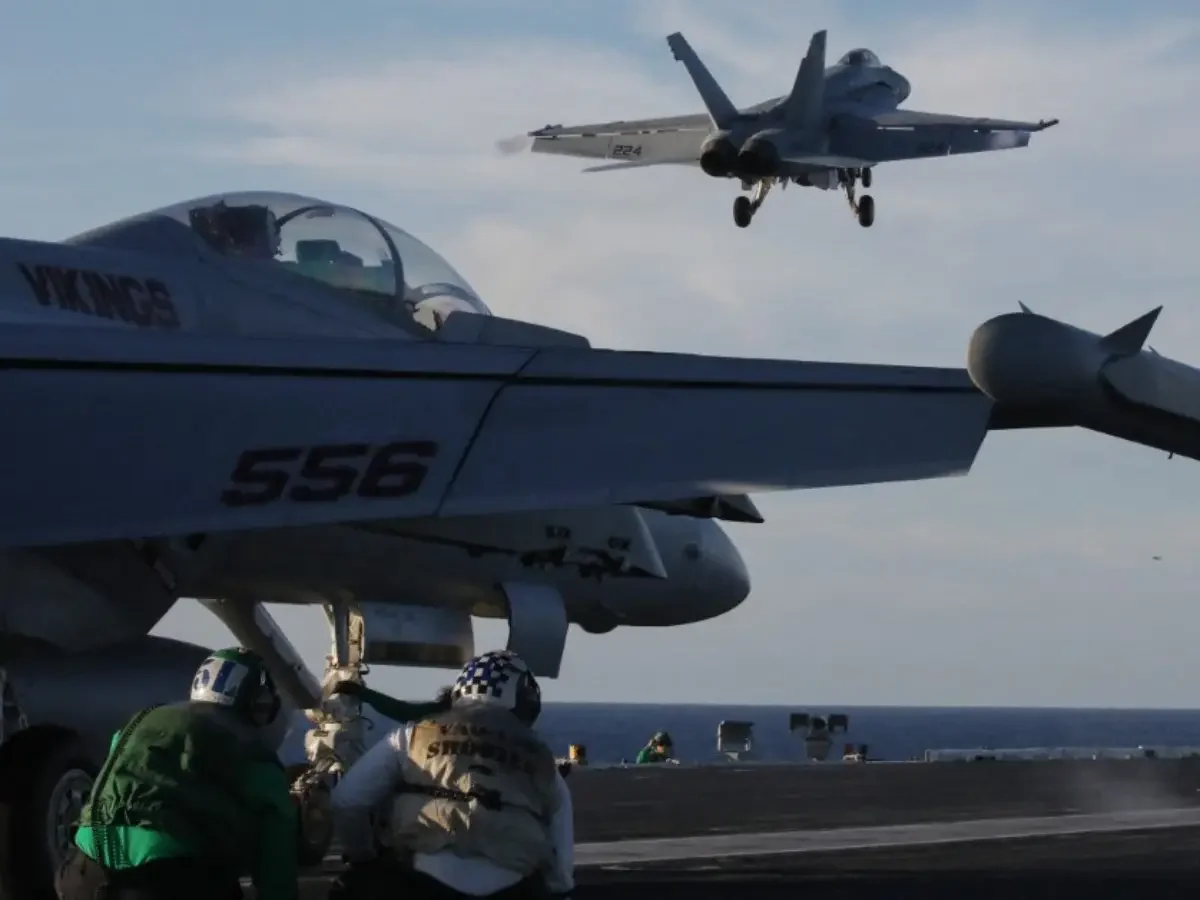
Key Highlights
- Two US Navy aircraft, an MH-60R helicopter and an F/A-18F jet, crashed in the South China Sea.
- The crashes occurred during routine operations within 30 minutes of each other.
- Crews were safely rescued following the incidents.
- The US maintains presence to ensure free navigation and counter Chinese influence.
Crashes in South China Sea
On October 27, 2025, two separate incidents involving United States Navy aircraft took place in the South China Sea. The first crash involved an MH-60R helicopter and the second a F/A-18F jet. Both crashes happened within half an hour of each other during routine operations.
According to statements issued by the US Navy, these incidents were part of ongoing “routine operations.” These operations include pilot training, maritime patrols, freedom of navigation missions, joint exercises with allies, and equipment checks, all aimed at maintaining readiness and ensuring free navigation in the region.
Safety and Rescue
Despite the severity of the crashes, both crews were successfully rescued. The MH-60R Sea Hawk helicopter’s crew was reported to be in “safe and stable condition,” as was the F/A-18F Super Hornet’s team.
Purpose of US Presence
The United States maintains a significant military presence in the South China Sea for several reasons. Primarily, it aims to protect free navigation and secure vital trade routes. Additionally, the US seeks to counteract what it perceives as increasing Chinese influence in the region, supporting regional stability.
A notable aspect of the US Navy’s activities is the ongoing operation by the USS Nimitz (CVN-68), a carrier strike group operating in these waters. This continuous presence underscores the strategic importance of the South China Sea for both military and economic reasons.
Geopolitical Context
The crashes come against the backdrop of ongoing tensions between the US and China over territorial claims in the South China Sea. While the exact causes of the crashes are not yet clear, they serve as a reminder of the complex geopolitical dynamics at play in this crucial international waterway.