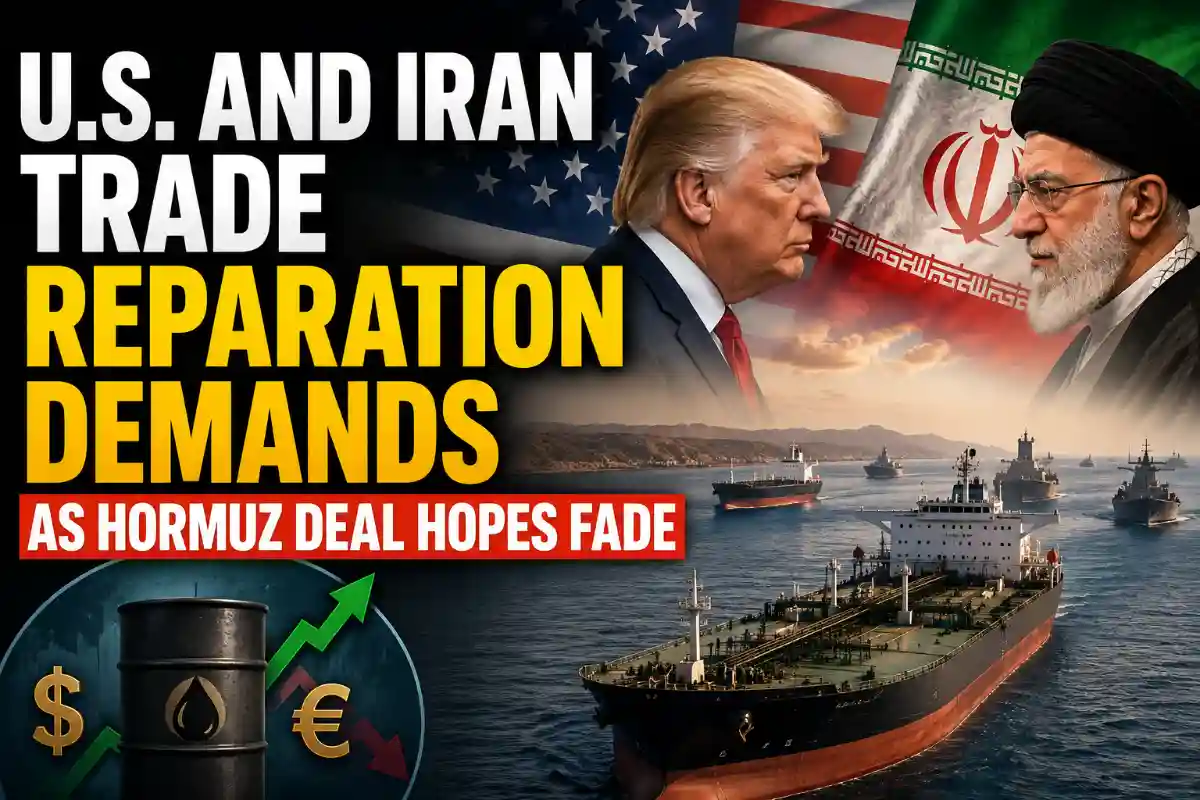
The latest U.S.-Iran standoff has taken an unexpected turn: instead of narrowing their differences over the Strait of Hormuz, Washington and Tehran are now putting competing compensation demands at the center of the dispute.
Iran has demanded compensation for damage caused during the conflict and has linked the reopening of the strategic waterway to broader conditions, including sanctions relief, the release of frozen Iranian assets and an end to the U.S. naval blockade. President Donald Trump has rejected Iran’s reparations demand and instead said the United States should receive compensation for American military casualties that Washington attributes to Iran.
The disagreement comes as hopes for a quick agreement over Hormuz have weakened. Iran said on Aug. 8 that it was close to an arrangement with Oman concerning the waterway, but also made clear that such an agreement alone would not be enough to reopen the strait.
That uncertainty is already being reflected in financial markets. Brent crude was trading around $88 a barrel on Tuesday, with prices having risen roughly 5% over two days and nearly 25% from early July levels, according to Reuters.
What Happened?
The central dispute concerns what conditions must be met before normal shipping through the Strait of Hormuz can resume.
Iran has maintained that the waterway will remain closed unless Washington changes its military and economic pressure campaign. Iranian Foreign Ministry spokesman Esmaeil Baghaei said Aug. 10 that the strait would remain closed until the United States ends its naval blockade.
Iran’s broader demands reportedly include an end to the U.S. blockade, sanctions relief, access to frozen assets, compensation for war damage and changes to the U.S. military presence in the region.
Washington has rejected the idea that the United States should pay Iran reparations. Trump has instead argued that Iran should compensate the United States for American military casualties connected to years of conflict.
The result is a negotiation in which both sides are effectively presenting financial claims against the other rather than simply negotiating the mechanics of reopening the shipping route.
Why It Matters
The Strait of Hormuz is one of the world’s most important energy chokepoints. Disruption there can affect crude oil, refined petroleum products, shipping costs and inflation expectations well beyond the Middle East.
For U.S. consumers, the most immediate economic risk is higher energy costs. A sustained rise in crude prices can feed into gasoline, diesel, transportation and other business costs. If higher energy prices persist, they can also complicate the Federal Reserve’s efforts to manage inflation.
The market response has already been visible. Reuters reported Tuesday that Brent crude was around $88 a barrel, while Treasury yields moved modestly higher as investors considered the possibility that stronger energy prices could reinforce inflation pressures.
The issue therefore extends beyond diplomacy. A prolonged Hormuz disruption could become a broader economic problem if elevated energy prices begin affecting consumer inflation and business costs.
Key Details
| Issue | Latest development |
|---|---|
| Strait of Hormuz | Reopening remains uncertain |
| Iran’s position | Demands include compensation, sanctions relief and an end to the U.S. blockade |
| U.S. position | Trump has rejected Iranian reparations demands and called for compensation for U.S. losses |
| Oil | Brent crude was around $88 a barrel Tuesday |
| Negotiations | Oman remains involved in diplomatic efforts |
| Market concern | Higher oil prices could add to inflation pressure |
Iran previously indicated that an agreement involving Oman was nearing completion, but Tehran said the arrangement would not automatically reopen the waterway because additional political and economic issues remained unresolved.
That distinction is important. Even if negotiators make progress on the technical administration of the strait, the larger U.S.-Iran dispute could still prevent commercial shipping from returning to normal.
Who Is Affected?
U.S. consumers
Higher crude prices can eventually translate into higher gasoline and transportation costs. The timing and size of any pass-through depend on how long oil prices remain elevated and how refiners and distributors respond.
Businesses
Companies with significant fuel, transportation or logistics expenses could face higher operating costs if the disruption persists. Airlines, trucking companies, manufacturers and other energy-intensive businesses are particularly exposed.
Investors
Energy companies can benefit from higher crude prices, while industries that depend heavily on fuel can face margin pressure. Investors are also watching Treasury yields because a renewed inflation shock could influence expectations for Federal Reserve policy.
Oil-importing economies
Countries dependent on Middle Eastern energy supplies face increased exposure to shipping disruptions and higher crude prices. That makes the Hormuz negotiations relevant to markets well outside the United States.
Iran
The economic stakes are particularly high for Tehran because reopening the waterway and restoring more normal oil trade would have significant implications for Iranian export revenues and access to international commerce.
Economic or Market Impact
The immediate market signal is higher oil.
Reuters reported that Brent crude had climbed about 5% over two days and was nearly 25% above early-July levels. West Texas Intermediate was also elevated, with another market report putting WTI around $82 a barrel.
The important distinction is between market fact and economic expectation.
The fact is that crude prices have risen as investors reassess the probability of a prolonged Hormuz disruption.
The potential consequence is that sustained energy inflation could make the Federal Reserve’s policy decisions more difficult. Higher fuel costs can push headline inflation upward, although the ultimate effect on broader inflation depends on the duration and magnitude of the oil shock.
Markets are therefore watching two separate developments at the same time: whether diplomacy can restore shipping through Hormuz and whether higher energy prices begin affecting U.S. inflation data.
What Happens Next?
The immediate focus will remain on diplomatic efforts involving Oman and on whether Washington and Tehran can narrow their differences over the conditions for reopening the waterway.
Iran’s position remains that reopening Hormuz cannot be separated from broader political and economic demands. Washington, meanwhile, has continued to emphasize pressure on Tehran and has rejected Iranian demands for compensation.
The White House has previously said the United States wants free navigation through the Strait of Hormuz and has described the U.S. position as one of maintaining pressure while leaving room for a deal.
The key question is whether the two sides can separate the immediate shipping issue from the much broader dispute over sanctions, military operations, compensation and Iran’s nuclear program.
Until that happens, the possibility of a rapid return to normal shipping remains uncertain.
What This Means for U.S. Consumers
For American households, the most important economic indicator may not be the diplomatic language itself but the price of crude oil.
If oil remains near recent highs, gasoline and transportation costs could stay under pressure. If the disruption becomes prolonged, businesses could also pass some higher logistics and energy costs through to consumers.
However, it would be premature to assume that every increase in crude prices will translate into a comparable increase in consumer inflation. The impact depends on the duration of the disruption, global inventories, alternative supply sources and the eventual resolution of the Hormuz crisis.
Consumers should therefore watch energy prices alongside upcoming U.S. inflation data rather than treating a single oil-price move as evidence of a lasting inflation trend. Reuters noted that investors were already awaiting U.S. consumer-price data as they assessed the Federal Reserve’s next policy decision.
FREQUENTLY ASKED QUESTIONS
Why is the Strait of Hormuz important?
The Strait of Hormuz is a critical maritime route for global energy shipments. Disruption can raise shipping and crude-oil prices and create broader inflation risks.
What is Iran demanding from the United States?
Iran’s reported demands include compensation for war damage, sanctions relief, access to frozen assets, an end to the U.S. blockade and changes to the U.S. military posture.
What does the United States want?
The U.S. position includes reopening the Strait of Hormuz and maintaining pressure on Iran over security and nuclear-related issues. Trump has also rejected Iran’s demand for reparations and argued that Iran should compensate the United States for American losses.
Are the U.S. and Iran close to a Hormuz deal?
There is no confirmed comprehensive agreement reopening the waterway. Iran has said discussions involving Oman were progressing but that additional political and economic conditions must be resolved before Hormuz can fully reopen.
Could the dispute push oil prices higher?
Yes. Continued uncertainty around Hormuz can increase the risk premium in crude markets. Brent was around $88 a barrel Tuesday amid renewed concerns about the negotiations.
Could higher oil prices affect U.S. inflation?
They could. Sustained increases in fuel and transportation costs can contribute to higher consumer prices, although the ultimate inflation impact depends on how long elevated oil prices persist.
BOTTOM LINE
The U.S.-Iran dispute over the Strait of Hormuz is no longer only about reopening a critical shipping route. Competing demands for compensation, sanctions relief and military concessions have made a broader diplomatic settlement more difficult.
For financial markets, the immediate risk is higher energy prices. Until Washington and Tehran resolve the conditions surrounding Hormuz, oil prices and inflation expectations are likely to remain sensitive to every major diplomatic development.