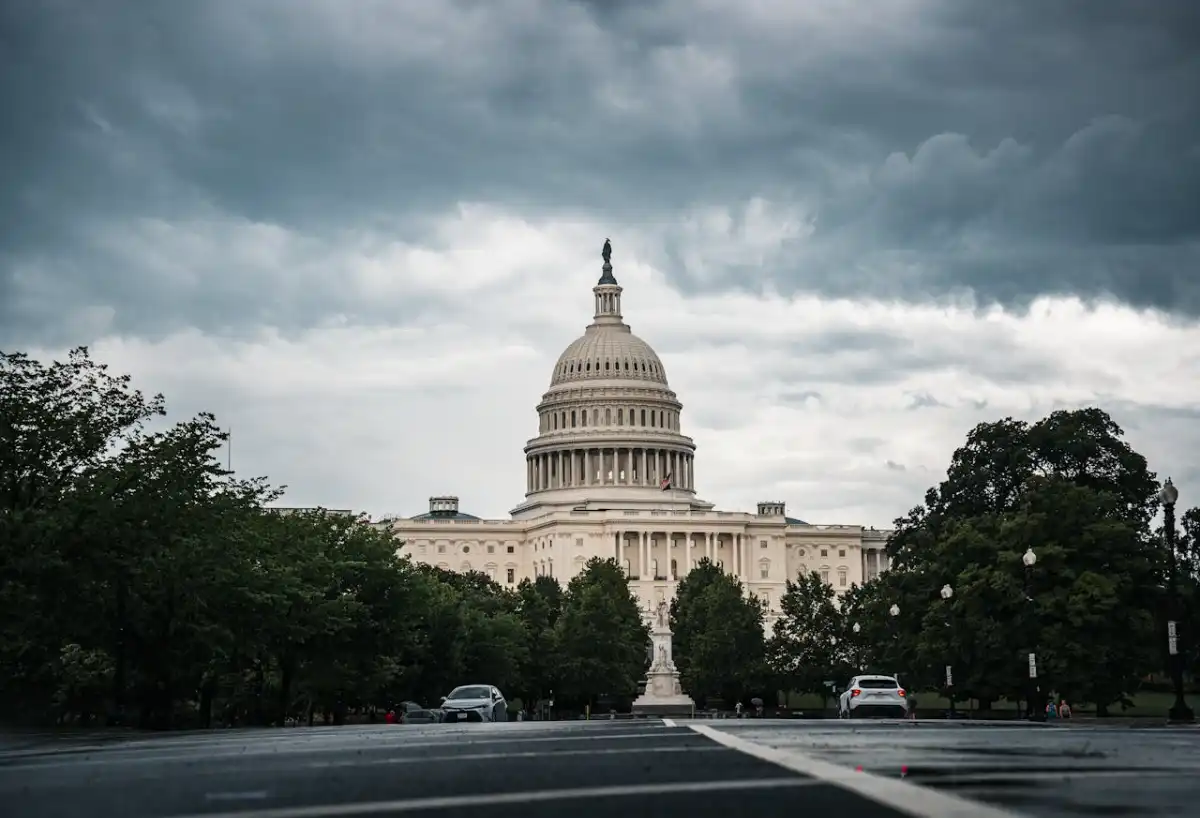
U.S. Government Shutdown 2025: What It Means for Your Money, Benefits, and the Economy
Quick Take
The federal government has entered a shutdown after President Donald Trump and Congress failed to reach a funding deal before the new fiscal year began on October 1, 2025. Essential services continue, but wide swaths of the federal workforce face furloughs, delays, and uncertainty—effects that ripple through markets, credit conditions, and household finances.
Why the Government Shut Down
- Stalemate over short-term funding (CR): Negotiators could not agree on a continuing resolution to keep agencies funded while broader spending talks continued. Competing proposals in the Senate failed, with both parties blaming the other for walking away from the table.
- Policy riders & health-care subsidies: Contentious add-ons—especially around health-care tax credits and related provisions—became a red line for each side. Without a clean path forward, appropriations authority expired at 12:01 a.m. ET and the shutdown began.
What Stays Open vs. What Pauses
Stays Open (Essential):
- National security & public safety: Active-duty military, air traffic control, key border and law enforcement operations.
- Social Security & Medicare payments: Monthly benefits continue, though some service centers may reduce in-person support.
- Federal courts (temporarily): The judiciary will operate using non-appropriated funds for a limited time (currently projected through Oct. 17, 2025), then scale to essential work if needed.
Likely Delayed or Paused:
- Many federal workers furloughed: Non-essential civilian employees are sent home without pay until funding resumes.
- New permits & routine services: Passport processing, small business certifications, some federal grants, and loan approvals may slow or pause depending on agency.
- National parks & museums: Access and staffing vary by site; many scale back services or close.
Your Money: Practical Effects for Households
1) Paychecks & Benefits
- Federal pay: Furloughed workers miss paychecks during the lapse (back pay historically granted after—but not guaranteed).
- Contractors: Federal contractors often do not receive back pay, so missed income could be permanent.
- Social Security/Medicare: Payments continue; expect longer wait times for customer service and appeals.
2) Taxes & IRS
- If the shutdown persists, refund processing and some taxpayer services may slow. Collections and critical enforcement continue, but expect fewer phone agents and longer replies.
3) Travel
- TSA & Air Traffic Control remain operational as essential; however, staffing strain can mean longer lines and occasional disruptions.
- Passport agencies may scale back in-person appointments depending on location.
4) Mortgages, Loans, and Credit
- USDA & FHA lending: Verifications and endorsements can slow; some closings may be delayed if they require federal income or social-security verification.
- Student loans: Servicing continues, though escalations or special handling might face longer queues.
5) Small Business
- SBA guarantees (7(a), 504) and certain federal grants can be delayed, affecting working capital and expansions. Prepare contingency liquidity if you’re mid-deal.
Markets & the Economy: What Investors Should Watch
- Equities (S&P 500, Nasdaq, Dow): Historically, shutdowns produce short-term volatility more than lasting drawdowns. Markets focus on duration and knock-on risks (missed data releases, delayed contracts, and consumer sentiment).
- Treasury market & yields: If economic data releases are postponed and risk sentiment softens, yields can drift on thinner information. Flight-to-quality flows sometimes nudge long-dated yields lower, but debt-supply and inflation-expectations matter more.
- Credit ratings: Ratings agencies generally view shutdowns as political noise unless they signal deeper institutional erosion or lead to fiscal slippage. For now, one major agency indicated the current shutdown is unlikely to affect the sovereign rating in the near term, with impact hinging on duration and scope.
- Dollar & commodities: The U.S. dollar often remains supported by safe-haven demand, while oil and copper move primarily on global growth signals rather than D.C. headlines.
Investor takeaway:
Diversify, keep a liquidity buffer, and avoid knee-jerk reallocations. Focus on durable earnings quality, not daily tape bombs.
How Long Could This Last?
Shutdowns typically end when the political cost to either side outweighs the policy gains of holding out. Signals to watch:
- Vote counts on any revised stop-gap bill in the House or Senate.
- Public opinion pressure on negotiators. Early polling shows broad opposition to shutdowns; rising disapproval can accelerate a deal.
- Emerging pain points: Travel snarls, veterans’ service backlogs, and business-loan delays often bring lawmakers back to the table.
- Judiciary runway: As court operating funds near depletion (current guidance through Oct. 17), pressure intensifies.
If You’re a Federal Worker or Contractor
Immediate steps:
- Document hours & duties in case retroactive pay policies require certification.
- Call creditors proactively: Many lenders offer forbearance/hardship options during shutdowns.
- Check employee assistance programs for bridge support.
- Track benefits (health, retirement contributions) to understand missed match periods and coverage continuity.
For contractors:
- Communicate with your contracting officer about stop-work orders and invoice timing.
- Consider bridge financing only if terms are manageable and you’ve assessed back-pay risk.
Personal Finance Playbook During a Shutdown
- Build/maintain a 3–6 month emergency fund. If that’s not realistic, aim for $1,000–$2,500 as a starter cushion.
- Prioritize essentials: Housing, utilities, food, transportation, health. Defer non-essential spending temporarily.
- Negotiate bills: Ask about hardship plans for mortgages, credit cards, auto loans, and student loans.
- Avoid predatory products: Payday or triple-digit APR loans can spiral quickly.
- Investing: If you’re a long-term investor with diversified funds, sticking to your IPS (investment policy statement) tends to beat timing headlines.
Small Business Owner? Here’s a Checklist
- Cash runway: Model 30–60–90 day scenarios; identify expenses you can flex.
- Accounts receivable: Speed up invoicing and collections; consider early-pay discounts.
- Supply chain: If your vendors rely on federal work, check their exposure.
- SBA pipeline: If you were counting on an SBA guarantee, talk to your bank about alternatives until processing normalizes.
- Payroll: Evaluate contingency measures (reduced hours, job-sharing) while preserving staff morale.
High-CPM Finance Angles Editors Love (and Readers Need)
- “Treasury Yields vs. Risk Assets” — What a data blackout does to bond-equity correlations.
- “Credit Rating Watch” — Why near-term ratings risk remains limited for now, but institutional erosion matters if lapses recur.
- “Household Liquidity Stress Map” — Which regions and sectors feel furloughs first.
- “Shutdown & Inflation” — Will slower data releases cloud the Fed’s path or mute market pricing?
- “Defense & Infrastructure Flows” — How delayed outlays affect contractors’ earnings cadence.
Timeline Snapshot (So Far)
- Oct 1, 2025, 12:01 a.m. ET: Funding authority lapses; shutdown begins after Senate fails to advance competing bills.
- Day 1–2: Agencies execute contingency plans. Federal courts announce operations will continue using non-appropriated funds through Oct. 17.
- Markets & Ratings: Early commentary from a major rating agency signals no near-term sovereign rating impact if the shutdown is brief.
FAQs
Q1. Do Social Security and Medicare stop during a shutdown?
No. Payments continue. However, field offices and hotlines may face reduced staffing, lengthening wait times for appeals or complex cases. Social Security
Q2. Will I get my tax refund?
The IRS maintains critical operations, but refunds and phone support can slow if the shutdown persists. Filing electronically with direct deposit remains the fastest path once processing resumes fully.
Q3. Are national parks open?
It depends on the park’s funding model and contingency plan. Some remain open with limited services (no visitor centers, trash removal), while others close entirely. Check local updates before traveling.
Q4. How does a shutdown affect the stock market?
Historically, shutdowns generate headline volatility more than long-term damage. Watch duration, missed data releases, and earnings guidance from government-exposed sectors (defense, aerospace, contractors).
Q5. What about my federal student loans?
Servicing continues, but escalations or special processing may move slower. Use online portals for routine actions; expect longer phone waits.
Q6. Does this hurt America’s credit rating?
Not automatically. Early indications suggest no near-term rating change unless the shutdown is prolonged or signals deeper institutional weakening.
Q7. I’m a federal contractor. Will I be paid back for downtime?
Unlike federal employees, contractors often do not receive back pay for idle time. Review contract terms and speak with your contracting officer about stop-work orders and invoicing.
Q8. How soon could this end?
Any time lawmakers agree on a stop-gap or full-year funding. The pressure typically escalates as visible disruptions mount and as the judiciary’s temporary funds near exhaustion (currently guided through Oct. 17).
What to Watch Next (Signals of a Breakthrough)
- A bipartisan CR with a short fuse (7–45 days) to reopen agencies.
- Any leader-level meeting that includes a narrow set of policy trades (e.g., temporary health-care provisions) in exchange for clean funding.
- A growing chorus of constituent pressure on key swing votes in both chambers.
- Market reaction beyond noise—sustained risk-off moves or funding stress that pushes leaders to cut a deal.
Conclusion
A government shutdown is disruptive, but your core benefits and national security continue while the political branches trade proposals. For households and businesses, the smartest response is practical, not panicked: stabilize cash flow, communicate early with lenders and vendors, and avoid costly short-term debt.
For investors, keep perspective—duration matters more than day-one headlines—and watch the policy path, not the noise. If lawmakers craft even a brief continuing resolution, much of the immediate strain will ease, markets will refocus on fundamentals, and delayed services should grind back to normal. Until then, prioritize resilience: liquidity, flexibility, and patience.
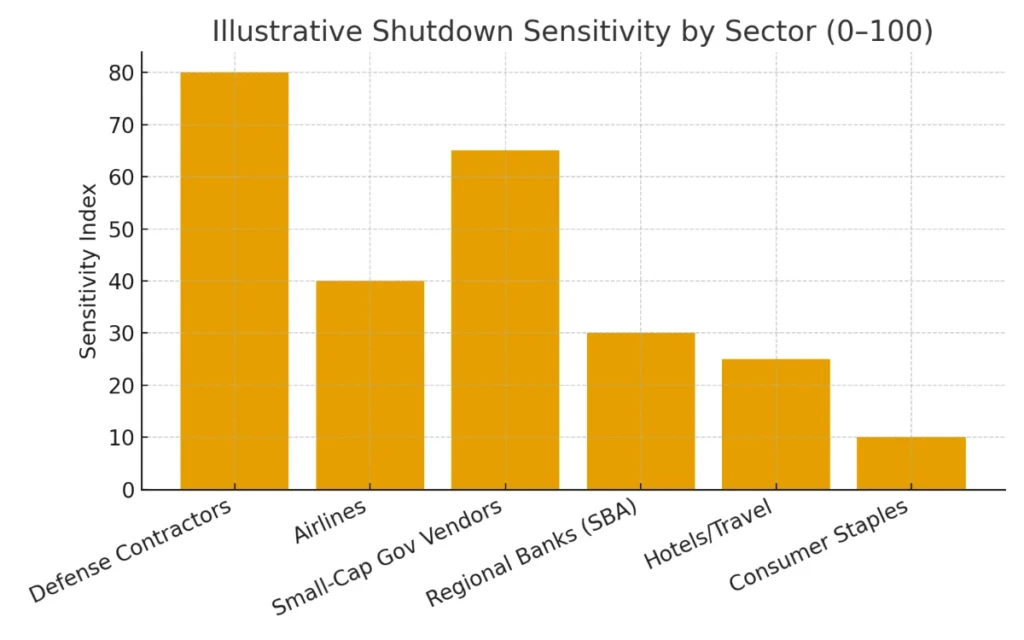
Note: The chart is illustrative—an at-a-glance view of relative “shutdown sensitivity” by sector, not investment advice.
Action Plan for Households & Investors
If your income is exposed to federal work—either directly or as a contractor—build a two-tier cash plan: (1) essential bills covered for 30 days, and (2) optional spending paused until a deal materializes. Proactively contact lenders and ask for hardship or forbearance options; many banks have playbooks specifically for shutdowns. For taxes and benefits, move everything you can to self-service portals to avoid phone delays.
For investors, remember that shutdowns are typically event-driven volatility, not long-term trend changers. Map your portfolio by revenue exposure to federal spending (defense, research grants, infrastructure) and by data dependency (companies that rely on government data releases). Keep dry powder for rebalancing and avoid chasing gaps. If you use options, consider defined-risk spreads rather than outright volatility bets.
Small businesses should run a 90-day working-capital drill: line up a back-up credit line, revisit payment terms with suppliers, and pre-plan staffing schedules. If you were counting on an SBA loan or federal permit, ask your lender for temporary alternatives and gather all documentation now so you can move the moment offices normalize. Above all, optimize for liquidity, flexibility, and communication—these three levers reduce stress while Washington negotiates.
Quick Reference Table: What’s Affected
| Area | Status During Shutdown | Practical Tip |
|---|---|---|
| Social Security/Medicare | Payments continue; slower service | Use online portals; expect delays |
| Federal Workers | Furloughs; back pay likely but not guaranteed | Prioritize essentials; talk to creditors |
| Contractors | Work pauses; back pay uncommon | Confirm stop-work orders; avoid costly bridge loans |
| IRS & Refunds | Some services slower | E-file and direct deposit |
| SBA Loans | New guarantees may slow/pause | Ask bank for interim options |
| Travel (TSA/ATC) | Operational with strain | Arrive early; watch advisories |