Key Highlights
- The US and Switzerland have agreed to cut tariffs on Swiss imports from 39% to 15%, as part of a deal involving $200 billion in Swiss investment into the US by 2028.
- Swiss business leaders met with President Donald Trump at the White House, bringing gifts such as a Rolex gold watch and a specially engraved gold bar from MKS.
- The deal is expected to bring significant economic benefits for both countries, including thousands of new jobs in the US through Swiss investment.
- Swiss companies are optimistic about the agreement, which could help them overcome the recent decline in tech exports due to increased tariffs.
The Charm Offensive: A High-Stakes Negotiation
In a move that underscored the significance of Swiss-American economic relations, the United States and Switzerland have struck a deal that slashes Swiss tariffs from 39% to 15%. This agreement is part of a broader strategy involving substantial investment commitments by the Swiss economy in the United States. According to Guy Parmelin, the Swiss Economics Minister, the deal will bring $200 billion into the US market over the next decade.
A Golden Gesture for Trump
The negotiations were not without their challenges. Initially, Swiss President Karin Keller Sutter attempted to change President Donald Trump’s mind through diplomatic channels but faced a cold reception. However, a pivotal moment came when Swiss business leaders decided to visit the White House in person.
The meeting included key industry players such as Jean Frédéric Dufour from Rolex and Johann Rupert of Richemont.
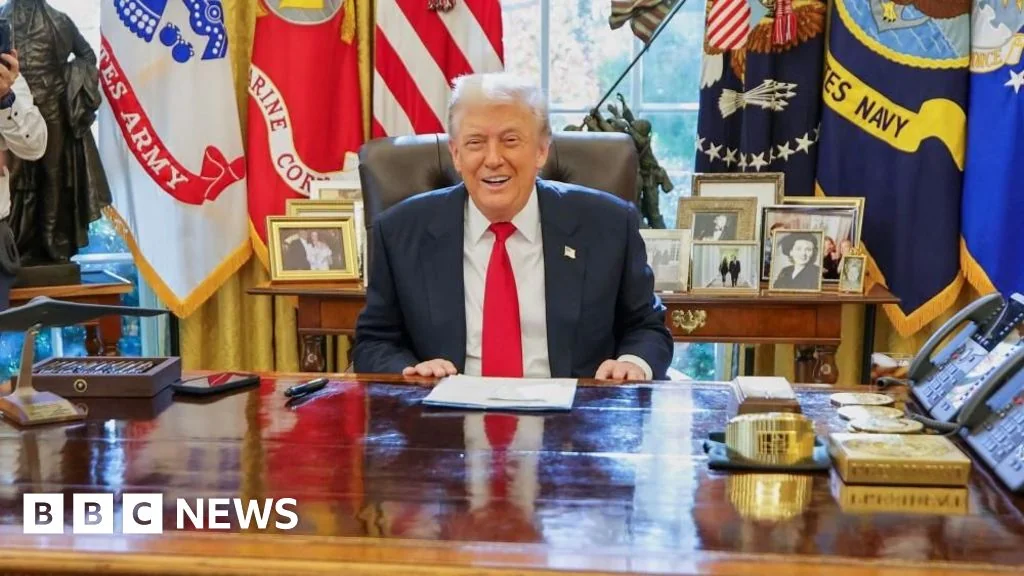
Among the gifts presented were a Rolex “Datejust” desk clock, worth tens of thousands of dollars, which was subsequently found on Trump’s desk in the Oval Office. These gestures seemed to have made an impact; soon after their visit, Trump revealed that a deal was being worked out.
Economic Impact and Investor Confidence
The reduction in tariffs is expected to have a positive economic effect, particularly for Swiss tech companies which saw exports to the US fall by 14.2% in the third quarter of last year following the tariff hike in August. Yves Bugmann from the Swiss Watch Industry Federation expressed relief and optimism about the agreement.
Swiss investment is set to play a crucial role, with plans including pharmaceuticals development, expansion of aerospace manufacturer Pilatus, and growth for train-maker Stadler in Utah. The deal also includes the phasing-in of $67 billion over three years, starting from 2026.
Helene Budliger Artieda, chief trade negotiator, highlighted that Swiss gold refining would be part of the plan, noting that Switzerland is currently a key storage location for gold, while New York handles much of the trading. These investments are expected to create thousands of new jobs in the US and align with the broader economic goals of both nations.
Approval and Future Prospects
The agreement still requires approval from the Swiss parliament and a subsequent referendum. Once approved, it will take several days or weeks for the changes to come into effect. Both countries are optimistic about the long-term benefits of this partnership, which could set a precedent for future trade agreements.
Industry insiders suggest that such high-level diplomatic efforts and personal connections played a significant role in securing this deal. The success of this negotiation highlights the importance of direct engagement between leaders and business representatives in shaping international economic policies.
This agreement marks a turning point in US-Swiss trade relations, reflecting a strategic alliance that benefits both nations economically while fostering mutual trust and cooperation.