Key Highlights
- President Donald Trump awarded two Congressional Medals of Honor during his 2026 State of the Union address.
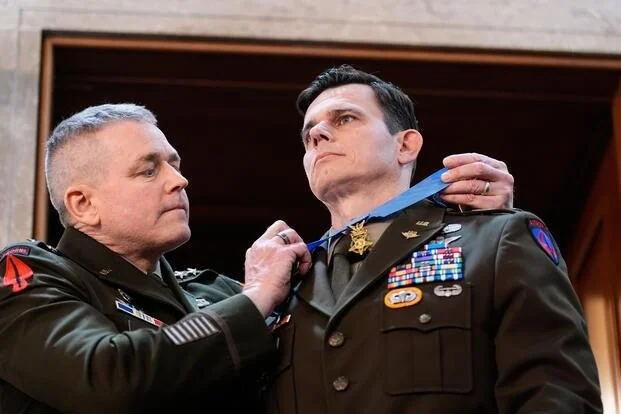
- The recipients were U.S. Army Chief Warrant Officer Eric Slover and Navy Captain Royce Williams, recognizing acts of heroism separated by decades.
- Slover was honored for his actions in a January raid on Venezuelan territory, while Williams received posthumous recognition for aerial combat during the Korean War.
The Show Must Go On: Trump’s State of the Union Medals of Honor Ceremony
President Donald Trump used one of the most-watched political stages in America to highlight something far removed from tax policy and border debates. During his 2026 State of the Union address, he awarded two Congressional Medals of Honor, recognizing acts of heroism separated by more than seven decades but united by what the president called “extraordinary American courage.”
The Modern Mission Under Fire: Slover’s Valor
Eric Slover, a 45-year-old Army Chief Warrant Officer, received his medal for actions during a January raid that Trump said resulted in the capture of Venezuelan leader Nicolás Maduro. In describing the mission, Trump painted a vivid picture of a Chinook helicopter descending under heavy fire.
A Dogfight Finally Recognized: Williams’ Legacy
Retired Navy Captain Royce Williams, 100 years old, was honored for aerial combat during the Korean War. In 1952, flying a Grumman F9F Panther, Williams engaged seven Soviet MiG-15 fighter jets in blizzard conditions over the Sea of Japan. Outnumbered and outgunned, he shot down four enemy aircraft while sustaining more than 200 bullet strikes to his own jet.
A Narrative Arc Spanning Generations
Together, Slover’s recognition reinforced that valor in contemporary missions carries the same weight as historic battlefield heroics. Williams’ award signaled that unfinished recognition can still be addressed, even generations later. For a few minutes, the focus was not on budgets or geopolitics but on the individuals who carried out missions when the cost was measured not in dollars but in blood.
While presidents frequently highlight service members during State of the Union addresses, actually presenting the Medal of Honor in the chamber is rare. The contrast was striking: one recipient represented today’s operational force, helicopter crews flying into hostile airspace, while the other symbolized the enduring legacy of Cold War aviators whose stories were once shrouded in secrecy.