Key Highlights
- Tucker Carlson has called Christian Zionism a “Christian heresy” in an interview with Nick Fuentes.
- The controversial pair lambasted Christian Zionists and questioned their support for Israel.
- Nick Fuentes, known for antisemitic views, appeared on Tucker Carlson’s show despite backlash from critics.
- Historically, the Catholic Church has not endorsed Zionism, with Pope Pius X opposing a solely Jewish state in 1904.
Tucker Carlson Denounces Christian Zionists as ‘Heresy’
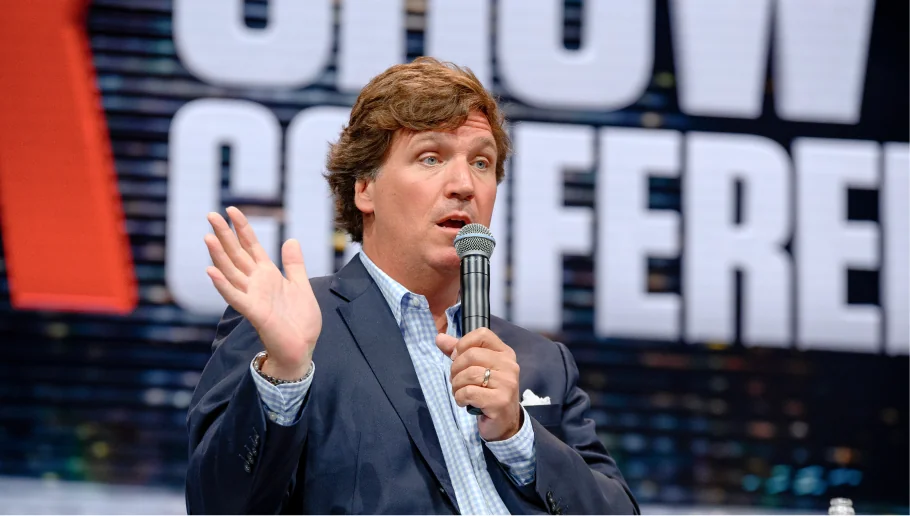
In an interview posted to his social media platform, former Fox News host Tucker Carlson has labeled Christian Zionism as “a Christian heresy,” a stark criticism aimed at conservative Christians who support Israel ardently.
During the two-hour conversation with controversial political actor Nick Fuentes, Carlson and Fuentes engaged in a heated discussion, lambasting “Christian Zionists” with fervor. Carlson, an Episcopalian Christian, expressed his deep dislike for these groups, stating that he finds them offensive as a believer.
“Christian Zionists – like what is that? … I dislike them more than anybody, you know, because it’s Christian heresy and I’m offended by that as a Christian,” Carlson declared in the interview. His strong stance aligns with his long-standing criticism of neoconservatives, whom he has accused of serving Israel over their own country since December 2003.
Nick Fuentes: A Controversial Figure on Tucker Carlson’s Show
Notably, the interview also featured Nick Fuentes, who has a history of antisemitic rhetoric. Despite the backlash his appearance generated, Fuentes echoed familiar themes from his “America First” platform, accusing dual citizens and pro-Israel lobbyists of undue influence in Washington.
Fuentes’s controversial views were evident as he suggested that neoconservatism arises from Jewish leftists who failed to understand reality after the Yom Kippur War. Carlson acknowledged their past feud through mutual insults, but ultimately they buried the hatchet over shared resentment towards establishment Republicans.
Historical Context: Catholic Church’s Stance on Zionism
The historical context of Christian Zionism has been further highlighted by references to the Catholic Church’s stance. Saint Pope Pius X expressed his opposition to a solely Jewish state in 1904, during an audience with Theodor Herzl, founder of modern political Zionism.
Subsequent Vatican diplomacy maintained this view, particularly during and after World War II when plans for a Jewish homeland gained international momentum. The Church was cautious about a Jewish-dominated Palestine that could disrupt Christian custodianship of sacred sites.
After 1948, the Catholic position began to evolve from outright theological rejection towards cautious political accommodation.
Pope Pius XII resisted American entreaties to recognize Israel, seeing such recognition as premature and inconsistent with the Church’s universal mission. Yet under Pope John XXIII, who sought reconciliation with the Jewish people, a more open tone emerged that would culminate decades later in formal diplomatic recognition.
The 1993 Vatican–Israel accord marked a pragmatic acknowledgment of political reality rather than a theological endorsement of Zionism. Subsequent agreements with the Palestine Liberation Organization reflected the Holy See’s enduring commitment to peace and justice for both peoples. In 2015, Pope Francis reaffirmed this dual recognition, calling for coexistence between two sovereign states.
While the Catholic Church has historically not endorsed Zionism, the complex relationship continues to evolve as different factions within Christianity grapple with the implications of Christian Zionism on their faith and politics.