Key Highlights
- Top Democrats try to reassure Europe about US foreign policy under Trump.
- Gavin Newsom suggests “Trump is temporary; he’ll be gone in three years.”
- Rubio’s speech at Munich Security Summit provides reassurance but does not fully allay European concerns.
- Democrats emphasize continuity with Europe despite Trump’s policies.
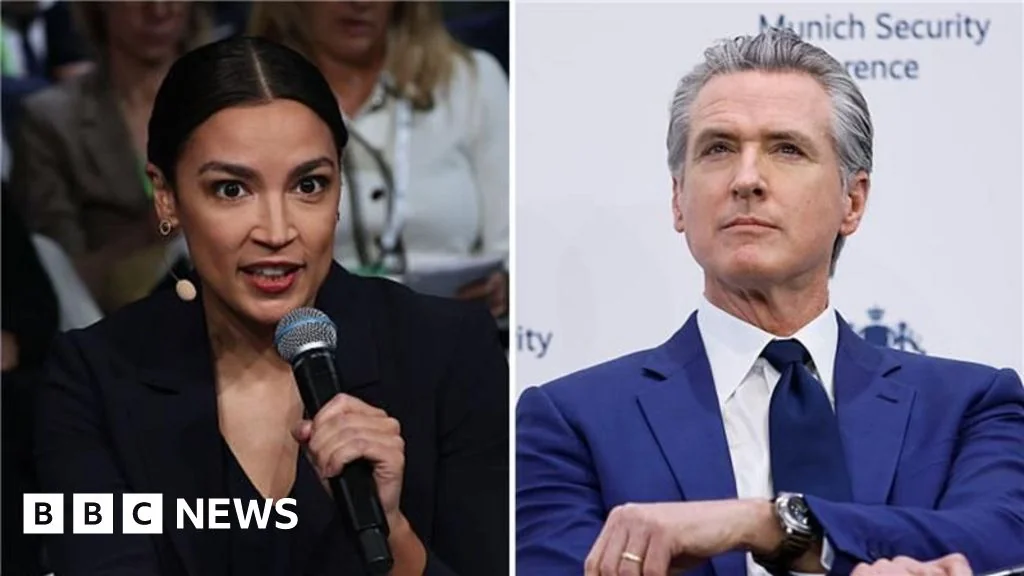
Donald Trump’s exit from the White House may seem like a distant prospect for many, but top Democrats are keen to remind their European counterparts that “he’ll be gone in three years.” This sentiment was echoed by California Governor Gavin Newsom during a conference event, where he emphasized the temporary nature of the current US administration.
Continuity Amidst Turmoil
At the Munich Security Conference, US Secretary of State Marco Rubio took center stage. While his speech aimed to soothe European anxieties about US foreign policy, it did not completely assuage concerns. The conference was a platform for American legislators and governors to voice their opinions on how the world should respond to Trump’s policies.
Temporary Solution?
“If there’s nothing else I can communicate today,” Newsom said at a conference event, “Donald Trump is temporary. He’ll be gone in three years.” This statement was part of a broader effort by Democrats to reassure European allies that despite the current tumultuous period, America remains committed to its international partnerships.
Other American politicians also sought to provide reassurance. Democratic Senator Jeanne Shaheen noted that “the reason we’re here is to provide reassurance that we understand how important our European allies are.” This message was echoed by Republican Senator Thom Tillis, who reminded allies not to get caught up in the rhetoric of US politics.
Domestic Concerns
The conference also addressed domestic concerns. Virginia Senator Mark Warner warned about the potential risks posed by Trump’s efforts to reshape the international order and his use of tariffs against trading partners. “The president’s talk of nationalising elections and instituting stringent identity requirements for voting via executive order mean the freedom and fairness of November’s midterm congressional elections are at stake,” he said.
Alternative Voices
While Rubio’s speech offered some reassurance, other American politicians used the conference to provide a counterpoint. Alexandria Ocasio-Cortez, for instance, highlighted the need for Western democracies to offer an alternative to authoritarian governments. “We’re going through something profound,” she said, “and we’ll get through it.”
Despite these efforts, the reality of US foreign policy under Trump cannot be ignored. His “America First” approach and push for a new international order have strained relations with Europe. Yet, as Newsom noted, “this too shall pass.” The challenge now lies in how long that passage will take.
The Munich Security Conference served as a crucial forum for these voices to be heard, but the underlying question remains: How much damage has already been done, and can it be undone?