Key Highlights
- The Nasdaq 100 has shown remarkable growth over the past decade.
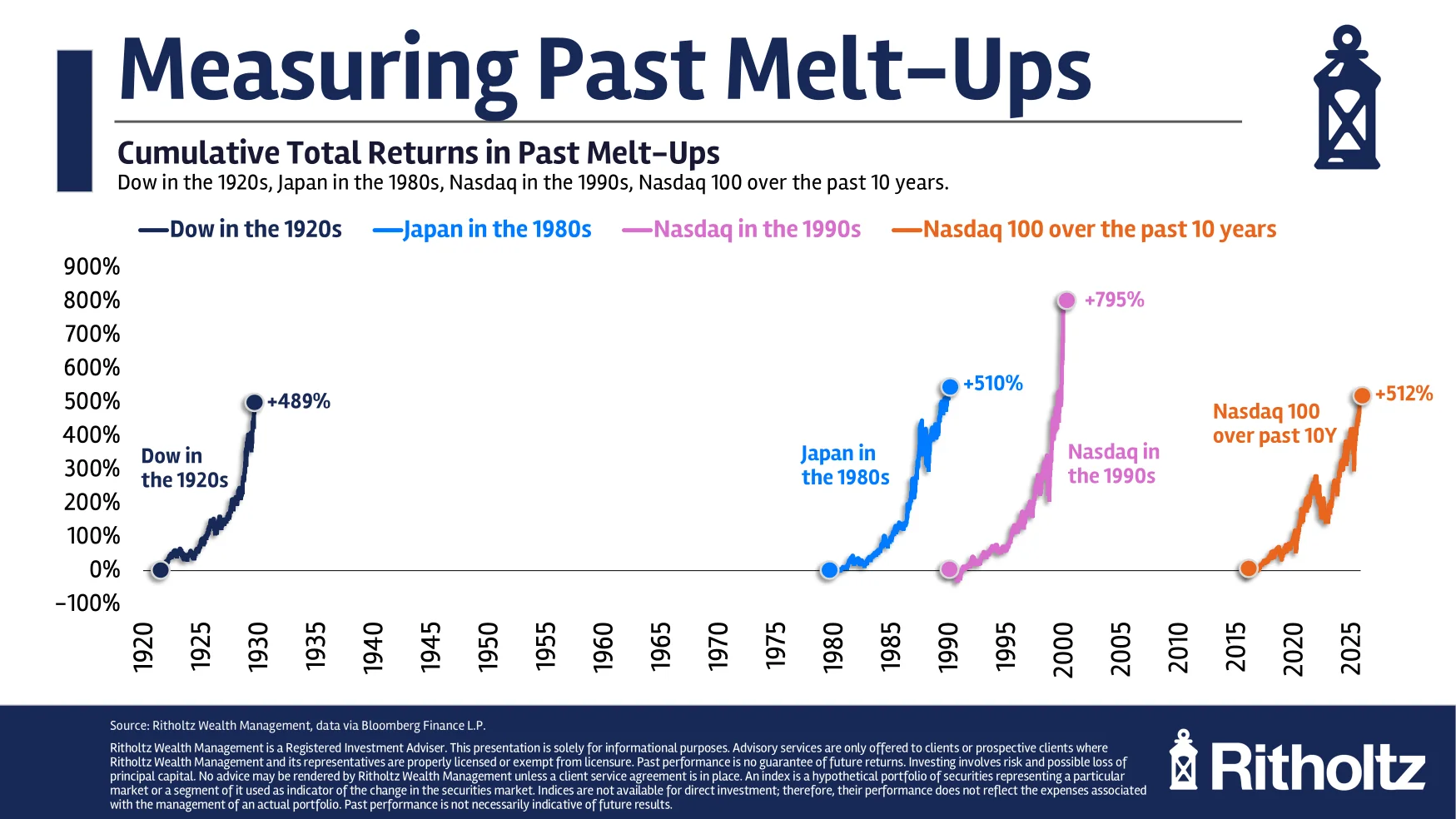
- Bubbles in history such as the Roaring 20s, dot-com bubble, and Japan’s 1980s have similar returns to today’s market.
- Warren Buffett-level annual returns are being observed, but a potential crash remains possible.
- Diversification is recommended given the concentration of wealth in tech stocks.
The Nasdaq 100: A Decade of Unprecedented Growth
Over the past ten years, the Nasdaq 100 has demonstrated a remarkable performance, with returns nearly 20% annually. From its lowest point in March 2009, the index has surged by 22% per year, marking an extraordinary period of growth that spans over one and a half decades.
Warren Buffett himself would likely be impressed with these numbers, underscoring just how strong this bull market run is. However, as any seasoned investor knows, such sustained high returns often herald the onset of a bubble, which is exactly what some experts are now warning about.
Bubble Talk: Comparing Today’s Market to Historical Bubbles
Historical precedents offer insight into whether today’s market conditions could be similar to those that led to significant crashes in the past. The article compares the current state of Nasdaq 100 returns with three major historical bubbles:
- The Roaring 20s (1920-1929)
- The dot-com bubble (late 1990s)
- Japan’s asset price bubble in the 1980s
While current returns are not as extreme as those seen during the dot-com boom, they align closely with the levels experienced during the Roaring 20s and Japan’s bubble era. This raises concerns among analysts about potential market correction.
The Potential for a Market Crash: Lessons from History
History provides valuable lessons on what can happen when markets reach such high valuations. The article mentions that following the dot-com bubble, the Nasdaq experienced an 80% crash, while during the period of 2000 to 2013, the index lost over half its value, resulting in a negative return of -8% per year.
These stark examples highlight the volatility and unpredictability inherent in markets. While the current bull market has been incredibly successful for tech stocks, there is always the risk of a significant downturn. The article notes that such a crash would not come as a surprise to many experts who have observed rapid innovation and potential overvaluation.
Expert Opinions: Forecasting Future Returns
Despite the warning signs, experts are divided on what exactly will happen next. Some believe that while high returns might slow down, an immediate market crash is unlikely. However, others emphasize the importance of diversification in a portfolio to mitigate potential risks.
“Concentrating your wealth in technology stocks has led to unbelievable returns for many years now,” one expert stated. “I strongly believe that diversification will be necessary at some point.” This sentiment underscores the ongoing debate among financial experts and investors alike about how best to navigate current market conditions.
Conclusion
Balancing Risk and Reward
The Nasdaq 100’s performance over the past decade is truly unprecedented, but history suggests that such growth often comes with significant risks. Investors are advised to remain cautious and consider diversification strategies to protect their portfolios from potential market corrections.
As the debate continues about whether we are witnessing a repeat of past bubbles or entering an entirely new era of tech-driven prosperity, one thing is certain: the future remains uncertain, and prudence in investment decisions is key.