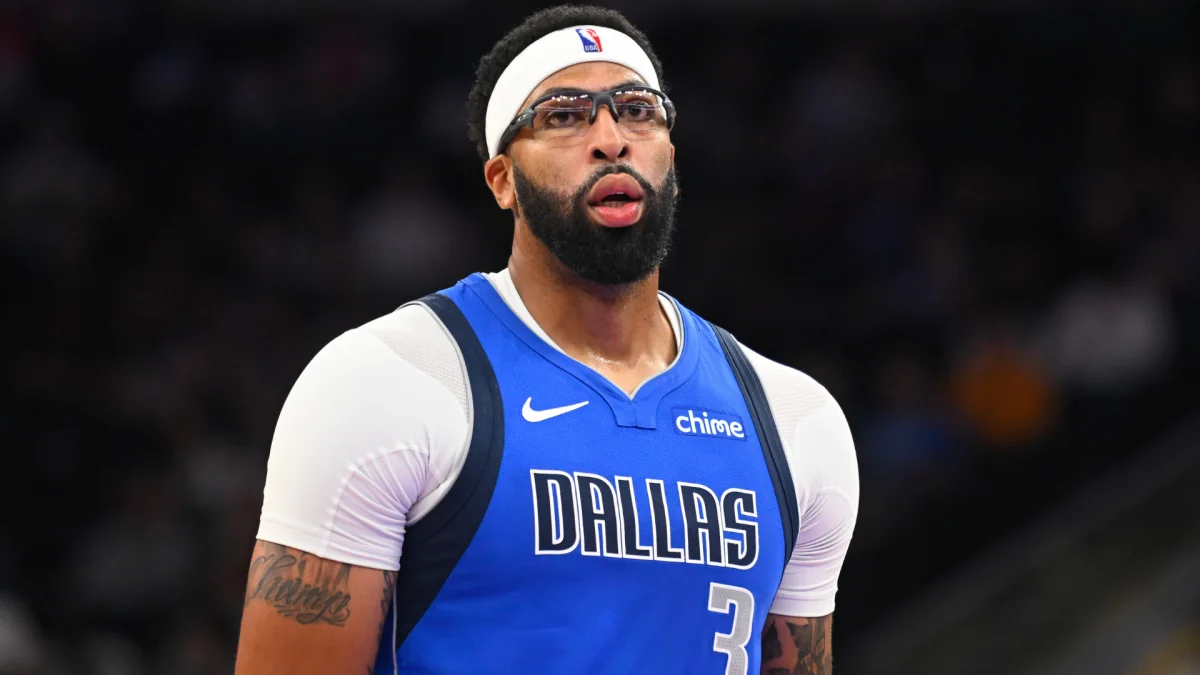
- Anthony Davis’ situation with the Dallas Mavericks is complicated due to his contract and age.
- The NBA trade landscape is challenging for top players like Davis due to their contracts and team needs.
- Teams are hesitant to offer significant assets in trades involving older, high-profile players.
- The difficulty in finding a suitable trade partner has been seen with other star players under the latest CBA.
The Complex Anthony Davis Trade Situation
Anthony Davis’ situation with the Dallas Mavericks is a bummer, much like the NBA’s overall trade landscape. The 33-year-old future Hall of Famer faces a unique set of challenges that make his potential move to a new team an exercise in frustration for both fans and front offices.
The Contract Conundrum
While Davis is turning 33 this March, it’s his contract that poses the biggest obstacle. He’s making $54.1 million this season, with $58.5 million due next year and a player option of $62.8 million in 2027-28. His extension options for future seasons also add complexity to any trade talks.
“There’s not a lot of teams that are lining up” to acquire Davis, ESPN’s Tim Bontemps noted on the Hoop Collective episode. This sentiment echoes the frustration felt by many around the league who recognize the difficulty in finding a suitable trade partner for such a high-profile player.
The Trade Market Landscape
The NBA trade market has historically struggled with top-tier players due to their contracts and team needs. The departure of Nico Harrison from the Mavericks adds another layer of complexity, as teams now have to consider both the immediate impact of trading away key players and the long-term financial implications.
According to Zach Lowe at The Ringer, the difference between what the Mavs gave up for Davis and what they’ll eventually get back “will set the world record for the biggest delta in trade returns for one single player in the history of professional sports.” This highlights the significant hurdle teams face when trying to move a star like Davis.
Historical Context
The situation with Anthony Davis is reminiscent of other star players who faced similar challenges under the latest Collective Bargaining Agreement (CBA). Jimmy Butler, Kevin Durant, and Brandon Ingram are just a few examples where teams were hesitant to offer the assets required to make such trades.
These trades often involve complex negotiations, as both sides must navigate the financial implications of player options and future contracts. The Charlotte Hornets’ reluctance to move LaMelo Ball, for instance, mirrors the challenges Davis faces with the Mavericks.
The Future of Trade Talks
As trade season approaches on December 15, top names like Anthony Davis are likely to receive significant attention. However, their moves will not be as straightforward as some might hope. Teams must balance the immediate need for a playoff push with long-term financial considerations.
The ideal target for buyers is usually younger players who can complement existing cores and fit within salary cap constraints. This explains why the Kings’ Keon Ellis, making $2.3 million this season, tops Fanspo’s NBA trade machine list despite his young age and limited experience.
Conclusion
The Anthony Davis situation with the Dallas Mavericks is a prime example of how complex trades can be in today’s NBA landscape. While it’s easy to say that the Mavs “should” trade him, finding an acceptable deal remains a daunting task for both sides. The league-wide trend of struggling to move top players highlights the intricate nature of modern basketball transactions.
For now, fans will continue to speculate and hope for a resolution, while teams grapple with the difficult decisions that come with dealing with such high-profile contracts in a competitive environment.