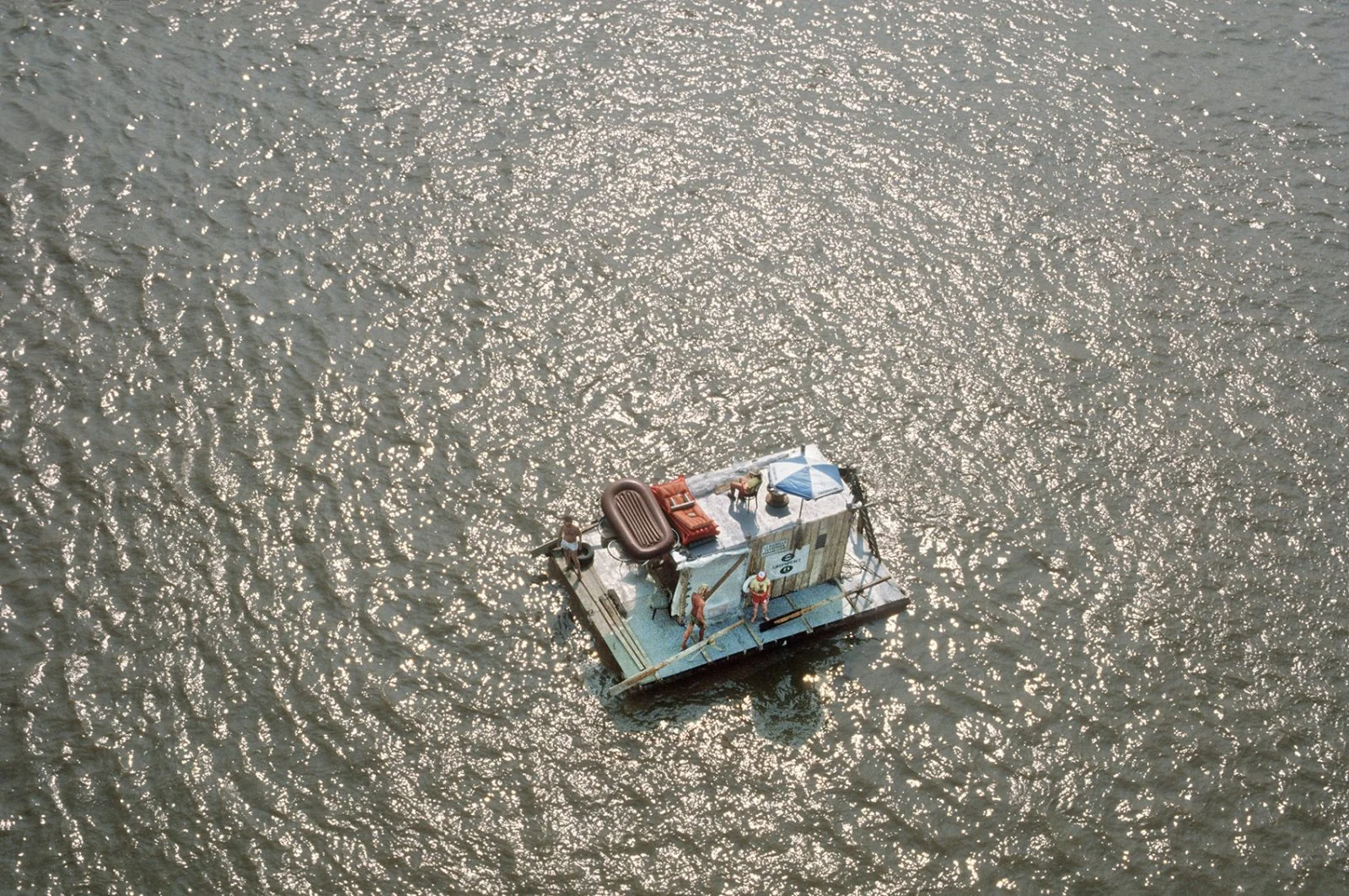
Key Highlights
- A group of young people from the U.S. and Germany launched a homemade raft on the Missouri River in 1981.
- The raft journey lasted two months, covering the entire length of the Mississippi to New Orleans.
- The project was documented by Justus Wayne Thomas, who later published “The River Will Be a Part of Us” with reflections from the crew members.
- Tom Bates organized the trip and asked Thomas to join as a photographer.
A Unique Adventure on the Mississippi
In 1981, Tom Bates, an American college student, and his German friend Eva Ohrner embarked on a remarkable journey that would change both their lives. Their goal was to float down the Missouri River from Kansas City to New Orleans, covering approximately 700 miles over two months.
The Raft
They named their homemade raft Eulenspiegel, a character in German folklore known for his wit and mischief. The name reflected the adventurous spirit of the trip. Justus Wayne Thomas, BA’80, an aspiring photographer from Nashville, joined the crew to document this unique experience.
The Journey
Launched on July 3, 1981, the raft faced numerous challenges along its journey. One night in St. Louis, they narrowly avoided disaster when a mooring line prevented them from being crushed by a barge near the Gateway Arch National Monument. Further downriver, they encountered a chute that carried their raft into darkness and a waterfall before re-emerging safely.
The Aftermath
Following the trip, most crew members scattered around the world, losing touch with each other for decades. In 2011, they reunited in Winter Park, Colorado, for a 30th anniversary reunion. Thomas, now a photographer and writer, decided to publish his photographs along with reflections from other crew members.
Documenting the Journey
Thomas’s photographs captured not only the beauty of the river but also the emotions and experiences shared by the crew. Atlanta curator TK Smith wrote an introductory essay, providing context for these images within American visual culture. The book highlights how adventure is both romanticized and rarely experienced.
Reflections
When asked about reliving such a physically demanding journey now, Thomas responded, “The raft trip was physically taxing, and I’m not sure I could do it now. But I hope the book inspires a few young people to take a similar leap so that in 40 years, they’ll be privileged to answer some ‘why in the world’ questions.”
A Lasting Legacy
“The River Will Be a Part of Us” serves as a testament to youthful adventure and the enduring power of shared experiences. The book not only preserves these memories but also inspires future generations to embrace similar challenges, fostering a deep connection with nature and adventure.