Key Highlights
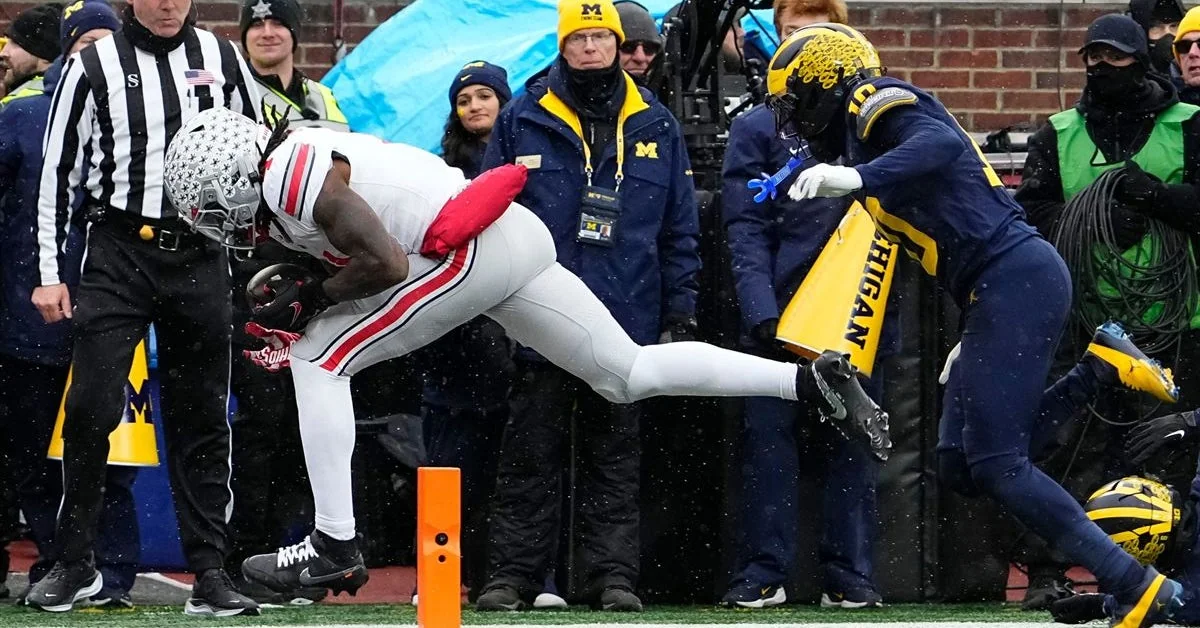
- The controversial touchdown by Jeremiah Smith in the Michigan vs. Ohio State game turned what could have been a defensive stop into an early Ohio State lead.
- Big Ten official Kole Knueppel cited a lack of definitive video angles as the reason for not overturning the call, stating that without clear evidence, the play was upheld.
- Michigan coach Sherrone Moore disagreed with the officials but acknowledged that the timing of the play impacted the flow of the game more than the final score.
The Controversial Touchdown: Turning Point in Michigan vs. Ohio State Rivalry
Narrated by ZACH SHAW, Nov 29th, 11:42 AM – The tension in Michigan Stadium was palpable as the Wolverines and Buckeyes clashed in their annual rivalry on a crisp November afternoon.
Michigan’s Early Lead and Fizzled Momentum
The game started with promise for the home team. Michigan took an early 6-0 lead, thanks to strong defensive play and accurate field goals by Dominic Zvada. Zeke Berry seemed at bay as wide receiver Jeremiah Smith made a swift move past him, creating an opening near the end zone.
Jeremiah Smith’s Touchdown: A Moment of Controversy
Despite facing little pressure from Ohio State’s defense, quarterback Julian Sayin found Smith who had effectively evaded Berry. The pass was perfect; Smith caught it comfortably in bounds and stumbled into the end zone, despite a hit by safety Brandyn Hillman.
The 35-yard completion on fourth-down turned what could have been a defensive stop with plenty of home-field momentum into a 10-6 Ohio State lead. The officials initially ruled it as a touchdown but faced scrutiny afterward for not overturning the call, sparking debate among fans and analysts alike.
Official’s Justification and Michigan Coach’s Response
Kole Knueppel, a Big Ten official, explained to reporters that they did not have a clear camera angle to determine if Smith had lost possession of the ball before crossing the goal line. “We did not have an angle to confirm by obvious video evidence that the ball was loose before he crossed the goal line,” said Knueppel.
Michigan coach Sherrone Moore acknowledged the controversial call but maintained a professional stance. He disagreed with the officials’ assessment, saying it was “inconclusive.” However, he added, “at the end of the day, it’s not my decision on what the official says.”
“A good bit, right? A big piece,” Moore elaborated. “We start out the game with a pick throwing at Jeremiah Smith and we start out the game with a pick.
At that point I think it’s 6-3, and if that’s a touchback, that gives us a little momentum, you know? So it was a big piece, but we got to do the other things. We got to do the other things in the other spots to go in.”
The game unfolded with Michigan being out-gained by Ohio State 350-83 after each team’s first two drives and ultimately losing 27-9. The controversial touchdown call, while just one play, had a significant impact on the flow of the game.
Implications for Future Games
The outcome of this game highlights the importance of clear camera angles in making critical officiating decisions during high-pressure moments in football games. It also underscores the challenges faced by officials when relying solely on live video feeds without access to additional angles or replays.
For coaches like Sherrone Moore, such incidents serve as a reminder that despite their best efforts and preparation, sometimes the outcome can hinge on factors beyond their control, including the decisions of game officials. This adds another layer of complexity to coaching strategy and team dynamics in competitive sports.