Key Highlights
- New York Times’ Connections game offers daily challenges to group answers based on various categories.
- Hints are provided for players who struggle with the game’s increasingly complex puzzles.
- The latest hints and solutions reveal today’s word groups in different colors, each representing a difficulty level.
- Johnny Dee offers insights into playing Connections and provides tips for success.
A Daily Challenge: The NYT Connections Puzzle
New York Times’ Connections is an engaging daily puzzle that challenges players to group answers based on different categories. Each day, the game presents a set of words that need to be divided into groups according to shared characteristics, with each group represented by a color—green for easy, yellow for medium, blue for hard, and purple for very difficult.
Today’s Puzzle: Insights from Johnny Dee
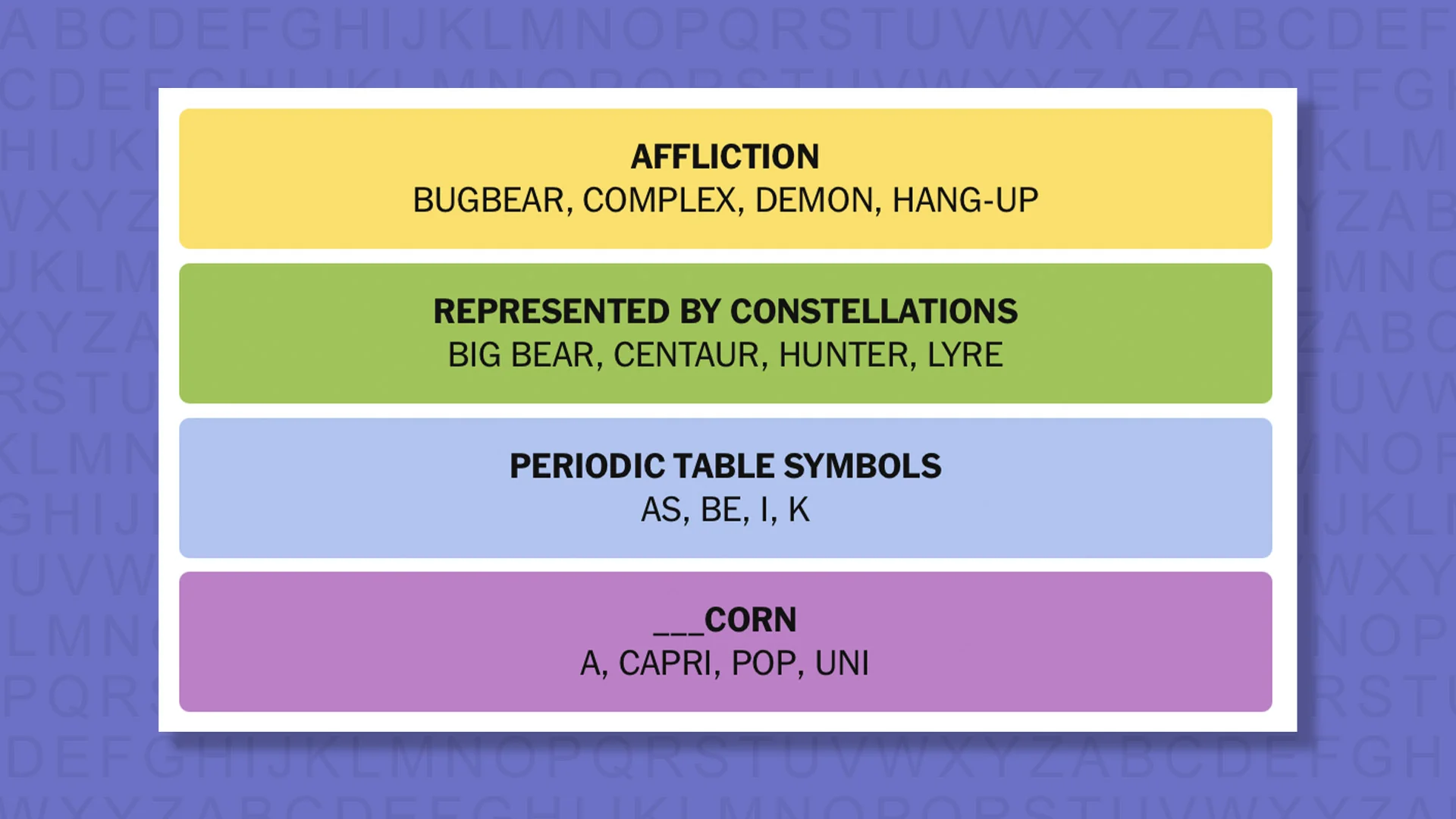
Johnny Dee, a freelance pop culture journalist, has provided hints and solutions for today’s puzzle. According to him, the game challenges players by presenting groups that are initially misleading or require complex thinking. For instance, the word “bugbear,” which might appear to be related to something in nature or mythology, is actually a category of chemical elements.
Dee emphasizes the importance of paying attention to clues provided for each group’s difficulty level.
He suggests that players look for patterns and connections between words, using rhymes or common themes to form groups. For today’s puzzle, he revealed that the purple group (very difficult) requires adding a word that rhymes with “torn.”
Playing Strategies and Tips
To succeed in Connections, players must be adept at recognizing patterns and making logical connections between seemingly unrelated words. According to Dee, it’s essential to approach each category methodically, starting with the easiest groups first and gradually moving towards more complex ones.
“It was extraordinarily tempting to connect K, POP, DEMON, and HUNTER,” Dee noted, “but I stopped before taking the plunge.” He advises players to avoid making assumptions too quickly and to use a process of elimination when stuck. Remembering that you can make up to four mistakes gives players some breathing room, allowing them to experiment with different groupings.
For those who find the game challenging, Dee offers additional resources such as daily Strands hints and answers and Quordle hints and answers articles. He also mentions Marc’s Wordle Today page for those interested in exploring other word games.
The Evolution of Word Games
Connections is part of a broader trend of word games that have gained popularity in recent years, following the success of games like Wordle. These puzzles not only provide entertainment but also serve as mental exercises, enhancing vocabulary and critical thinking skills.
“NYT Connections is one of several increasingly popular word games made by the New York Times,” Dee explains. “It challenges players to find groups of four items that share something in common, with each group having a different difficulty level: green for easy, yellow for medium, blue for hard, and purple for very difficult.”
While Connections can be tricky, it offers a unique challenge compared to simpler games like Wordle. The inclusion of homophones and other tricks adds an extra layer of complexity, making each puzzle both frustrating and rewarding.
Conclusion
New York Times’ Connections game provides daily word challenges that test players’ abilities to recognize patterns and make logical connections. With hints and solutions available from dedicated journalists like Johnny Dee, even those who find the game difficult can navigate its complexities more easily. As a popular addition to the world of word games, Connections continues to engage and challenge a wide audience.