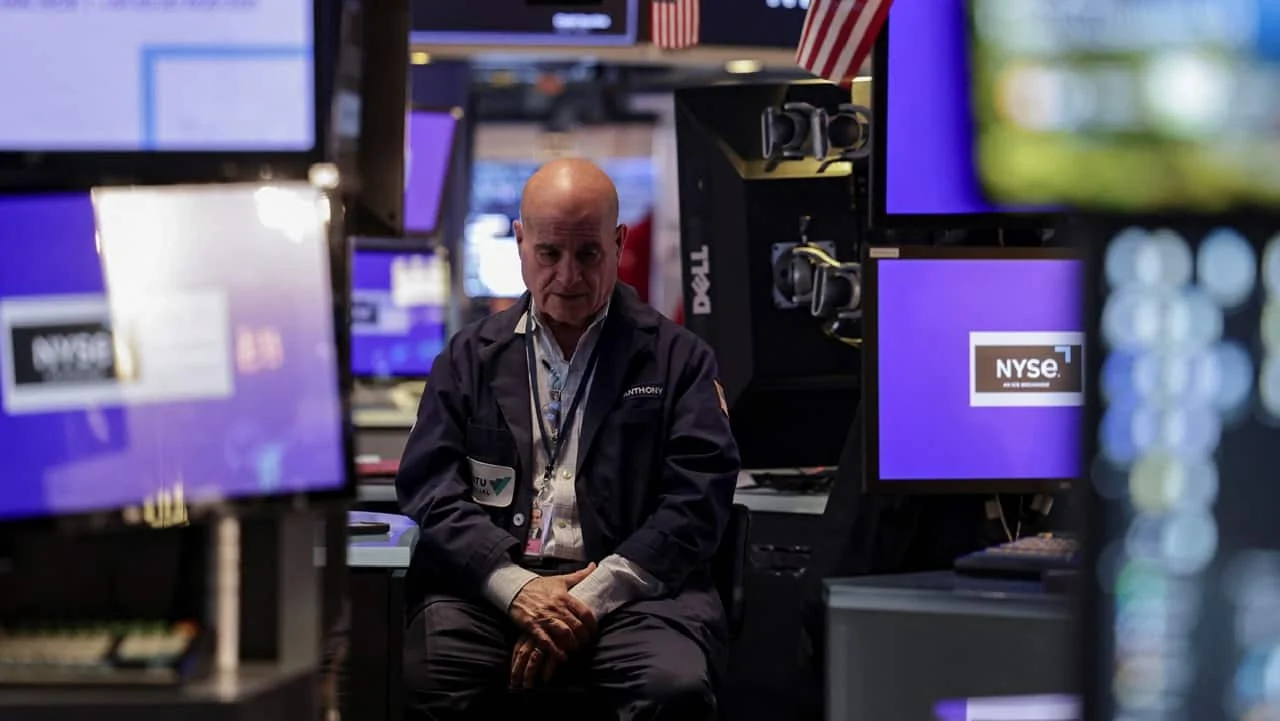
Key Highlights
- The Nasdaq Composite Index has posted its sharpest decline in eight months in November.
- Heavy selling in major artificial-intelligence stocks, including Nvidia, Meta, Tesla, and Amazon, is driving the slide.
- Nvidia’s stock price has dropped more than 8 percent in November.
- The Nasdaq’s decline of 4.3 percent this month compares to a nearly 2 percent drop in the S&P 500 Index.
Market Downturn and AI Sector Impact
The Nasdaq Composite Index suffered its most significant monthly drop in eight months, with major artificial-intelligence stocks leading the decline. The index has fallen by 4.3 percent this month, outperforming the S&P 500’s nearly 2 percent decline. This downturn highlights growing unease among investors regarding the sustainability of the AI trading environment.
The pullback in key players such as Nvidia, Apple, Meta, Tesla, and Amazon has significantly contributed to the market’s volatility.
Specifically, Nvidia experienced a more than 8 percent drop in November, while Tesla declined by 11 percent over the same period. Apple’s stock was down only 1 percent, and Meta fell 7 percent.
Investor Sentiment and AI Earnings
Much of the market’s slide has been driven by concerns that recent strong third-quarter earnings from these companies might not be enough to support their lofty valuations. The strength of the artificial-intelligence narrative has pushed S&P 500 valuations to elevated levels, making it among the world’s most expensive markets.
Notable investors such as Peter Thiel have sold their stakes in Nvidia, while SoftBank’s Masayoshi Son and Michael Burry, who held put options on the chipmaker with a notional value of over $1 billion, have also reduced or exited their positions. This exodus reflects broader investor anxiety about potential bubbles driven by AI investments.
The surge in demand for technology shares, heavy investment in AI capacity, and rapid build-out of data centers are further fueling the circular momentum of the AI ecosystem. Within public markets, a large share of upward earnings revisions has been driven by the Magnificent Seven, widely viewed as key beneficiaries of the AI boom.
Private Market Valuations and Economic Indicators
The strength of the AI narrative extends to private markets as well. One major AI firm now holds an estimated valuation of $500 billion with $1–1.5 trillion in committed investments, while Thinking Machines Lab, founded by former OpenAI executive Mira Murati, is seeking funds at a $50 billion valuation less than a year after its launch.
This high valuations across the sector have placed S&P 500 indices among the world’s most expensive markets. The selling pressure in both indices is expected as investors prepare for an eventful week of corporate results and economic signals, including earnings reports from Nvidia, Home Depot, and Walmart, along with key economic data releases.
The Federal Reserve will release minutes from its October 28–29 meeting, which may provide more insight into the unusual split among policymakers following a quarter-point rate cut.
Traders have reduced the probability of another cut in December to below 50 percent, after officials signaled that further easing is not guaranteed.
The market downturn underscores the complex interplay between AI technology, investor sentiment, and broader economic conditions. As companies like Nvidia prepare to report earnings on Wednesday, the coming weeks will likely reveal more about the health of the AI sector and its impact on global markets.