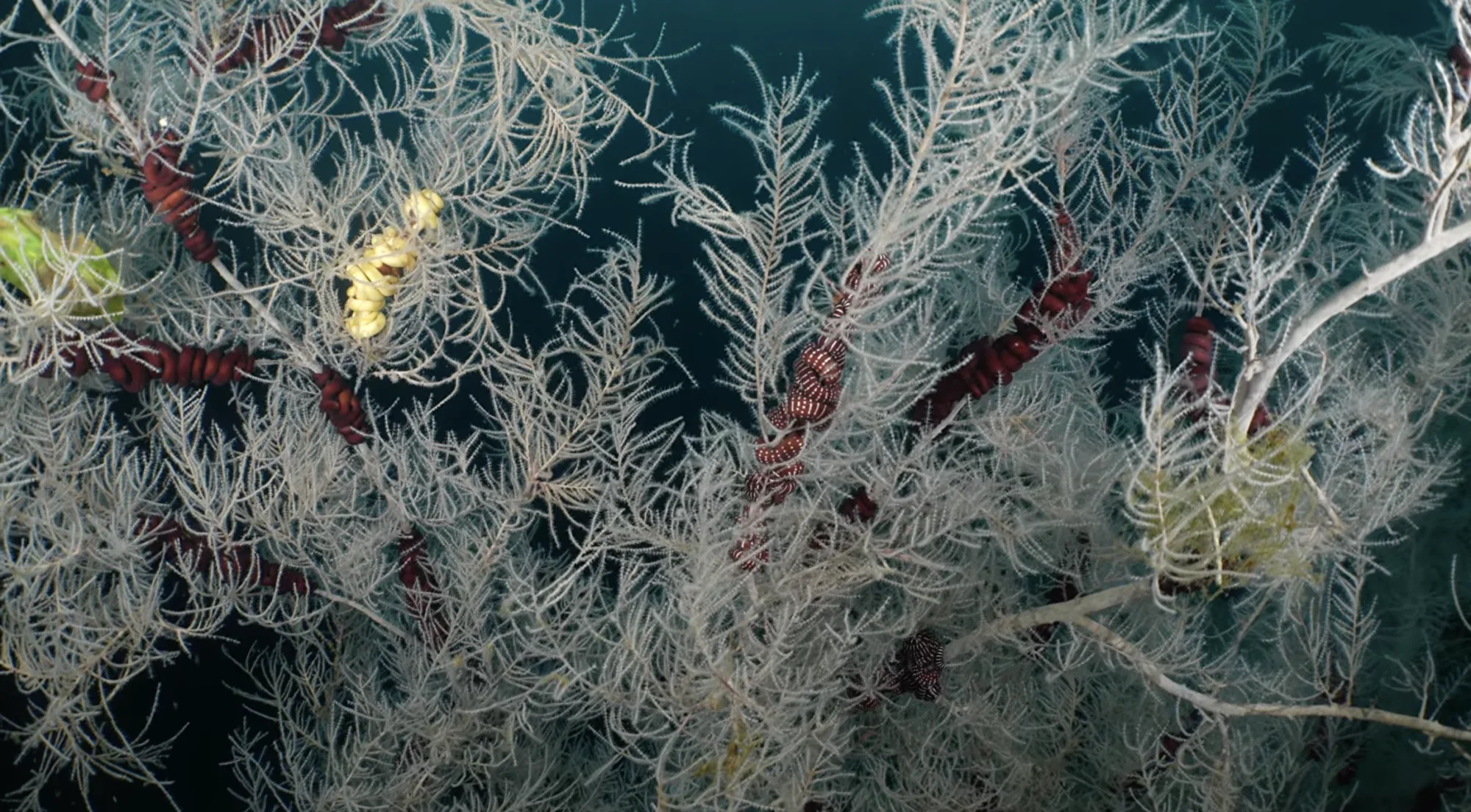
Key Highlights
- A 300-400-year-old black coral was discovered in Fiordland National Park, New Zealand.
- The coral measures four meters high and 4.5 meters wide, making it the largest of its kind found in Aotearoa New Zealand’s waters.
- Scientists emphasize the importance of protecting large corals as vital breeding stock for the species.
- Larger corals are more resilient to environmental threats like rising ocean temperatures and acidification.
New Discovery: Largest Ever Seen Centuries-Old Coral in New Zealand
Conservation efforts in New Zealand received a significant boost when marine researchers stumbled upon an enormous black coral that has been estimated to be between 300 and 400 years old. Found off the coast of Fiordland National Park, this discovery is not only groundbreaking for its size but also highlights the urgent need for enhanced protection measures in New Zealand’s waters.
Discovery and Size
During a routine dive in the depths of Fiordland’s underwater realms, Victoria University researchers made an incredible find. The black coral, known scientifically as Antipathella fiordensis, was measured to be four meters high and 4.5 meters wide, making it one of the largest corals ever documented in New Zealand’s marine environment.
The discovery was described by Professor James Bell, a marine biologist at Te Herenga Waka Victoria University of Wellington, as “absolutely huge.” His experience over 25 years as a researcher provided him with a unique perspective on just how rare and special such findings are. “Most black corals we come across when diving are small,” he noted, “with the bigger ones usually less than two to three meters tall. Finding this one was really cool.”
Importance of Large Corals
Large corals like these play a crucial role in marine ecosystems as they serve as vital breeding stock for their species. According to Professor Bell, “These larger corals are more resilient and can contribute significantly to the overall health and recovery of coral populations.” The slow growth rate of black corals makes them particularly valuable for conservation efforts.
However, large corals face increasing threats from rising ocean temperatures, ocean acidification, and destructive fishing practices. Over the last four decades, half of the world’s coral reefs have been lost due to these environmental challenges. In New Zealand alone, a bottom trawling vessel pulled up six tonnes of protected coral in a single trawl last year, marking the worst case of coral destruction reported in over a decade.
Call for Protection
To address this pressing issue, scientists and activists are urging law-makers to take decisive action. Endurance swimmer Jono Ridler has taken up the mantle, embarking on a 1,000-mile world-record attempt across New Zealand’s North Island unassisted. His campaign aims to highlight the need for stronger laws against bottom trawling, which continues to occur in other parts of the country despite a two-year suspension.
“Pinpointing where large corals occur means we can better protect them by letting people know where not to anchor their boats or drop pots,” Professor Bell added. This underscores the importance of identifying and safeguarding these critical habitats.
Collaborative Efforts
The Victoria University researchers are working closely with the Department of Conservation and the Fiordland Marine Guardians to study and map the distribution of protected coral species in the fiords. They are calling on anyone who knows of similarly large black corals to report their findings so they can better understand the extent and commonality of such large coral colonies throughout Fiordland.
“We’d love to receive reports from anyone who knows of particularly large black corals that are greater than four meters,” said Professor Bell. This collaborative approach is crucial in building a comprehensive understanding of these rare and important marine resources.
The discovery of this enormous black coral serves as both an inspiration for conservation efforts and a stark reminder of the urgent need to protect our oceans and their precious inhabitants. As the world continues to face environmental challenges, the preservation of such unique marine life becomes ever more critical.