Key Highlights
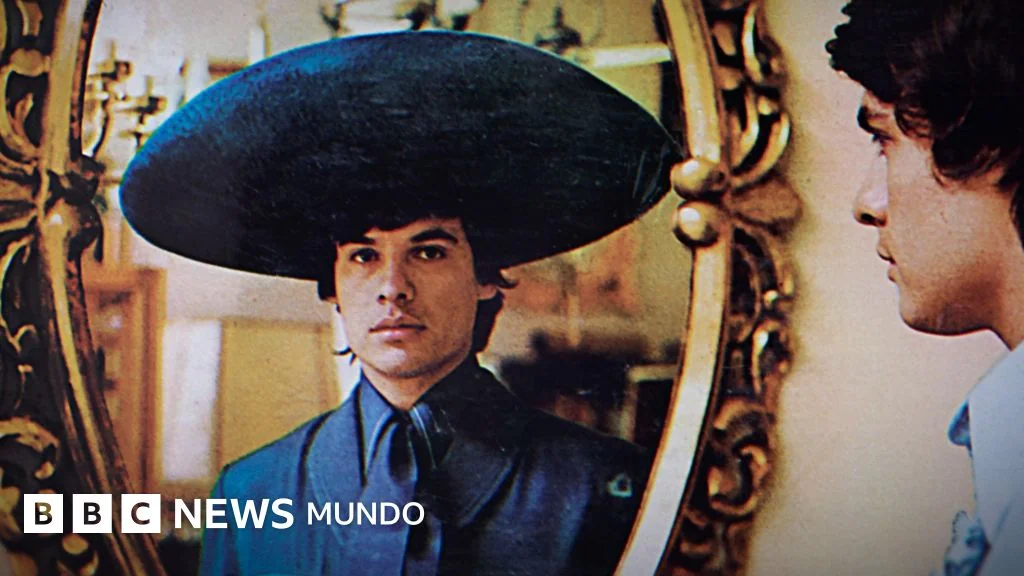
- Juan Gabriel’s life and legacy are explored in a Netflix documentary titled “Debo, puedo y quiero.”
- The musician’s ambiguous sexuality contributed to his status as an icon of Mexican cultural identity.
- Mexican musicologist Guadalupe Caro Cocotle discusses Juan Gabriel’s impact on the country’s education sentimental culture.
- Juan Gabriel successfully challenged traditional masculine norms and societal expectations through his artistry.
The Legacy of Juan Gabriel: An Icon of Mexican Culture
On 30 October 2025, we revisit the life and enduring legacy of Alberto Aguilera Valadez, better known as Juan Gabriel. His career spanned from his birth in 1950 to his death in 2016, leaving behind a rich tapestry of musical achievements that have become an integral part of Mexican cultural identity.
Juan Gabriel’s Ambiguous Identity
According to Guadalupe Caro Cocotle, Juan Gabriel has transcended the status of a mere icon and stands as an essential reference for understanding the emotions and complexities of the Mexican psyche. “He became an iconic figure that is central to the education sentimental culture of Mexicans,” she states.
The documentary series “Debo, puedo y quiero” on Netflix delves into his life, revealing new perspectives on how Juan Gabriel’s ambiguous sexuality contributed significantly to his cultural significance. In a society where open discussions were rare, Juan Gabriel’s non-conformity allowed him to explore and express emotions traditionally associated with the feminine.
Reversing Traditional Masculinity
“My father said, ‘canta muy bien el puto,’ in front of me,” recalls Caro Cocotle. This statement, which was not an insult but a form of reclamation within his family, highlights how Juan Gabriel’s openness about his sexuality challenged traditional norms and provided a new lens through which men could express their emotions.
By embodying a more emotionally expressive masculinity, Juan Gabriel offered tools for men to explore vulnerability. His songs often depicted the pain of unrequited love but also held out hope for reconciliation, reflecting a deeply human condition that resonated with many Mexican listeners.
Ambiguity and Cultural Ambivalence
The documentarians emphasize how ambiguity played a crucial role in Juan Gabriel’s success. Caro Cocotle explains: “Juan Gabriel managed to decentralize and deconstruct the masculinity of his time, allowing for emotional expression that was previously considered weak or feminine.” This duality—between extreme happiness and tragedy—is quintessentially Mexican.
Music such as “Querida,” which transitions from a plea for return to a joyful dance, exemplifies Juan Gabriel’s ability to convey complex emotions through his lyrics. This ambivalence is evident not only in his music but also in the way Mexicans celebrate life and death during festivals like Día de Muertos.
Negotiating the Music Industry
Despite the conservative environment of the 1970s and 1980s, Juan Gabriel navigated the industry with remarkable skill. His ability to perform at Bellas Artes, an institution of high culture in Mexico City, marked a significant moment when he reconciled his artistic vision with mainstream acceptance.
Caro Cocotle notes: “He managed to perform there alongside the Orquesta Sinfónica Nacional and the coro de Bellas Artes, despite coming from a background that was often seen as less refined. This performance represented a democratization of culture, making his music accessible across different social classes.” This act of bridging gaps between elite and popular cultures underscored Juan Gabriel’s broad appeal and influence.
Conclusion
A Cultural Icon for All Time
The legacy of Juan Gabriel extends far beyond the realm of music. His life and work continue to shape discussions around gender, emotion, and cultural identity in Mexico. As the documentary series continues to explore his story, it serves as a reminder of how art can transcend boundaries and touch the lives of millions.