Key Highlights
- Kirk Herbstreit says he would quit before participating in clickbait culture.
- Herbstreit criticizes the debate show format that has taken over sports media, saying it prioritizes viral moments over analysis.
- College GameDay is presented as an antidote to the clickbait culture, focusing on players and storylines rather than controversy.
The State of Sports Media: Kirk Herbstreit’s Criticism
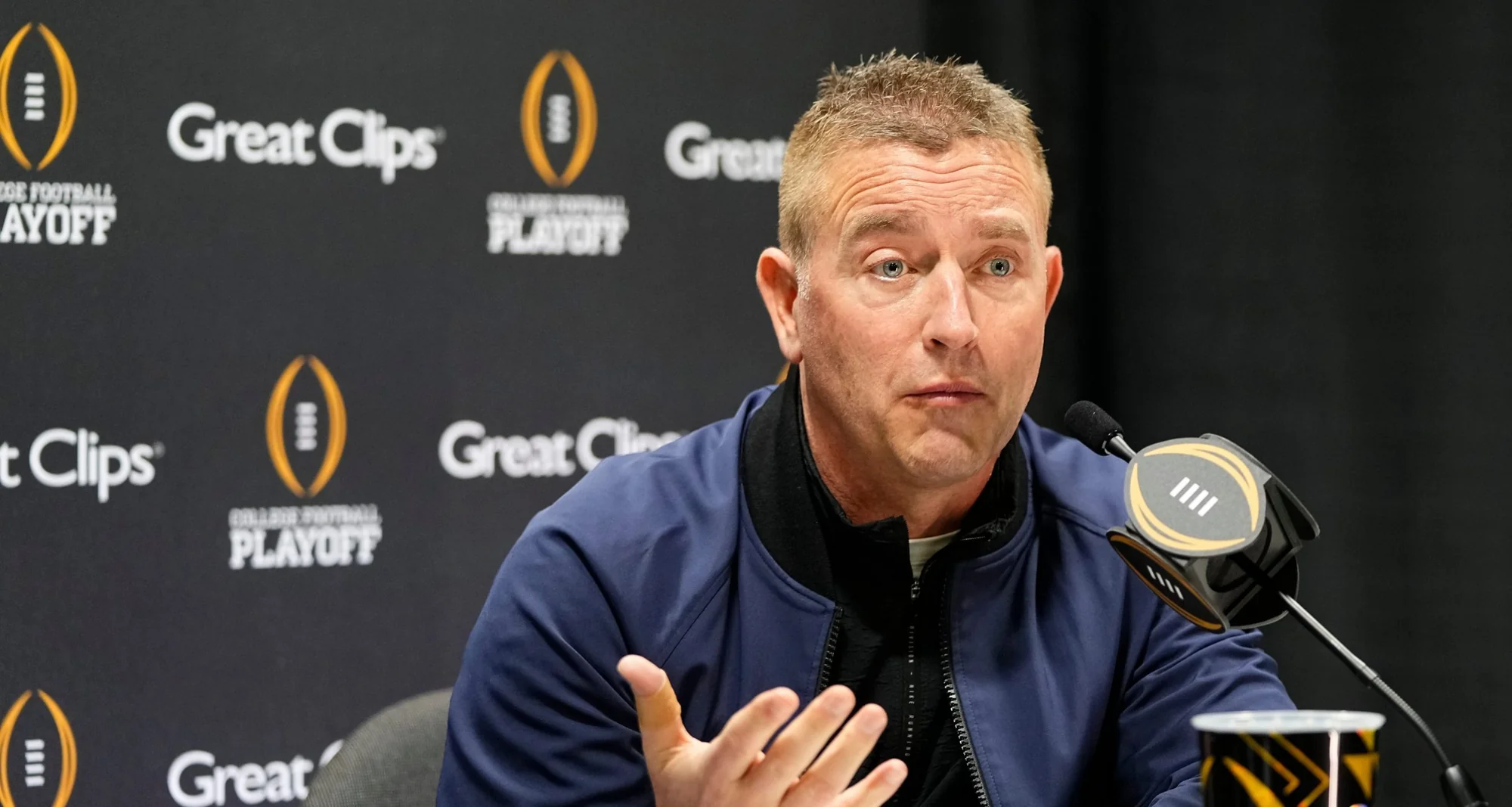
Kirk Herbstreit, a well-known ESPN analyst, recently voiced his concerns about the state of sports media. In an interview with The Inner Circle Podcast, Herbstreit expressed dissatisfaction with the prevalent debate show format that has increasingly dominated the airwaves.
From First Take to the Metastasized Format
“I think it started with Skip Bayless and Stephen A. because they kind of had a thing way back at ESPN, where they would just argue for the sake of arguing,” Herbstreit said. “And it works for them, but I think other shows copied it, and it has become something that drives me crazy.” He elaborated on how this format, which he believes prioritizes loud and viral moments over substantive analysis, has spread across various networks.
Herbstreit’s Commitment to Authenticity
“I watch some of these shows on various networks, especially the NFL shows,” Herbstreit continued. “It drives me crazy where our industry has gone.” He expressed his unwillingness to participate in such a culture and stated that he would quit before doing so himself. “Man, I will quit before I ever do that. Like, if that’s what it takes to make it, I would never do this,” Herbstreit emphasized.
College GameDay: An Antidote to Clickbait Culture
In contrast, College GameDay is seen by Herbstreit as an antidote to the clickbait culture. He highlighted how McAfee brings energy and entertainment value while maintaining a focus on players, coaches, and storylines rather than controversy. “On GameDay, we don’t do that,” he said. “Again, Pat’s crazy and fun, but we make it about the players, we make it about the coaches, and we make it about the storylines.” He further explained why this approach resonates with him: “The reason I’ll tell y’all that is if it ever changed, I would be so fast gone out of studio television. But I’m lucky. I kind of live on an island where we’re allowed to still talk ball and still just have fun talking about ball.”
The Business Perspective
Herbstreit also pointed out the business implications of the debate show format, noting that ESPN built its entire daytime programming strategy around this template. “The network applied the format systematically across the schedule because it works from a business perspective,” he said. This means that while Herbstreit claims to live on an island where they can still discuss football in a traditional manner, his own work environment is deeply entrenched in the very culture he criticizes.
Moreover, Herbstreit acknowledged that even College GameDay has evolved to prioritize viral moments alongside traditional football coverage. “The show still does plenty of legitimate football analysis,” he admitted, “but it’s also designed to generate viral content in ways it wasn’t a decade ago.” This evolution has made the gap between his approach and those he criticizes less stark than he initially portrayed.
Ultimately, Herbstreit’s critique highlights the tension between maintaining traditional values and adapting to modern media demands. While he advocates for more substantive analysis, his own work environment suggests that such ideals are often compromised in the pursuit of engagement and viewership.
Kirk Herbstreit’s words underscore a broader debate within sports media: how to balance engaging content with meaningful analysis. As the industry continues to evolve, it remains to be seen whether traditional values can withstand the pressures of modern media demands.