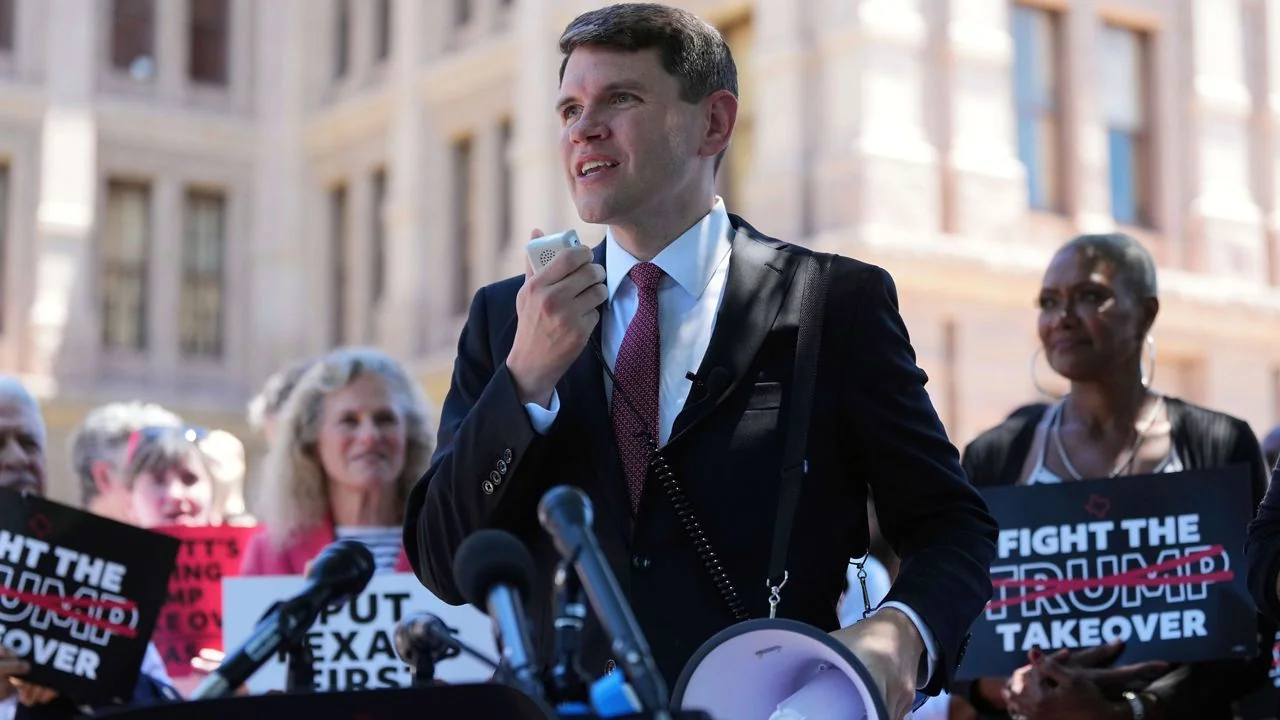
Key Highlights
- Election 2026 in Texas features State Rep. James Talarico’s bid for U.S. Senate.
- Talarico raises $6 million, significantly outpacing his rival, former U.S. Rep. Colin Allred, who raised $4 million.
- Talarico campaigns against billionaire mega-donors but accepts over $90,000 from billionaires in September.
- Analysts suggest Talarico’s anti-billionaire stance could be a key differentiator in the race.
The Race for U.S. Senate in Texas: A Tale of Two Campaigns
In the 2026 election cycle, State Rep. James Talarico of Austin has emerged as one of the frontrunners vying for a seat in the U.S. Senate.
His campaign, launched just three weeks ago, has already garnered significant traction with a fundraising haul of $6 million. This substantial sum places him far ahead of his major rival, former U.S. Rep.
Colin Allred, who has raised only $4 million over three months.
Central to Talarico’s campaign strategy is his anti-billionaire message. He aims to highlight the influence wielded by “billionaire mega-donors and their puppet politicians,” a theme that resonates with many Democratic voters in Texas. According to Matt Angle, an analyst from the Lone Star Project, this approach reflects a broader understanding among Democrats about the role of wealthy donors in political processes.
Financial Challenges and Opportunities
Despite Talarico’s strong start, his campaign has faced criticism for accepting over $90,000 in donations from billionaires. His latest campaign finance report reveals individual contributions from individuals linked to oil billionaire Ray Hunt. However, Talarico has maintained that there is nothing inherently wrong with raising money across the income spectrum as long as influence is not sold.
“There’s nothing wrong with raising money from all levels of the income scale,” Angle emphasized. “The problem is when you sell influence.” This statement underscores a fine line between financial support and political leverage that Talarico must navigate carefully.
Political Scientists Weigh In
Political scientists view Talarico’s campaign as a testament to the need for populist messaging in Texas, especially to capture traditional Democratic voters. Brian Smith from St. Edward’s University noted that Talarico needs to outspend his competitors like Glenn Paxton and John Cornyn, who are known for their pro-business stances.
Smith highlighted the strategic importance of grassroots support: “Paxton and Cornyn are not going to be anti-billionaire or anti-corporate, and they’re going to take money wherever they can get it. And we know Talarico is going to need to be able to outspend those candidates if he’s going to be competitive.”
Competing Strategies: Colin Allred’s Approach
In contrast, Allred has pledged not to take corporate PAC money and does not promote an anti-billionaire stance as aggressively. His campaign focuses on grassroots support, with over 100,000 individual donations averaging just $34 each. This strong base of supporters suggests a different approach that could also play well in the upcoming election.
“Colin’s campaign is powered by Texans — not special interests,” Dan Gottlieb, Allred’s communications director, stated firmly. “With over 100,000 individual donations and an average contribution of just $34, Colin’s campaign has built a strong grassroots support because people know he’s fighting to unrig the system.”
As the election approaches, both campaigns will need to balance their populist messages with practical realities.
Talarico’s anti-billionaire rhetoric may resonate with some voters, but his acceptance of billionaire donations could undermine that message. Similarly, Allred’s grassroots approach provides a solid foundation, but it remains to be seen how well it translates into votes.
The race for U.S. Senate in Texas is shaping up to be a battle between two distinct strategies: the anti-billionaire populist approach versus the more traditional path of corporate support and broad-based voter engagement. The outcome will depend on which candidate can most effectively appeal to the diverse electorate of Texas while staying true to their campaign promises.