Key Highlights
- Federal officers have flooded neighborhoods in Minneapolis following a fatal shooting.
- The scale and intensity of the operations appear greater than past immigration enforcement actions in other blue cities.
- Residents describe feeling like they are under invasion, drawing comparisons to Nazi Germany.
- The city mayor warns against “taking the bait” from protesters while defending community safety.
The Unprecedented Scale of Federal Enforcement in Minneapolis
Minneapolis is grappling with a significant influx of federal officers, particularly those from Immigration and Customs Enforcement (ICE), following the fatal shooting of 37-year-old Renee Nicole Good. The scale, intensity, and aggression of these operations are reportedly unprecedented for a blue city like Minneapolis.
A Sense of Invasion
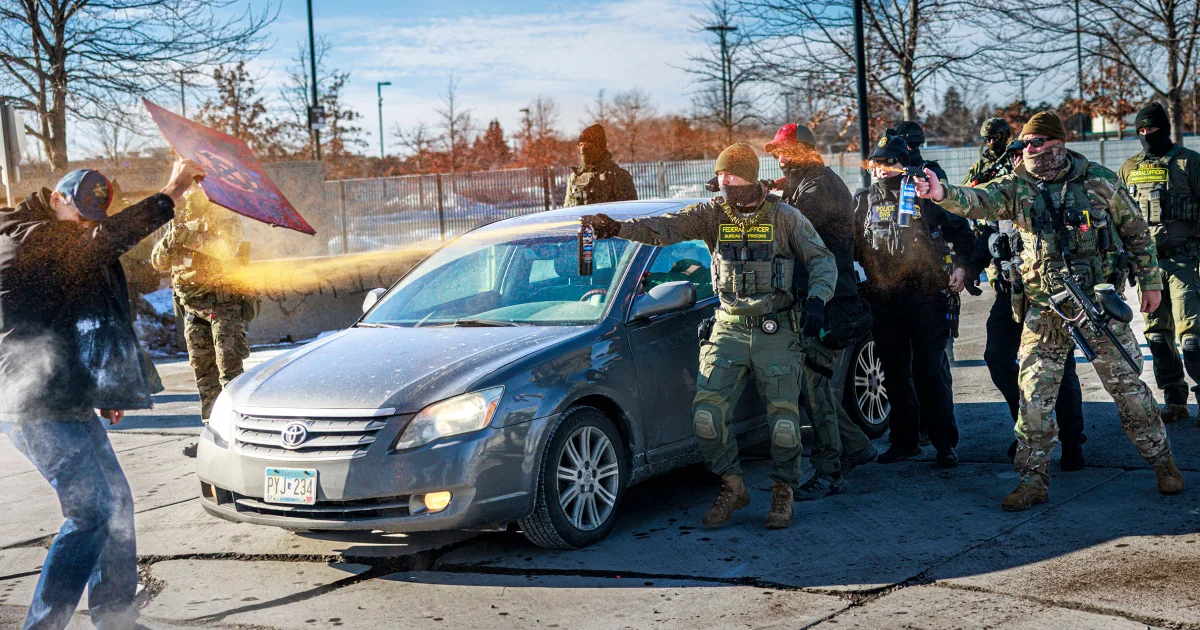
Residents describe a pervasive sense of invasion, with federal officers patrolling neighborhoods in unmarked cars, honking their vehicles to alert others of their presence, and occasionally using chemical agents. A woman who operates a restaurant said she had temporarily closed her business due to the threat it posed to her immigrant employees.
Protests and Confrontations
The deployment of federal officers has sparked intense protests in Minneapolis. On Wednesday night, a man was shot in the leg after allegedly attacking an ICE officer with a snow shovel or broom handle. Federal officials defended their actions, stating that the officer had fired defensively to protect his life.
Community Impact and Mayor’s Warning
The city of Minneapolis is under significant strain as federal officers have been seen inside stores and at the Target in Richfield. The mayor, Jacob Frey, warned against “taking the bait” from protesters while emphasizing the need to keep people safe and maintain order. He noted that the city has far fewer police officers (600) compared to the 3,000 federal immigration officers present.
Background and Context
The current operation, branded as “Operation Metro Surge,” is part of a broader strategy by the Trump administration to intensify immigration enforcement. This operation appears to have broadened beyond mass deportations, including confrontations with anti-ICE protesters. The shooting of Good and the scope of this deployment have heightened tensions in a nation already divided over immigration issues.
Activist Accounts
A resident who spoke with NBC News described being arrested hours after Good’s death, providing video evidence of their encounter. They recounted officers breaking their car windows before pepper-spraying both the passenger and driver. The person said they were punched in the face when an officer dragged them out of the vehicle.
ICE Operations and Public Perception
The Whipple Federal Building, which holds an ICE facility, has been the site of daily protests. The city demanded that ICE leave the state immediately, emphasizing support for its immigrant and refugee communities. Residents have described a persistent and aggressive presence of federal officers in their neighborhoods, leading to widespread concern and unrest.
Expert Analysis and Future Implications
The operations in Minneapolis reflect broader trends in immigration enforcement under the Trump administration. With more officers deployed and increased efforts to target non-U.S. citizens, cities like Minneapolis are facing unprecedented challenges. The community’s reaction highlights the deep divisions over immigration policy in the United States.
As the situation continues to unfold, experts warn of potential long-term impacts on local economies and social cohesion. The scale and intensity of these operations could have lasting effects on communities that feel under threat from federal enforcement actions.
“We are trying to find a way forward to keep people safe, to protect our neighbors, to protect order,” Mayor Jacob Frey said.