Key Highlights
- In 1951, 16-year-old Barbara Rose Johns led a walkout of her segregated Virginia high school, sparking a landmark civil rights case.
- The statue of Johns is the latest addition to Emancipation Hall in the U.S. Capitol Visitor Center, replacing that of Confederate General Robert E. Lee.
- Johns’ 1951 student strike played a crucial role in the Brown v. Board of Education Supreme Court case, which declared school segregation unconstitutional.
- The statue unveiling is part of Virginia’s efforts to rectify historical inequities and recognize important civil rights figures.
Barbara Rose Johns: A 16-Year-Old Champion for Civil Rights
In April 1951, a young Black teenager named Barbara Rose Johns made history. At the age of 16, she led hundreds of students in a historic walkout from Farmville’s Robert Russa Moton High School to protest the school’s overcrowded conditions and inferior facilities compared to those at the town’s white high school.
Johns’ actions were part of a broader fight for equality that eventually became one of the five cases reviewed by the U.S. Supreme Court in Brown v.
Board of Education. The landmark 1954 ruling declared state laws establishing separate public schools for Black and white students unconstitutional, marking a pivotal moment in American civil rights history.
The Walkout and Its Impact
On April 23, 1951, Johns gathered all 450 students in the auditorium and convinced them to walk out. The strike lasted roughly two weeks and caught the attention of the National Association for the Advancement of Colored People (NAACP). NAACP lawyers Spottswood Robinson and Oliver Hill filed a lawsuit challenging the constitutionality of segregated education, which ultimately became one of the key cases in the Brown v.
Board of Education Supreme Court case.
The court’s decision was a landmark victory for civil rights but took years to be fully enforced throughout the United States. Prince Edward County schools were officially integrated in 1964, after being closed for five years as part of “Massive Resistance” efforts by Virginia authorities to avoid integration.
A New Era at the U.S. Capitol
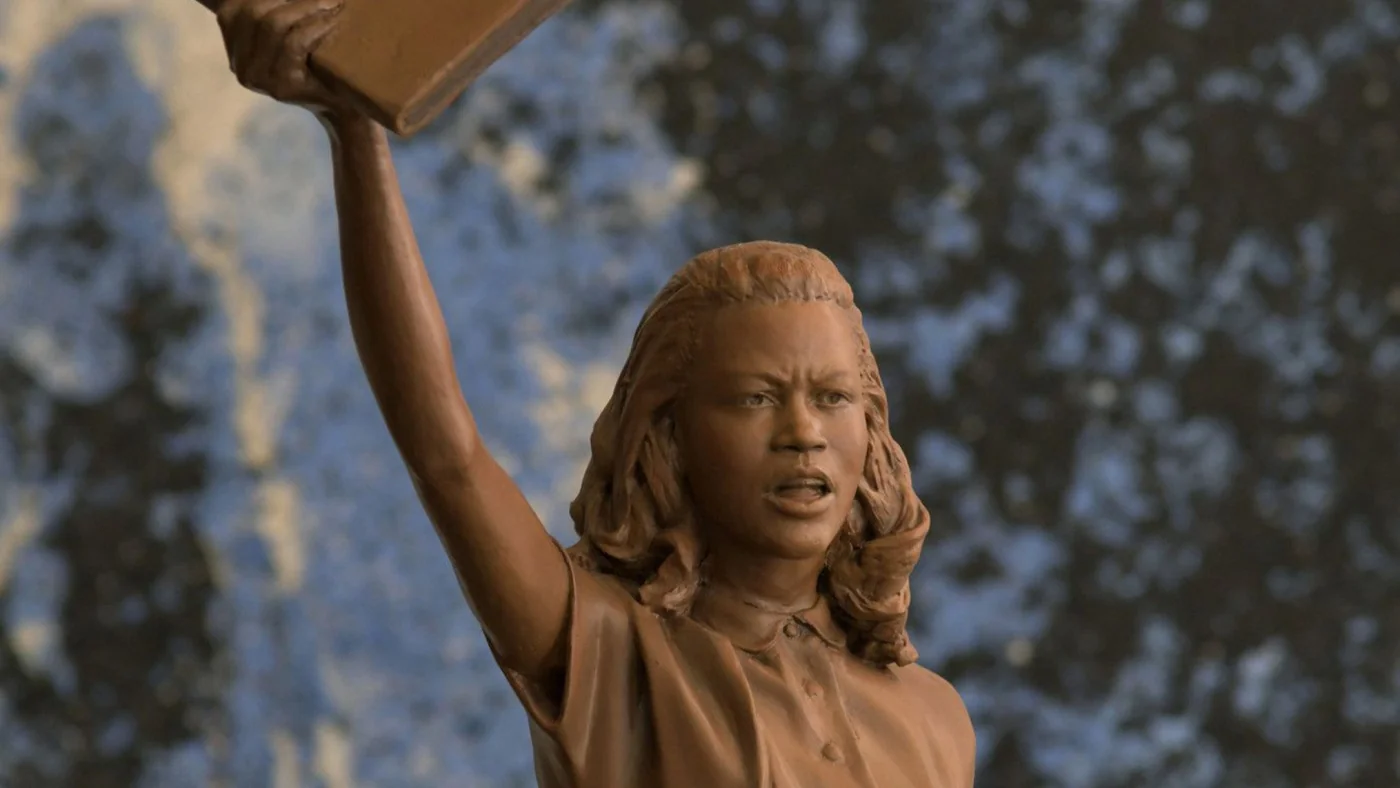
Exactly five years and a multi-step approval process later, Johns’ statue was unveiled on Tuesday in the U.S. Capitol Visitor Center’s Emancipation Hall. The 11-foot bronze statue, created by Maryland artist Steven Weitzman, shows a teenage Johns standing at a podium, raising a book overhead mid-rallying cry.
Its pedestal is engraved with the words: “Are we going to just accept these conditions, or are we going to do something about it?” This quote reflects the spirit of Johns’ leadership and the pivotal role she played in ending school segregation.
The statue replaces that of Confederate General Robert E. Lee, a move by Virginia’s Commission on Historical Statues in the United States Capitol in response to a nationwide racial reckoning.
Johns was chosen from a list of 100 names and five finalists, including notable figures like Pocahontas and Maggie Lena Walker. The unveiling ceremony attracted state leaders and members of Congress, with House Speaker Mike Johnson and Virginia Governor Glenn Youngkin in attendance. Despite his campaign against critical race theory and DEI initiatives, Youngkin expressed pride in the statue’s significance.
Legacy and Recognition
Barbara Johns’ story is now a required part of lessons in Virginia public schools. In 2017, the Virginia Attorney General’s Offices were renamed in her honor, and the following year, April 23 was designated as Barbara Johns Day statewide.
Johns married Rev. William Powell and had five children before passing away at age 56.
Her sister, Joan Johns Cobbs, expressed that their family is honored by this newest tribute to Johns in the nation’s capital. “I think Virginia is trying to correct some of its inequities,” she said.
The statue unveiling represents a significant step towards rectifying historical injustices and recognizing the contributions of civil rights leaders like Barbara Rose Johns. As more states and institutions continue to honor such figures, the legacy of the 16-year-old who changed history continues to inspire future generations.