Key Highlights
- The Grand Egyptian Museum in Giza has reached completion after over three decades of planning and development.
- Sprawled across a 50,000-square-meter site, the museum houses more than 100,000 pharaonic antiquities.
- Designed by Dublin studio Heneghan Peng Architects, the museum is expected to open fully on November 1, 2025.
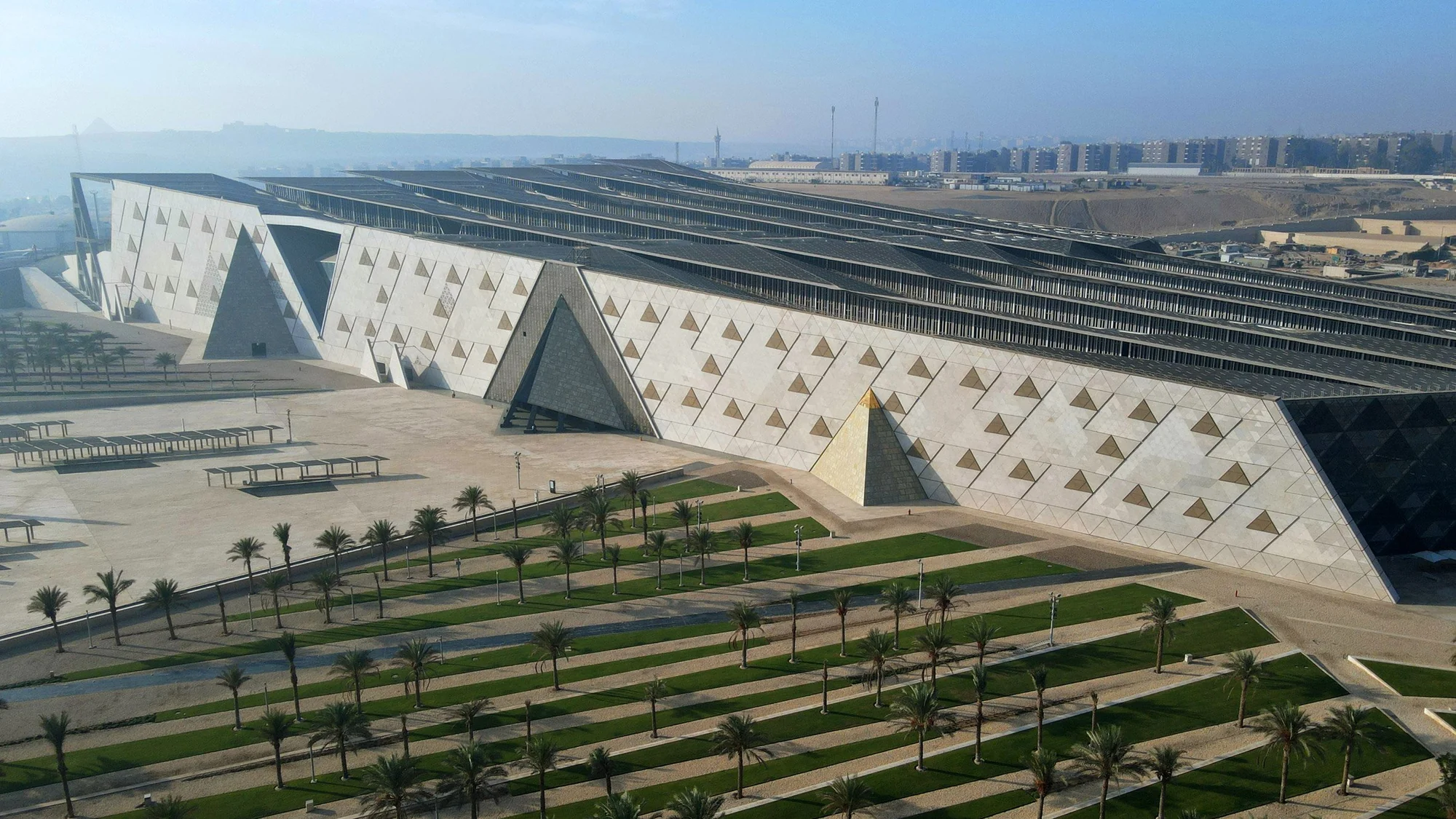
- The building, with a total floor area of 81,000 square meters, features triangular cladding and entrances aligned with the nearby pyramids.
Completion of the Grand Egyptian Museum in Giza
The long-awaited Grand Egyptian Museum in Giza has finally reached completion after more than three decades of planning and development. This significant milestone marks a crucial step towards transforming Egypt into a global cultural and tourist hub.
A Vision for the Future of Tourism
Spread across a 50,000-square-meter site near the renowned Pyramids of Giza, the museum is set to house an impressive collection of over 100,000 pharaonic antiquities. Many of these artifacts have never been made public before, promising a unique and enriching experience for visitors.
Architectural Innovation
Dublin-based architecture firm Heneghan Peng Architects has designed the museum as an awe-inspiring structure that aligns with the positioning of the nearby pyramids. The building features a triangular cladding system, creating a striking visual effect while also providing functional benefits such as enhanced natural light and ventilation.
Historical Significance and Modern Design
Róisín Heneghan, co-founder of Heneghan Peng Architects, expressed the unique opportunity presented by designing such an iconic museum. “Our design works to strengthen that connection to history and place,” she stated. “Providing a home for some never-before-seen artifacts that rests upon the very land from which they were created.”
Development Timeline and Challenges
The project’s development timeline spans several decades, with initial plans being announced in 1992 under former President Hosni Mubarak. Heneghan Peng Architects won an international competition to design the museum in 2003, with construction commencing in 2012. Despite these early promising starts, numerous political and economic setbacks, as well as the global impact of the COVID-19 pandemic, delayed the opening date until November 1, 2025.
Technical Features and Facilities
The museum’s total floor area measures 81,000 square meters. Its interior includes a six-story staircase that provides access to various galleries, including the Tutankhamun Gallery on the top level, which will showcase over 5,000 artifacts for the first time. The building also features a children’s museum, conference center, auditorium, conservation facility, and gardens.
According to Heneghan Peng Architects, the concrete structure of the museum helps regulate internal temperatures, reducing the need for air conditioning and making it an energy-efficient design. This feature is particularly significant given Egypt’s hot climate.
Future Prospects
The Grand Egyptian Museum is poised to become a major draw for tourists and scholars alike. Its collection of rare artifacts and innovative design make it a unique addition to the global museum landscape, representing not only a celebration of ancient Egyptian civilization but also a forward-looking vision for modern cultural institutions.
As Egypt continues to invest in its heritage sites and tourism infrastructure, the Grand Egyptian Museum stands as a testament to both historical preservation and future-oriented planning. Its opening on November 1, 2025, marks an exciting new chapter in the country’s cultural narrative and is anticipated to significantly boost international interest in exploring the rich history of ancient Egypt.