Key Highlights
- Australia is experiencing a shift in its views towards the United States under President Donald Trump’s administration.
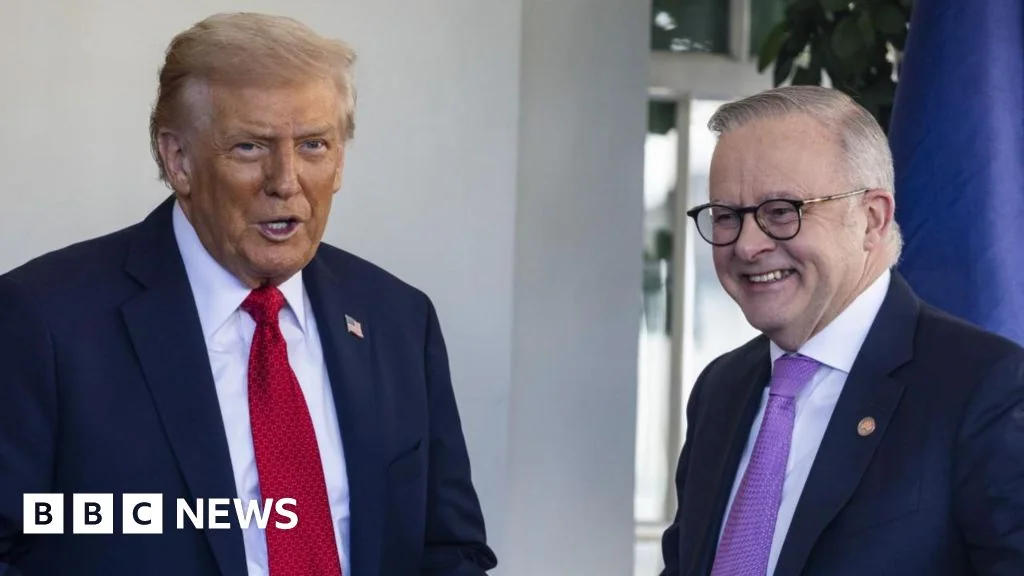
- The meeting between Australian Prime Minister Anthony Albanese and US President Donald Trump highlighted both friendly relations and underlying tensions.
- Concerns over Aukus, tariffs, and the unpredictability of the Trump administration have led to increased distrust in the US as an ally.
- Australian polls show mixed feelings towards the alliance but a continued belief that it is crucial for regional security.
Albanese-Trump Meeting: Friendly Yet Tense
During his first official meeting with US President Donald Trump, Australian Prime Minister Anthony Albanese was met with a blend of praise and tension. Trump’s effusive comments about the long-standing alliance between Australia and the United States were countered by increasing doubts within the country regarding America’s reliability as an ally.
Aukus: A Point of Concern
The Australia-United Kingdom-U.S. (AUKUS) defense pact has been a source of anxiety for Australia, particularly under Trump’s administration. The review of this agreement, announced in June, sent shockwaves through Canberra as it raised fears that the deal might be rewritten or canceled. This concern was further exacerbated by the US’s own challenges in submarine technology supply and its isolationist rhetoric.
Domestic Polls Reflect Growing Skepticism
In a recent poll, Donald Trump’s approval ratings among Australians are low, with fewer people believing that America remains a reliable ally under his leadership. However, there is also a significant portion of the population that still views the alliance as essential for regional security. Jared Mondschein from the United States Studies Centre notes that while many Australians criticize Trump’s policies, finding an alternative to the US in the current geopolitical landscape is challenging.
“For the first time in my lifetime, one of our two major political parties benefited in the last election from slightly distancing itself from the US,” Sam Roggeveen from Australia’s Lowy Institute added. This shift reflects a broader trend where Australia is re-evaluating its strategic partnerships amid growing tensions with China.
China’s Rising Influence and Regional Security Concerns
The increasing military presence of China in the region, including its massive defense build-up, has heightened security concerns for Australia. While some argue that closer ties with the United States are necessary to counterbalance this threat, others suggest that China could potentially be a security partner rather than an outright adversary.
“There is a belief amongst Australia’s political and security experts that the country cannot defend itself independently if it comes to that,” Roggeveen stated. “But there’s also a view that the only reasonable course for Australia is to seek closer and closer relations with the United States.”
The AUKUS pact, while facing initial scrutiny, was ultimately reaffirmed during Albanese’s meeting with Trump, ensuring that Australia would receive cutting-edge nuclear submarine technology in exchange for help countering China. However, the tariffs imposed by the US on Australian goods remain a source of irritation.
Future Implications and Strategic Diversification
Australia faces a complex geopolitical landscape where it must balance its relationship with both the United States and China. As President Trump’s administration winds down, Australia will likely continue to explore strategic diversification in partnerships beyond the traditional US alliance.
The meeting between Albanese and Trump underscores the multifaceted nature of Australia’s foreign policy challenges. While the alliance remains important, it is clear that Australia must navigate an increasingly complex world order with a more critical eye towards its long-standing ally.