Key Highlights
- Airlines are canceling 6% of flights at 40 high-traffic airports in compliance with the Federal Aviation Administration mandate amid a government shutdown.
- The Senate passed a bill to end the longest-ever government shutdown, but it still needs House approval and President Trump’s signature.
- Over 1,100 flights within the U.S. had been canceled as of Tuesday morning, with more than 850 delayed.
- The FAA announced a plan to predetermine daily flight cancellations to accommodate air traffic controllers and TSA employees who have worked without pay for 42 days.
Flight Cancellations Reach 6% Amid Government Shutdown
Airline operations across the United States are experiencing significant disruptions following a government shutdown, with flight cancellations inching up to 6% of scheduled flights at 40 high-traffic airports. This increase comes one day after the Senate passed a preliminary agreement aimed at ending the longest-ever government shutdown. However, the bill still requires approval from the House and President Trump’s signature before it can fully take effect.
Airlines, including United, are now facing mandated flight cancellations as part of an FAA directive to reduce air traffic in light of staffing shortages among air traffic controllers and Transportation Security Administration (TSA) employees.
According to United Airlines, the company has already canceled hundreds of flights for Tuesday and Wednesday, affecting major cities such as Chicago, New York, Washington D.C., Atlanta, and Dallas-Fort Worth.
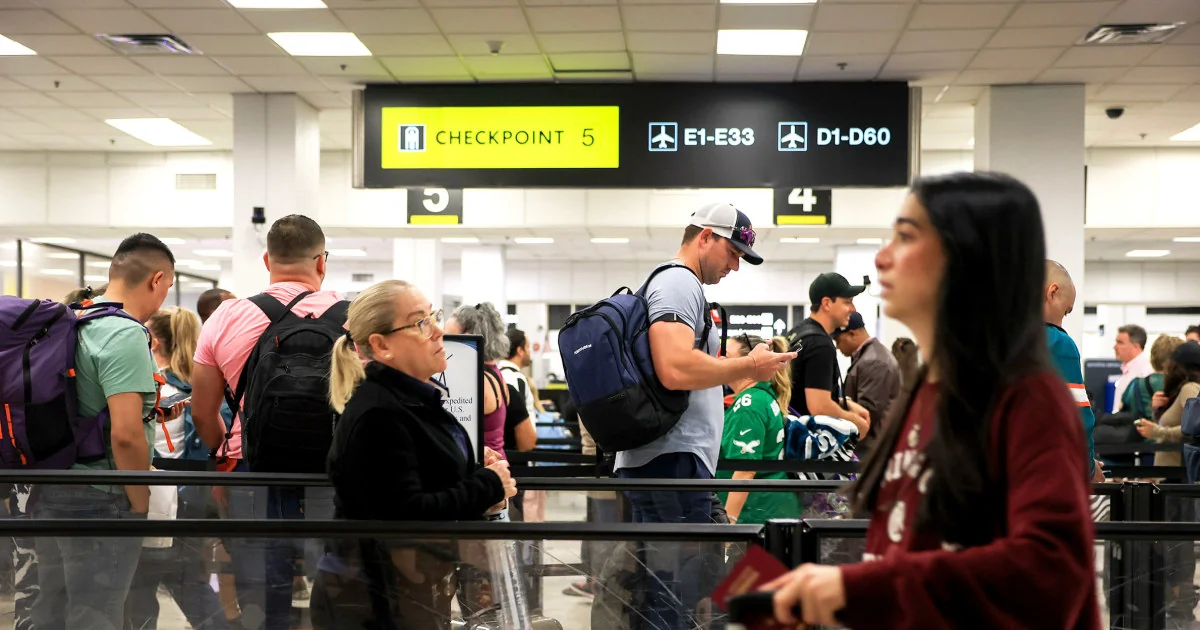
The shutdown’s impact on air travel is significant, with over 1,100 domestic flights canceled by Tuesday morning, according to the flight tracking website FlightAware. Additionally, more than 850 flights had been delayed as of the same time. The FAA has reported that airports have faced staffing shortages and delays for the past month and a half due to workers grappling with uncertainty over their next paychecks.
Federal Aviation Administration’s Plan to Mitigate Disruptions
The Federal Aviation Administration (FAA) announced its plan to predetermine the percentage of daily flights to be canceled, starting at 6% this Tuesday. The agency stated that the reduction is necessary to accommodate air traffic controllers and TSA employees who have been working without pay for 42 days. As the shutdown continues, the FAA plans to increase the cancellation rate to 8% on Thursday and then to 10% by Friday.
The FAA’s decision comes as eight Democratic senators broke with their party late Monday to pass a bipartisan bill that would end the longest-ever government shutdown.
However, the bill still needs approval from the House of Representatives and President Trump’s signature before it can be enacted into law. In a Truth Social post on Monday, President Donald Trump called out air traffic controllers he said were skipping work and suggested a $10,000 bonus for those who worked through the shutdown—though he admitted he didn’t know where the money would come from.
Airports have reported that these staffing issues are causing significant disruptions. While airlines have promised to ensure customers reach their destinations with increased flexibility, travelers have faced multiple cancellations. One NBC News traveler recounted being on three flights, all of which got canceled.
Industry Impact and Future Outlook
The government shutdown’s impact on the airline industry is not expected to subside even after it ends. According to experts, it may take longer for flight schedules to return to normal once the shutdown concludes. The FAA has acknowledged that it could take several days for the air traffic system to fully recover from the disruptions caused by the extended period without consistent staffing.
The situation highlights the critical role of air traffic controllers and TSA employees in maintaining safe and efficient air travel.
Nick Daniels, president of the National Air Traffic Controllers Association, emphasized the strain on these workers and its potential impact on public safety: “This is the erosion of the safety margin the public never sees, but America relies on every single day.”
As the government shutdown continues to affect daily life across the United States, airline passengers and travelers are bracing for more disruptions. The passage of the bipartisan bill marks a step toward resolution, though the road to full functionality remains uncertain.